
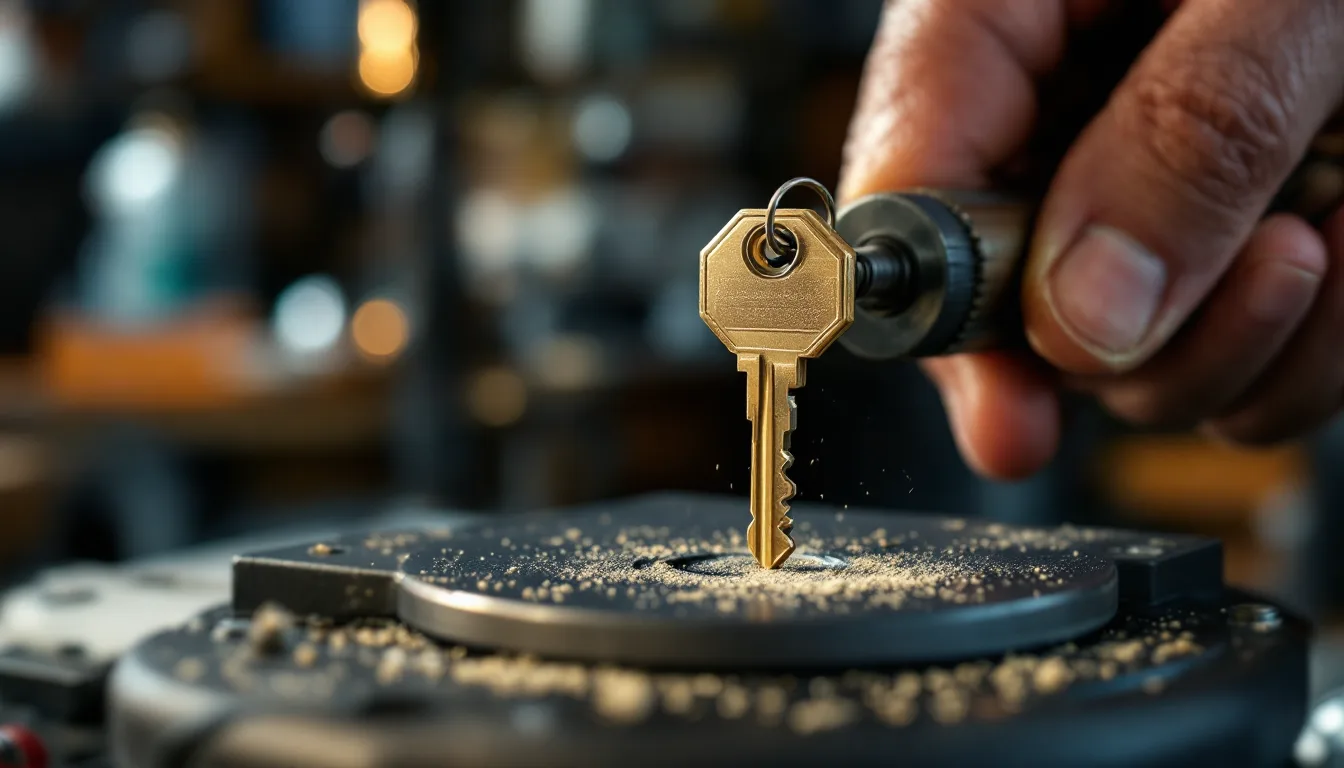
Why people call for key duplication
Many duplicate-key calls begin with a small, practical worry. Someone has one key and a household of people who need one. A landlord is handing a unit to a new tenant. A business owner has hired a second shift, and the only office key hangs on a manager's ring. A mailbox key went missing during a move and the spare is in a box nobody can find. None of these is an emergency until the one key you have goes missing, and that is the point of making a copy today: it costs you far less hassle than a lockout later.
Other calls come after a near miss. A key has worn smooth and started to stick. A copy from a hardware-store kiosk turns only if you jiggle it. A spare opens the knob but not the deadbolt. Those are signs the copy was cut from a worn original, on the wrong blank, or with a poor alignment, and they are worth fixing before the key snaps off inside the cylinder.
Our phone is answered 24 hours a day, so you can also call when the need is urgent: a key for a house sitter arriving tonight, or a duplicate for a contractor who needs access in the morning. Whether we can cut on the spot depends on the key itself, and the sections below explain how that works.
How is a house key duplicated, step by step?
Key duplication looks simple from across a counter, but accuracy depends on small details. Here is the process we follow for a standard pin-tumbler key, the kind that fits most house, apartment and office doors.
- Identify the key. We read the brand stamp, the keyway profile and the shape of the bow (the head of the key). If the lock is available, we compare the key against it so the blank matches the actual cylinder.
- Inspect the original. We look for rounded cuts, bends, hairline cracks and wear on the shoulder. A worn original produces a worn copy, so if the key is tired we say so and discuss a cleaner route.
- Choose the right blank. The blank must match the keyway, the length and the way the key stops in the lock. Some keys stop at the shoulder, others at the tip, and the wrong blank can cut perfectly and still fail.
- Clamp and align. The original and the blank are held in paired vises on the duplicating machine and lined up from the correct stop point. Misalignment at this stage is the usual reason a copy almost works.
- Trace and cut. The guide follows the cuts of the original while the cutter shapes the blank. We take this at a steady pace, because forcing the cut leaves rough edges and uneven depths.
- Deburr. Fresh cuts leave tiny metal burrs. We remove them, because burrs make a key feel gritty and slowly wear down the pins inside your lock.
- Test in the real lock. A key that looks right on the bench can still bind in the door. We try the copy in the lock several times and compare how it feels against the original.
- Adjust if needed. If the copy is tight or turns only with effort, we correct it or recut it, then hand over the original and the copy so you know which is which.
Locked out or need a locksmith now?
We answer around the clock, every day of the year.
Call (213) 577-1366What a professional checks before and after cutting
The cutting itself takes a short time. The judgment around it is what separates a copy you trust from one you tolerate. These are the points we check on nearly every job.
- Wear on the original: smooth, rounded peaks mean the copy may be loose in the lock, and a copy of a copy drifts further from the true cut.
- Keyway and blank match: similar-looking blanks from different manufacturers are not interchangeable, and a near match can jam in the cylinder.
- Stop position: shoulder-stop and tip-stop keys are aligned differently, and getting this wrong shifts every cut.
- Cut depth consistency: each cut must reach the correct depth, because pins in the lock respond to small differences.
- Clean edges: no burrs, no sharp edges, no metal shavings left on the key.
- Function in every lock it should open: if one key works a knob and a deadbolt keyed alike, we test both rather than assume.
- Fit over repeated use: we turn the key in the lock several times, not once, to catch binding that shows up only on the second or third try.
How does the type of lock and key change the job?
Calling something a duplicate key covers a wide range of work. The key, the lock and the situation each change how we approach it.
- House and apartment keys: usually standard pin-tumbler keys that can be duplicated directly. In managed buildings, we may ask about the property manager's rules before cutting.
- Duplicate deadbolt keys: deadbolts are often keyed alike with the knob, but not always. We confirm which lock a key operates and test the copy in the deadbolt itself, since deadbolts have less tolerance for a sloppy cut.
- Office and commercial keys: these can belong to a master key system, where several keys share a hierarchy. We ask who has authority to approve copies, because a stray copy of a higher-level key affects every door beneath it.
- Mailbox keys: small, thin keys that are easy to cut badly. Some mailboxes in multi-unit buildings are controlled by a property manager or the postal service, and we will tell you plainly if a key is not ours to copy.
- Gate, padlock and utility keys: the keyway varies widely, and we match the blank to the lock rather than the key's size.
- Vehicle keys: these are a different category of work. Transponder chips, remote heads and laser-cut keys vary by make, model and year, and where information is unclear we confirm by VIN and in person. Some vehicles are dealer-only for key programming, and we say so rather than promise a job we cannot do.
Locked out or need a locksmith now?
We answer around the clock, every day of the year.
Call (213) 577-1366Restricted and high-security key duplication
Some keys cannot be copied at a typical counter, and that is deliberate. Restricted keyways use blanks that are controlled by the manufacturer, and duplication is permitted only with authorization, such as a registered owner's card or a signed approval from the account holder. A Do Not Duplicate stamp on a key is a request, not a lock on the machine, which is why we ask about authority before cutting a stamped key.
High-security cylinders add other features: sidebars, internal tracks, unusual cut patterns or hardened materials. Laser-cut keys, sometimes called sidewinder keys, have a groove cut into the face of the blade rather than conventional edge cuts and are produced on different equipment than a standard house key. Not every key of this kind can be duplicated, and not every one can be duplicated at the same place.
Our approach is to look at the actual key and lock first. If the blank is available and the authorization is in order, we cut it. If the system is manufacturer-controlled or dealer-only, we tell you that directly and explain the options, which may include ordering through the manufacturer or changing the lock to a system you control. For a deeper look at those systems, see our page on high-security locks.
Electronic credentials are separate again. A key fob or access card needs programming rather than cutting, and compatibility depends on the system it belongs to. We check that before suggesting a route.
Mobile key duplication: when we come to you
We operate from a storefront at 10740 Wilshire Blvd in Westwood and from mobile service vans, so there are two ways to get a key cut. Which one makes sense depends on the key, the lock and your situation.
A van visit helps when you can't leave the property, when several doors need keys, when an office needs work done outside business hours, or when we need to test a copy in the lock it belongs to. Coming to the lock also lets us check the cylinder's condition and see whether a worn lock is part of the problem.
Bringing the key to the storefront can suit simple jobs and keys that benefit from bench equipment. When you call, tell us what the key looks like, what it opens and where you are. We will say honestly whether the job suits a visit or a trip to the storefront, rather than sending a van for something that does not need one.
Locked out or need a locksmith now?
We answer around the clock, every day of the year.
Call (213) 577-1366When duplication is the wrong call
A good locksmith tells you when copying a key will not solve your problem. A few situations come up regularly.
- You have lost the only key. Duplication needs an original to work from. Depending on the lock, we can often make a working key another way, but that is a separate job from copying.
- You do not know who has copies. If a former tenant, roommate, employee or contractor still holds a key, another copy adds a key to the problem. The better route is lock rekeying, which changes the lock so old keys stop working.
- The lock itself is failing. A fresh copy will not cure a cylinder that sticks, spins or has worn pins. If new keys keep binding, look at lock repair before cutting more.
- The mailbox lock is broken or missing. A copy needs a working lock to be useful. If the mailbox lock has failed or the key is gone, mailbox lock replacement is the right job.
- The original is badly worn or bent. We will tell you if it is better to start from the lock or from a code than to copy damage.
- The key is controlled by someone else. Restricted systems and managed buildings may require approval we cannot substitute for.
What affects the price of a duplicate key
We do not quote numbers on a web page, because the honest answer depends on the key in your hand. Here is what moves the cost of a duplication job up or down.
The type of key matters first. A standard house key and a restricted or high-security key are not the same kind of work, and the blank for a controlled system can be harder to source. Laser-cut and other specialty keys use different equipment and take more care.
Quantity and condition also matter. Several copies from a clean original are different from one copy that needs the key straightened or recut. If the original is worn, extra time goes into checking and adjusting the result.
Location and timing play a part. A storefront job differs from a mobile visit, and an after-hours call differs from a daytime one. Authorization requirements for restricted keys can add steps.
Calling with a description of the key, what it opens and where you are is the quickest way to get a clear answer. We would rather explain the factors and give you a straight quote on the phone than surprise you at the door.
Locked out or need a locksmith now?
We answer around the clock, every day of the year.
Call (213) 577-1366Why call Wilshire Lock & Key for duplicate keys
We have been in business since 1987, and the work on this page is the everyday craft we have been doing throughout that time. David, the owner and lead technician, oversees the work, so questions about a tricky key get answered by someone who understands the trade.
We are one company, not a dispatch service. When you call (213) 577-1366, you reach us, and the job is handled by our own team rather than passed to a stranger who bid for it. That means a consistent standard, and someone accountable if a copy does not fit.
We also have a real storefront at 10740 Wilshire Blvd in Westwood alongside the mobile vans. You can bring a key in, or we can come to you. Our phone is answered 24 hours a day, seven days a week, year-round.
One practical tip about any locksmith, including us: California requires locksmith companies to hold a BSIS LCO license. Ask for it before you hire anyone, and take note of how they answer.
Where we provide key duplication
Our service area covers 140 cities across Los Angeles and Ventura counties. The full list is on our locations page, and each city has its own page with local detail. If you want to see how the service looks in a particular area, these are good starting points: key duplication in Los Angeles, key duplication in Santa Monica and key duplication in Pasadena.
This page focuses on the craft, which is the same wherever you are. What varies from place to place is the building: older homes, newer apartments, managed complexes and commercial space all use different hardware. If your city is not named above, call us anyway. Tell us the address and what you need, and we will confirm that we can serve you and how.
Frequently asked questions
Can you copy a key stamped Do Not Duplicate?
Sometimes, but we ask first. That stamp is a request from the manufacturer or the property, not a physical block. We want to know that you have the authority to approve copies. For restricted keyways, the blank is controlled and we need proper authorization, and in some cases only the manufacturer or a dealer can supply the key.
Why does my copied key stick or only work if I jiggle it?
Usually one of four reasons: the copy was cut from a worn original, the blank was the wrong match, the key was misaligned in the machine, or burrs were left on the cuts. Sometimes the lock itself is worn. We can check the key and the lock together and tell you which it is.
Can you make a key if I do not have the original?
Often yes, depending on the lock, but that is key making rather than duplication. We work from the lock itself instead of a key. Call us with the type of lock and where it is, and we will explain what is possible and whether rekeying makes more sense.
Do you duplicate car keys?
This page covers house, office and mailbox keys. Vehicle keys depend on the make, model, year and whether the key has a transponder chip or remote. Where details are unclear, we confirm by VIN and in person. Some vehicles are dealer-only for key programming, and we will tell you plainly if yours is one of them.
Can you copy a key fob or access card?
A fob or card is programmed rather than cut, and whether it can be copied depends on the access system behind it. Some systems limit who can add credentials. Call us with the system's brand if you know it, or send us a description, and we will tell you what can be done.
How many spare keys should I have made?
Enough that losing one is an inconvenience, not a crisis, and no more than you can keep track of. Every extra copy is another key to account for. For a shared home or an office, keep a simple record of who holds which key so you can tell when a rekey makes sense.
What should I bring or have ready when I call?
The key itself, if possible, and a note of what it opens. If it has stamps, numbers or a brand name, mention them. For managed buildings and offices, tell us who authorizes copies. If a key is worn, bring it in anyway so we can look at it before cutting.
Can a tenant or employee ask for a copy?
It depends on who controls the lock. In rentals and offices, the property manager, landlord or business owner often decides who may have copies, and some keys are restricted. We will ask a few questions so we are cutting keys for someone with the right to have them.
Is it worth sending someone out for one key?
Sometimes, sometimes not. If you can reach the storefront, a simple key may not need a visit. If you are tied to the property, need the key tested in the lock, or have several doors to deal with, a mobile visit makes sense. We will give you an honest answer when you call.
Key Duplication near you
Related services
Reviewed by David, Owner & Lead Technician, Wilshire Lock & Key — in the locksmith trade since 1987.
Last updated 2026-10-12.