
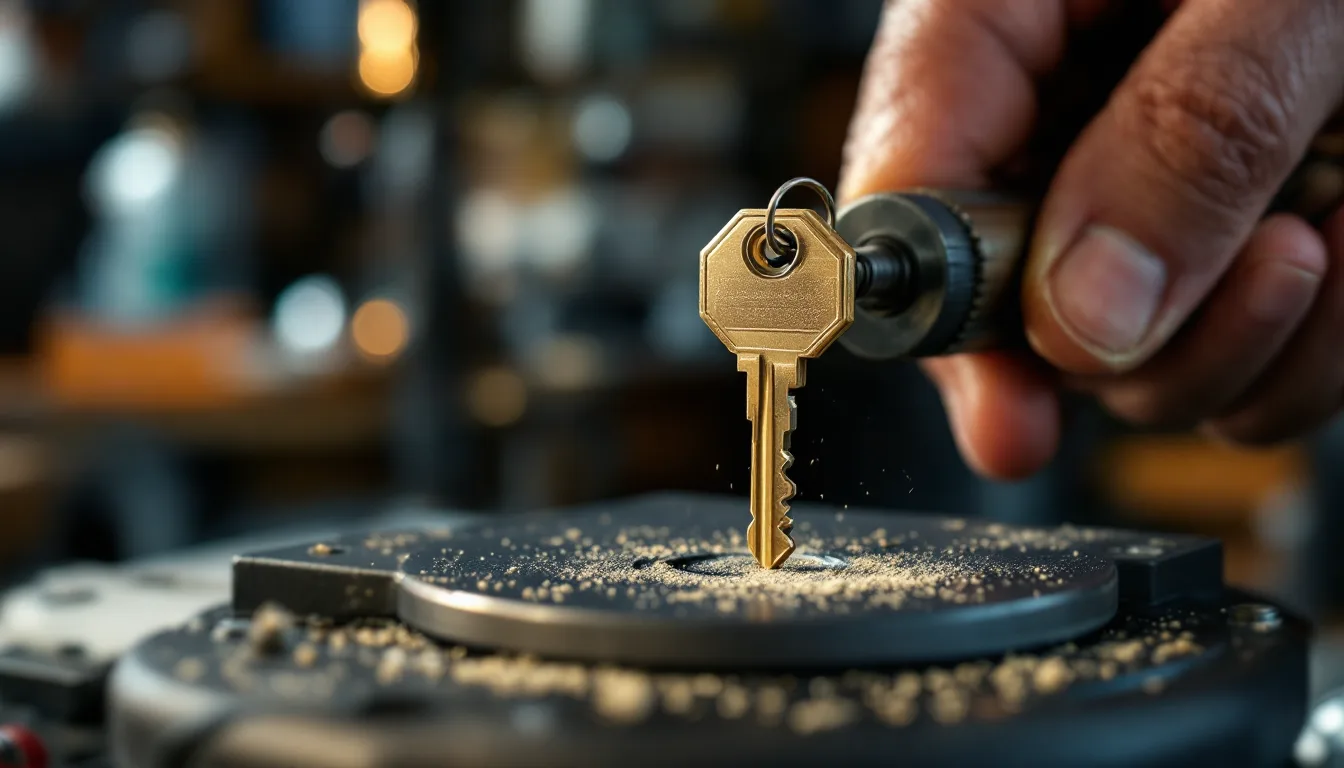
What does key duplication involve, and when is it worth doing properly?
Key duplication sounds like the simplest job a locksmith does, and for an ordinary house key it often is. But a copy is only as good as the cutting, the blank it was cut on, and the key it was traced from. A copy that almost fits is worse than no copy at all, because it works on a good day, sticks on a bad one, and eventually snaps off in the cylinder or wears the pins inside your lock.
People usually come to us for a few ordinary reasons. A new roommate is moving in. A landlord wants a set for a maintenance file. A family wants a spare house key to leave with a neighbor instead of hiding one under a planter. An office manager needs six copies of the suite key for a growing team. Someone has finally noticed that their only mailbox key is nearly worn smooth. All of these are good reasons to copy a key before you are locked out, not after.
We are a storefront at 10740 Wilshire Blvd in Westwood with mobile service vans, and we have been in business since 1987. Duplicating keys is one of the oldest parts of the trade, and we treat it as precision work rather than a counter chore.
How do we copy a key, step by step?
The process is not complicated, but each step is where a bad copy either gets prevented or gets made. Here is how we handle a typical duplicate.
- Look at the original. We check the key for wear, bends, and cracks before cutting anything. A badly worn original produces a badly worn copy, and we will tell you if yours is past the point of being a good pattern.
- Identify the keyway and match the blank. The blank has to fit the lock's keyway profile, not just look similar. Many keys appear identical until you hold them side by side, and the wrong blank is a common cause of copies that will not turn.
- Cut the copy. We trace the original's depths and spacing onto the new blank and remove the burrs left from cutting. Burrs are small, but left on, they drag against the pins and shorten the life of your lock.
- Test it in the lock if we can. A copy that matches the original on a bench can still bind in the actual cylinder. If the lock is available, we try the key in it. If it is not, we tell you plainly that it is untested.
- Hand it over with advice. If the copy turns rough, we recut or adjust it. If the lock itself is the real problem, we say so rather than sending you off with a key that fights the cylinder.
Locked out or need a locksmith now?
We answer around the clock, every day of the year.
Call (213) 577-1366Which keys can we duplicate: house, apartment, office, mailbox and deadbolt?
Most everyday keys can be duplicated without any special process. The categories we see most often are below, and each has its own small quirks.
- House key copy: standard residential keys for front doors, back doors, and side gates. Most are straightforward, and we can make several at once if you are handing keys to family members.
- Duplicate deadbolt key: deadbolts often use a different keyway from the knob lock on the same door. If your entry has a knob and a deadbolt on separate keys, bring both, or tell us which one you need. If both work on a single key, you will want to confirm the copy operates both.
- Apartment key copy: building leases sometimes restrict copying of unit keys or entry fobs. We copy standard unit keys when the key is not marked or restricted, and we will tell you when a key needs authorization from the property manager before we proceed.
- Office key duplication and commercial key duplication: suite doors, file cabinets, desk drawers, and storage rooms. Commercial keys are often part of a larger system, which changes what we can copy without authorization (more on that below).
- Mailbox key duplication: the small keys for mailbox banks are easy to lose and easy to wear out. We can copy many of them, but some mailbox locks are part of a building-controlled set, so we may need to talk to the property manager first. If a mailbox lock is damaged rather than just missing a key, that is a mailbox lock replacement job, not a copy.
What about high security and restricted keys?
Not every key is meant to be copied freely. Restricted key duplication exists because some keyways are controlled on purpose: the manufacturer limits who can get blanks, and the key is issued only to a verified owner. The point is that a stamped 'Do Not Duplicate' marking on a key is a request, not a lock, but a properly restricted system is actually protected by its keyway and its authorization process.
For high security key duplication, expect a more careful conversation. We will ask which lock the key belongs to, whether you hold the authorization card or account paperwork, and who the registered owner is. Some of these keys can be duplicated with proper authorization. Others can only be ordered through the manufacturer or dealer, and that takes longer than a cut at a counter. We will not pretend otherwise, and we will not cut a restricted key on a look-alike blank just to get you out the door, because it will not work the way you expect.
If you are weighing whether a restricted system is worth the added hassle, our high security locks page explains what that protection does and does not do. The short version: it controls who can make keys, which matters most in buildings with many users or a lot of turnover.
Locked out or need a locksmith now?
We answer around the clock, every day of the year.
Call (213) 577-1366Why do some copies fail, and how do you avoid it?
Most failed copies come from a handful of causes, and almost all of them can be avoided.
The first is copying a copy. Every generation of duplicate adds a little error. If your only key is already a duplicate made at a hardware store kiosk, the next copy inherits and adds to that drift. If you can, start from the original key or from a clean, well-cut master. If your original is lost, a locksmith can often cut a key to your lock directly, which is a different job from duplication.
The second is a worn original. Keys wear where they ride against the pins every day. A copy of a worn key reproduces the wear. We would rather tell you the original is too far gone and suggest a fresh key or a rekey than cut a copy that sticks.
The third is the wrong blank or an unclean cut. Blanks look similar and are not interchangeable, and burrs left on a fresh cut chew up pins.
A quick habit worth building: after any new copy is made, try it in the lock right away, with the door open. A key that turns roughly today will turn worse in three months.
- Try each new copy in its lock before you leave the area.
- Keep one original or a well-cut master as a pattern and do not use daily-carry keys for copying.
- If a key needs jiggling or a firm push to turn, bring it and the lock to us before it breaks.
What affects the cost of key duplication?
We do not quote numbers on a web page, because the honest answer depends on the key in your hand. Here is what moves the cost up or down, so there are no surprises when you call.
The type of key is the biggest factor. A common residential blank is the lighter-cost end of the work. Keys with unusual keyways, restricted blanks, or high-security designs involve harder-to-source blanks, more careful cutting, and sometimes authorization steps, and that is reflected in the cost. Quantity matters too: a batch of identical copies is usually the more economical route per key than coming back repeatedly for one at a time.
Other factors include whether the original is in good enough shape to copy cleanly, whether we need to match a worn key by hand, and whether you are coming to the storefront or asking for a van. Mobile key duplication includes the travel and the visit, which a counter cut does not. Timing can also play a part when the call comes outside normal hours.
The most useful thing you can do is describe the key over the phone, or send us the brand stamped on the head if there is one. We will tell you what category it falls into and what the process will look like before you commit to anything.
Locked out or need a locksmith now?
We answer around the clock, every day of the year.
Call (213) 577-1366Can you come to me for mobile key duplication?
Often, yes. Our vans carry a range of common blanks and cutting equipment, so many standard keys can be duplicated at your door, your office, or your building lobby. That is useful for property managers who need sets cut for several units at once, for offices that cannot spare someone to leave, and for anyone who simply cannot get across town with a key.
The honest limit is this: a van cannot carry every blank for every lock. Unusual keyways, restricted blanks, and some high-security keys may need to be cut at the storefront or ordered. When you call, we will tell you straight whether the key can be done on-site or whether it makes more sense to bring it in. Our mobile locksmith page covers how the vans work more generally.
For many people in Los Angeles, though, the storefront is the simpler answer. The shop at 10740 Wilshire Blvd is about a mile from the center of the city's west side, so if the key is portable, bringing it in is often the lighter-cost route. Call first at (213) 577-1366 and we will tell you which way makes sense.
Key duplication around Westwood, Palms, Koreatown and the rest of Los Angeles
Central and west Los Angeles has a housing mix that shapes what people actually ask us to copy. Renters outnumber owners across most of the central city, and that means a steady stream of apartment key copy requests: new roommates in the very large stock of mid-century apartments and dingbats in Palms, Sawtelle and Koreatown, and extra sets for family members who need access. In a typical building like that, there is often a unit key, a building entry key, and a mailbox key, and they are three different things. Bring all three if you want complete sets, and ask your property manager which of them may be restricted.
Around UCLA and Westwood Village, student housing is the clearest example. Roommates change, semesters turn over, and keys get passed around or lost. A spare unit key cut before a lockout is far easier than dealing with a locked door at an odd hour, and if you are already in that situation, our apartment lockout page is the place to start. The same logic applies in the 90024 ZIP and nearby 90025 and 90064.
Along the Wilshire Corridor through Westwood, the HOA-managed condominium high-rises often use controlled-access entries, intercoms, and mailbox banks. Those systems can come with their own rules about who may copy keys and fobs, so check with your HOA or management first. Mailbox key duplication in these buildings is common and usually simple, but the lock may belong to the building, not you.
In Mid-Wilshire and the older flats, 1920s and 1930s Spanish Colonial Revival and Tudor homes (including those in the 90036 and 90010 areas) often still carry original mortise locksets and mid-century hardware. Old keys for these locks can be worn or oddly shaped, and a copy needs more care than a modern blank. If one of those keys is your only one, copy it before it wears further. Postwar single-family homes in Mar Vista and Rancho Park tend to have more standard residential hardware, which is generally the easier case for duplication.
Downtown's loft conversions in early-1900s commercial buildings, and the offices of Century City, bring the commercial side of the work. Office key duplication in a tower suite or a converted loft may involve a keyed system managed by the building, which leads naturally into the next point.
Locked out or need a locksmith now?
We answer around the clock, every day of the year.
Call (213) 577-1366What if my office or building uses a master key system?
Commercial key duplication has one more wrinkle: many offices and multi-unit buildings run on a master key system, where one key opens many doors and each door also has its own key. Those keys are typically restricted on purpose, and for good reason. If anyone could copy the top-level key at a kiosk, the system would be pointless.
If you manage a suite or a building and need more keys cut, the cleanest route is to work through whoever holds the system's records, and we can help with that. If the system is old, poorly documented, or has too many keys floating around, it may be time to look at a master key system rework instead of just cutting more copies. For businesses with broader needs beyond keys, our commercial locksmith page covers the rest.
Why call Wilshire Lock & Key for duplicate keys?
There are plenty of places to get a key cut. Here is what we offer that a kiosk does not.
We have been doing this since 1987. David, the owner and lead technician, oversees the work, so the person who knows the trade is behind the counter and the van. We are one company, with a storefront and our own mobile vans, not a call center passing your job to whoever is nearest. That matters most when a key is unusual, because the person you talk to is the person who handles it.
We will also be honest when a copy is the wrong answer. If a key is badly worn, if a lock is failing, or if too many unknown copies are out in the world, the better fix may be lock rekeying so that old keys stop working and a clean set takes over. We would rather tell you that than cut another copy that solves nothing.
One practical note: California requires locksmith companies to hold a BSIS LCO license, and you should ask any locksmith you hire for it, especially for restricted or high-security work. It is a fair question and a reasonable thing to expect a straight answer to.
Frequently asked questions
Can you copy a key that says 'Do Not Duplicate'?
That stamp is a request, not a technical barrier, and it does not by itself stop a key from being copied. Whether we copy it depends on the key and who owns it. If it belongs to a restricted system, we need proper authorization. If it is a standard key from a property you control, we will talk through it with you. Call (213) 577-1366 and describe the key.
How do I get a spare house key made?
Bring the key that works best, ideally the original rather than a copy of a copy. We match the blank to your keyway, cut it, remove the burrs, and test it in the lock if we can. If you cannot come in, ask about mobile key duplication and we will tell you whether a van can handle your key.
Can I copy my apartment key without telling my landlord?
It depends on your lease and the key. Many standard unit keys can be copied, but some buildings restrict copying, especially for entry keys, fobs, and master-keyed doors. Check your lease or ask your property manager. If the key is marked or restricted, we will tell you it needs authorization before we proceed.
Do you duplicate mailbox keys?
Often, yes. Many mailbox keys can be copied without trouble. In some buildings, though, the mailbox lock belongs to the property or the postal arrangement and may be controlled. If the lock itself is damaged or the key is gone entirely, that is a replacement job rather than a copy.
Can you duplicate a high security or restricted key?
Sometimes, with authorization. Restricted keyways are controlled on purpose, so we usually need proof of ownership or account paperwork, and some blanks have to be ordered rather than cut right away. We will not cut one on a look-alike blank, because it will not work properly. Tell us the lock and key markings when you call.
Why does my new copy stick or turn rough?
Common causes are a worn original, a copy made from another copy, the wrong blank, or leftover burrs from cutting. Sometimes the lock is the problem, not the key. Bring both the key and the lock if you can, and we will tell you whether to recut the key or look at the lock.
Can you copy a car key?
Plain metal car keys can often be copied like any other key, but many modern keys have chips or are tied to the vehicle's system, and what is possible varies by make, model, and year. We confirm by VIN or in person rather than guess, and some cases may be dealer-only. For that kind of work, see our car key replacement page.
I manage rental units. Can you cut multiple keys at once?
Yes, batches are a normal part of the work, and they are usually the more economical route per key than one-offs. For turnover-heavy properties, our locksmith for landlords page covers keys, rekeys, and records together. Tell us how many keys and which locks, and we will plan the visit.
More locksmith help in Los Angeles
Key Duplication near Los Angeles
Reviewed by David, Owner & Lead Technician, Wilshire Lock & Key — in the locksmith trade since 1987.
Last updated 2026-10-11.