
What does a mobile locksmith actually do?
A mobile locksmith brings the shop to you. Instead of you driving to a storefront with a dead key or a stuck lock, a technician arrives in a van stocked with the tools, hardware, and key-cutting equipment to solve the problem where it happened. That might be a front porch, a parking structure, a shoulder of the road, or the back door of a shop.
The work covers more than opening doors. Getting you back inside is the most common reason for the call, but the same van handles rekeying a lock after a lost key, replacing worn or damaged hardware, cutting keys, pulling a broken key out of a cylinder, and sorting out a lock that has started to stick or refuses to turn. What we can do on a given call depends on the lock, the door or vehicle, and what we find when we look at it.
This page explains the craft behind that service: how a call actually unfolds, what changes the job, where mobile work reaches its limits, and how to tell a real locksmith from a lead-generation operation. If you are locked out right now, skip the reading and call (213) 577-1366. A person answers, any hour.
What situations lead to a mobile locksmith call?
People rarely plan to call a locksmith. The call usually comes at an inconvenient moment, and the situation tells us a lot about what the van needs to carry. These are the situations we hear most often:
- Keys locked inside a house, apartment, or office, with the door pulled shut behind you.
- Keys locked inside a car, sometimes with a child, a pet, or a running engine involved, which changes how urgent the call is.
- A lost or stolen key, where the real concern is not just getting in but making sure the old key no longer works.
- A key snapped off in a lock or ignition, with part of it still stuck inside.
- A lock that has gone stiff, loose, or unreliable and finally refuses to turn.
- A break-in or attempted break-in that damaged a door, frame, or lock and leaves the property unsecured.
- A move-in, a breakup, or a change in tenants or staff, where the locks should be changed before anyone else holds a copy.
- A business that cannot open because a lock, exit device, or storefront door has failed.
How does a mobile locksmith job work, step by step?
Every call is a little different, but the sequence is steady. Doing it in the right order is what separates a clean job from one that leaves you with a damaged door.
- You call (213) 577-1366 and talk to a person. We ask where you are, what is locked or broken, what kind of door, lock, or vehicle it is, and whether anyone is in danger or exposed. Make and model details for a car matter here, and the type of lock matters for a building.
- We tell you what we expect the job to involve and what will influence the cost before anyone drives out, so the call isn't a surprise when the van arrives.
- The technician arrives and, before touching anything, asks for proof that you have the right to be let in: ID that matches the address, a lease, a vehicle registration, or similar. We do this on every call. It protects you as much as anyone else.
- We look at the lock and the door. A pro checks the brand and type of lock, the condition of the latch and strike, whether the door is deadbolted or only latched, and any sign of earlier damage. That look decides the method.
- We use the least destructive method that works. If the lock can be opened without harming it, we open it without harming it. Drilling or cutting is a last resort, and we say so before doing it.
- Once you are in, we check that the lock still works properly, because a lock that was opened badly can be left half-broken. If it needs rekeying, repair, or replacement, we explain the options and let you decide.
- We test the final result with you: key turns smoothly, door closes and latches, deadbolt throws fully. Then we talk about the bill, which should match what we discussed on the phone unless the job turned out different from the description.
Locked out or need a locksmith now?
We answer around the clock, every day of the year.
Call (213) 577-1366What's in the van, and what methods do we use?
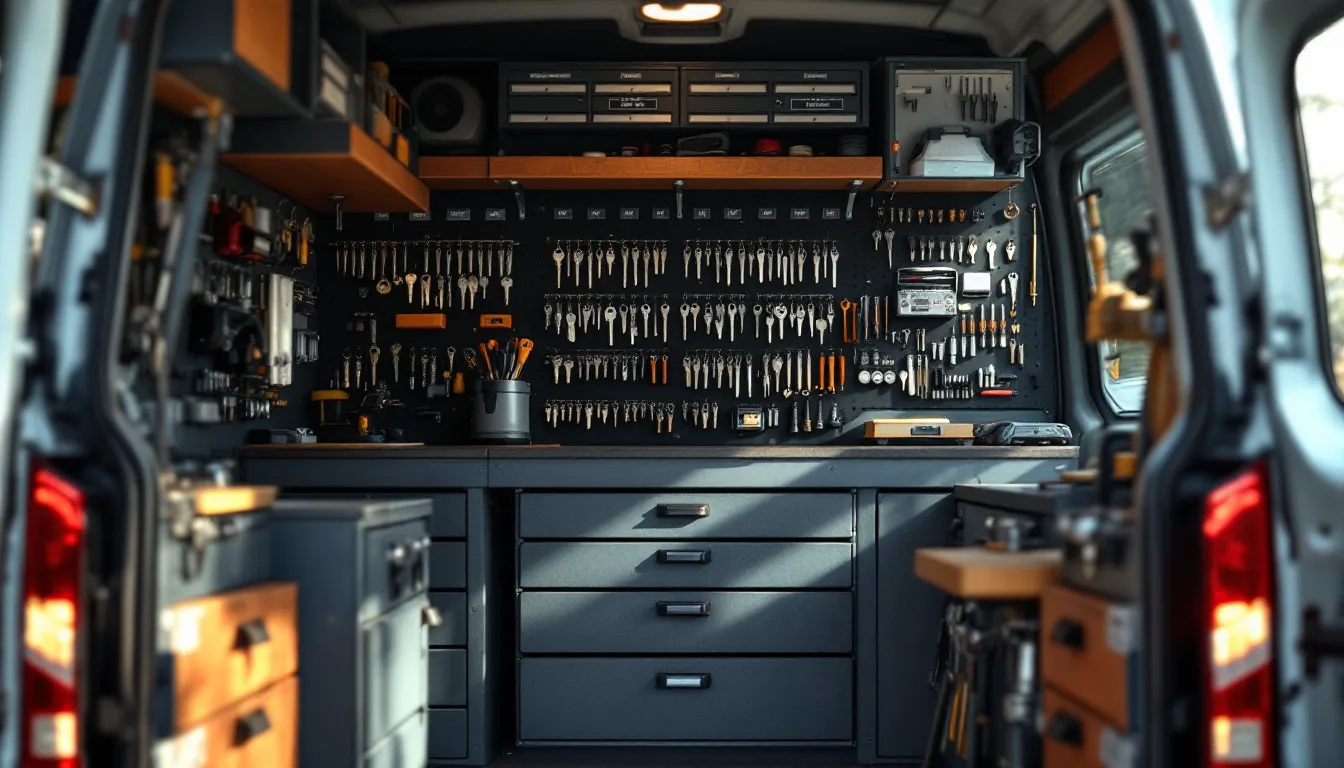
A mobile locksmith van is a working workshop, and the contents say a lot about how a company operates. A van with only a few picks and a drill is a van built for forced entry. A well-stocked one is built to open things without damage and then leave the lock in good shape.
Most non-destructive entry comes down to understanding how the lock works. Pin tumbler cylinders, the type in most residential deadbolts and knobs, can often be opened by manipulating the pins individually with picks and a tension tool. Latches on standard spring-bolt locks can sometimes be slipped with a thin tool, or opened with a bypass technique that never touches the cylinder. Which of these applies depends on the lock design and on how the door was hung and fitted.
Beyond entry, the van carries what you need for the second half of the call:
- Key-cutting equipment, so a replacement key can be made on site instead of sending you to a shop.
- Rekeying supplies, including pins, springs, and plug followers, for changing which key works a lock without replacing the hardware.
- Replacement cylinders, deadbolts, and handle sets in common finishes and sizes, for locks that are worn, damaged, or beyond repair.
- Extraction tools for broken keys, thin and precise enough to draw out a fragment without pushing it further in.
- Vehicle entry tools designed to open a car without scratching paint or tearing weatherstripping, and key equipment for vehicles we can support.
- Basic door and frame hardware, because a failed lock is sometimes really a failed strike plate or loose latch.
How do the lock, the door, or the vehicle change the job?
The headline problem, I'm locked out, can mean very different work depending on what's in front of us. A few variations come up constantly.
Residential deadbolts and knob locks are the most familiar territory. A standard pin tumbler deadbolt is usually straightforward to open without damage and to rekey afterward. High-security cylinders are built to resist picking and drilling, which makes entry slower, and sometimes the key blanks are restricted, which affects how copies and replacements are made.
Apartment and multi-unit doors add a wrinkle. There may be a building master key, a property manager with authority over the lock, or a lease clause about who may change locks. We often need to confirm that you are the tenant, and sometimes that the building allows the change, before touching the hardware.
Commercial doors can mean panic bars, exit devices, closers, and storefront glass doors with specialized locks. These are different from residential hardware and sometimes require different parts. If the door is part of a fire exit path, that affects what we can change.
Vehicles are where the details matter most. Older mechanical keys are simple to cut, while transponder keys, key fobs, and push-button start systems contain electronics that must be programmed to the car. Whether we can cut and program a replacement on the roadside depends on the vehicle and its security system. We confirm by VIN and in person rather than guess. Some vehicles require dealer-held codes or dealer-only equipment, and when that is the case we tell you plainly instead of letting you wait on something we can't deliver.
Smart locks and keypads bring their own questions: dead batteries, forgotten codes, and a lock that has lost sync with its app. Often the fix is a mechanical override or a battery swap, but not always.
Locked out or need a locksmith now?
We answer around the clock, every day of the year.
Call (213) 577-1366What can a mobile locksmith not fix?
Honesty about limits saves you time and money. A mobile locksmith is excellent at locks and keys. We are not the right call for everything that happens to involve a door.
If the problem is a warped door, a cracked frame, or a rotted jamb, a lock change will not cure it. We can secure the opening temporarily and tell you what kind of carpenter or door repair you need next. If a vehicle's key system can only be programmed at a dealer, we will say that and not pretend otherwise. If a lock has been tampered with as part of a crime, we can make the property secure again, but the report to police and your insurer is yours to handle, not ours.
Some situations belong on a different service page, and the right page can change what gets sent. If you are in the middle of an urgent, unsafe, or unusual situation, our emergency locksmith service is built around that. If your key has snapped off, broken key extraction covers the tools and the technique. For specific entry problems, we have dedicated pages for car lockouts and house lockouts. Those pages go deeper on one problem; this one covers the whole mobile approach.
One more limit: we won't open something for someone who can't show a right to it. If we can't confirm that, we won't do it, however sympathetic the story. That is not a policy we bend.
What affects the price of a mobile locksmith call?
We don't publish numbers on this page because the honest answer depends on the call. What we can do is tell you what moves the cost up or down so you can judge any quote you receive, ours included.
Mobile service has a travel component, and the distance and conditions involved are part of it. The time of day matters too: a call in the middle of the night means someone has left their bed, and that is reflected differently than a daytime appointment. The type of lock is a major factor. A basic knob lock is a different job from a high-security cylinder or a commercial exit device. The method matters: opening a lock cleanly and leaving it intact usually costs less than replacing hardware that had to be destroyed to get in.
Then there is what you need after the door opens. A simple lockout may end with nothing more than an open door. A lost key may call for rekeying, new keys, or a full lock replacement, each with its own cost. Vehicle keys vary widely, because programming electronic keys takes specialized equipment and time, and some cars need more than others.
For the general picture of how we approach cost, see our pricing page. On the phone, ask any locksmith, us included, what a quote covers and what could change it. A company that won't explain the quote is telling you something.
Locked out or need a locksmith now?
We answer around the clock, every day of the year.
Call (213) 577-1366How do you tell a real mobile locksmith from a lead-generation operation?
Searching for a locksmith near you can turn up listings that look local but are really call centers. The person who answers may never touch a lock. They collect your details and pass the job to whoever is available, and the price you hear on the phone is not always the price on the doorstep. This is a well-known problem in the trade, and it is worth protecting yourself against.
A few questions help:
- Ask for the company name, answered by name. If the person on the phone hesitates or uses a generic greeting, that is a flag.
- Ask where the business is based and whether it has a physical address. A real storefront can be visited.
- Ask whether the person arriving is an employee or a subcontractor dispatched through a network.
- Ask what the quote includes and what could change it, before the van is on its way.
- Ask for the company's California locksmith license. California requires locksmith companies to hold a license from the Bureau of Security and Investigative Services (BSIS), called a Locksmith Company (LCO) license. Any locksmith should be able to give you that number, and you can check it with the state.
Why call Wilshire Lock & Key for mobile service?
We have been in business since 1987, and we have a storefront at 10740 Wilshire Blvd in Westwood alongside our mobile vans. That combination matters. The shop means there is a place with a name on the door, a workbench, and stock. The vans mean the work comes to you.
We are one company, not a dispatch network. When you call (213) 577-1366, you are calling us, and the technician who comes out works for us. There is no middleman between your call and the person at your door, which is how quotes stay consistent and how mistakes get owned.
David, the owner and lead technician, oversees the work. That means the standards for how a lock is opened, how a door is treated, and how a job is explained to a customer come from someone who has done the work himself, not from a script. The phone is staffed around the clock, every day of the year, because lockouts don't keep business hours.
We would rather tell you honestly that a job is outside what a van can do than send someone out to improvise. That includes recommending a lighter-cost option when one exists, such as rekeying a good lock instead of replacing it.
Locked out or need a locksmith now?
We answer around the clock, every day of the year.
Call (213) 577-1366Where do our mobile locksmith vans go?
Our vans cover 140 cities across Los Angeles and Ventura counties. That range includes dense urban neighborhoods, residential suburbs, business corridors, and the roads connecting them, and the work changes with the setting: older doors and mixed hardware in some places, newer buildings with commercial-grade locks in others, and vehicles of every age in parking lots, driveways, and roadsides.
If you want to see how this service works in a specific place, we have pages built around individual cities. Los Angeles and Santa Monica are two examples. You can browse everywhere we serve on our locations page.
If you're not sure whether we reach you, call (213) 577-1366 and give us the address. We'll tell you straight.
Frequently asked questions
What is the difference between a mobile locksmith and a locksmith shop?
A locksmith shop expects you to come to it. A mobile locksmith comes to you in a van carrying tools, hardware, and key-cutting gear. We do both: our storefront is at 10740 Wilshire Blvd in Westwood, and our vans handle calls at homes, businesses, and roadsides.
Can you make a new key on the spot?
For many locks, yes. Standard mechanical keys can often be cut from the lock itself if the original is lost. Restricted or high-security keys, and electronic car keys, depend on the system. We tell you what is possible once we know the lock or the vehicle.
Will you damage my lock or door getting in?
Not if it can be avoided. We start with non-destructive methods and only move to drilling or cutting if nothing else works. If that happens, we explain why and what replacement is needed before we proceed.
What do I need to show before you open a door or car?
Proof that you have the right to be there, such as ID matching the address, a lease, or the vehicle registration. We ask on every call. It protects you from someone else being let into your property.
Can you program a car key at the roadside?
Sometimes. It depends on the vehicle and its security system, so we confirm by VIN and in person rather than promise from the phone. Some vehicles need dealer-held codes or dealer-only equipment, and if yours is one of them, we say so honestly.
Do you only work during business hours?
No. Our phone is answered 24 hours a day, seven days a week, year-round, at (213) 577-1366. Lockouts and break-ins don't follow a schedule, so we don't either.
Is a mobile locksmith more expensive than driving to a shop?
The call includes travel, which a shop visit does not. But if you are locked out, you often can't drive anywhere, and a shop can't open your car from across town. What the call costs depends on the lock, the time, the distance, and the work needed, which is why we explain it before dispatching.
How do I know a locksmith is legitimate?
Ask for the company name, a physical address, and a California BSIS locksmith company (LCO) license number. Ask whether the technician is an employee or a subcontractor. A real locksmith answers those questions without fuss.
What if I'm not sure which service I need?
Call and describe what happened. Whether it is a lockout, a broken key, or a lock that won't turn, we'll help you work out the right approach. You can also look through our full list of services or reach us through the contact page.
Mobile Locksmith near you
Related services
Reviewed by David, Owner & Lead Technician, Wilshire Lock & Key — in the locksmith trade since 1987.
Last updated 2026-10-12.