
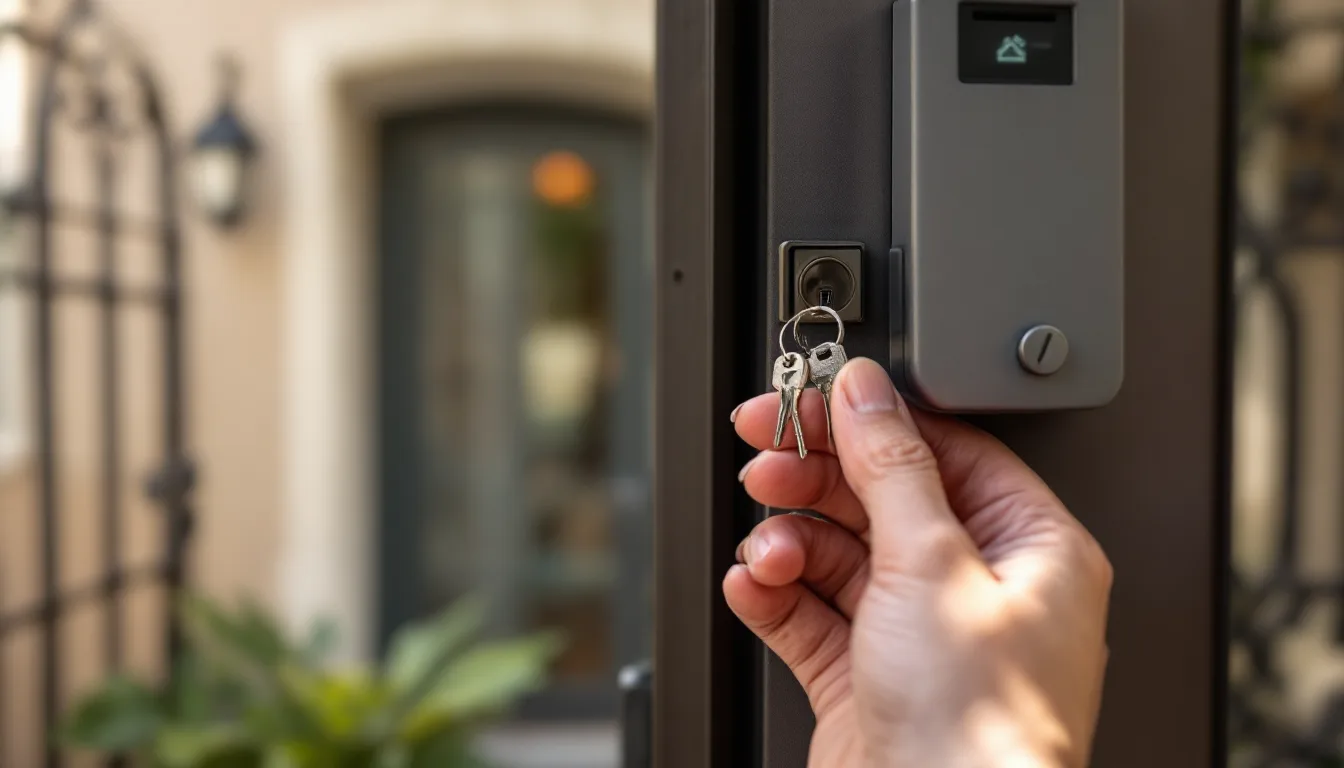
Why do people call a mailbox locksmith?
A mailbox lock is one of those things nobody thinks about until the key is gone. Then it becomes a daily irritation, because mail keeps arriving whether you can open the box or not. Bills, replacement bank cards, medical notices and packages slips pile up behind a door you can't open.
Most of the calls we take fall into a handful of situations, and each one is a slightly different job:
- You lost the only key, or the spare is somewhere in a moving box you haven't found yet.
- You moved into a unit and the previous tenant never handed over a key, or you simply don't know who else still has one.
- A key snapped off in the cylinder, or it turns but the door won't release.
- The lock is worn, corroded or sticking, usually from years of sun, moisture and grit working into a small mechanism nobody ever cleans.
- The box was pried, struck or tampered with, and the lock or door no longer closes the way it should.
- A property manager is taking over a building, or a tenant turnover has gone badly, and wants a whole bank of boxes on a fresh set of keys.
How is a mailbox lock replaced, step by step?
The work looks small, and the lock itself is small, but doing it properly means a few decisions in the right order. This is how we approach a typical mailbox visit, whether the van pulls up to a single-family home or a multi-unit building.
- Confirm who we're helping. We ask whose box it is and want to see ID or some proof that you live there or manage the property. Mail is protected, and we won't open a box for someone who can't show a connection to it.
- Identify the box and the lock. We look at the box type, any manufacturer markings, the face of the lock and the style of key. Is it a cam lock, a wafer or pin tumbler cylinder, or a tubular lock? If a key code is stamped on the lock face, we note it, because that can speed up cutting a key.
- Decide between repair and replacement. A lock that is only stiff or dirty may need cleaning and a dry lubricant, not a new part. A lock with a lost key, a damaged cylinder or heavy wear is usually better replaced. We tell you which one we think it is and why.
- Open the lock with as little damage as possible. Where the lock allows it, we use picks or a decoding method to open it without destroying anything. If the lock is too worn or damaged for that, we drill the cylinder at a controlled point, which sacrifices the old lock but protects the door and frame.
- Remove the old lock and measure it. Most mailbox locks are held by a nut or a retaining clip behind the door. Before we pull the lock, we note the cam style, its length and its orientation, because the cam has to catch the frame exactly where the old one did.
- Fit the new lock. We match the barrel length, the thread or clip type and the cam, then tighten and orient it so the door pulls shut flush. If an exact match isn't on the van, we adapt with a compatible cam or a universal lock rather than force a bad fit.
- Cut keys and test. We cycle the lock repeatedly with each key, check that the cam fully engages and that the door doesn't rattle or hang open, and hand you the keys. We'll also tell you to get a spare made before you need one.
Locked out or need a locksmith now?
We answer around the clock, every day of the year.
Call (213) 577-1366What kinds of mailbox locks are there, and how do they change the job?
Mailbox hardware is more varied than most people expect. The type of lock decides what tools we use, how the lock comes out, and whether a replacement can be put in the same afternoon or needs sourcing. Here are the variations we see most often:
- Cam locks. The most common type on apartment mailbox banks and many wall-mounted boxes. A small barrel with a flat metal cam on the back that swings behind the frame. Replacement is usually in place, but the barrel length and cam shape have to match.
- Wafer tumbler locks. Simple, common and often worn by the time they fail. These are usually quick to open non-destructively, but the key can wear down and break off in them.
- Pin tumbler cylinders. Seen on some higher-quality boxes and parcel compartments. They resist casual tampering better and are somewhat more involved to open or replace.
- Tubular round-key locks. Less common on mailboxes, found on certain parcel lockers and older commercial units. They need dedicated tubular tools.
- Padlock and hasp setups. Some curbside and standalone boxes use a hasp with a padlock rather than a built-in lock. That is a simpler swap, though a rusted hasp can complicate it.
- Cluster and community box compartments. Each compartment has its own small lock on a shared structure, sometimes with a separate door for parcels or carrier access. Which lock is ours to replace depends on who owns the unit, which we cover below.
Older and discontinued boxes
Age matters more than brand. A box that has been bolted to a wall for decades may have a lock that is no longer manufactured, a corroded retaining nut, or a door that has warped slightly. In those cases we work from the dimensions of the old lock and choose a compatible replacement. Sometimes that means a different cam, a spacer, or a different style of lock that fits the same hole.
Occasionally the hole in the door has been enlarged or damaged by a previous pry attempt, and no lock will sit right. We say so plainly instead of installing something that will loosen in a month.
What about a lost mailbox key or a key broken off in the lock?
Lost key is the most common reason we're called, and the answer depends on whether the lock can be opened without damage. For many cam and wafer locks, it can. We open it, assess the lock, and either put in a new lock with fresh keys or, if the lock is in decent shape and a key can be cut for it, do that. Replacement is often the simpler and cleaner route, particularly when the lost key might have been on a ring that included your address.
A broken key is a different job. The snapped piece sits inside the cylinder and blocks the lock. We use thin extractor tools and hooked picks to catch the broken piece and draw it out, or in some wafer locks we can turn the plug with the piece still in place. If the lock is worn, the key was already bent, or the fragment is seated too deeply, we replace the lock instead of risking further damage to the box.
What helps, and what doesn't, before we arrive:
- Stop forcing the key. Extra torque turns a clean break into a deeper one.
- Don't pour glue, superglue or oil into the keyway. It can make extraction far harder.
- Don't pry the door open. A bent door causes more trouble than the lock ever did.
- Keep the broken piece if it came out. It tells us a lot about the lock and the key.
Locked out or need a locksmith now?
We answer around the clock, every day of the year.
Call (213) 577-1366Apartment buildings, HOAs and cluster boxes: who owns the lock?
This is the question that decides whether we can do the job. Private apartment mailbox banks, and many cluster boxes installed by a builder or a property owner, belong to the property. The owner, manager or HOA can authorize lock replacement, and that's work we do regularly. If you manage a building, we can work through a bank row by row, label each compartment's key set, and make sure each tenant gets the right keys.
Boxes owned by the US Postal Service are different. The Postal Service controls the locks and keys on its own units, and those changes normally go through your local post office. We won't take a job that isn't ours to take, and we'll tell you honestly if that's what you're dealing with.
Not sure whose box it is? Call and describe it, or send us a photo. In most cases we can tell you in a short conversation whether it's a job for us or for the post office.
What mailbox lock replacement can't fix
We'd rather be upfront about the limits than sell you a lock that won't solve the actual problem.
- USPS-owned units and carrier-access locks. Those belong to the Postal Service and aren't ours to change.
- A bent, rusted-through or broken door or frame. A new lock can't hold in damaged metal. The honest fix may be a replacement door or a new box.
- Suspected mail theft. A new lock stops a lost key from being used, but it won't investigate a theft. Report it to your local post office and, if needed, the police.
- A door lock problem that you've mistaken for a mailbox problem. If what's really failing is your front door, that's a job for lock replacement, not mailbox work.
- Security beyond what the box was built for. A mailbox is a light-gauge metal box. A better lock helps, but it can't turn a thin door into a vault.
What affects the cost of mailbox lock replacement?
We don't quote numbers on a web page because mailbox jobs vary too much for a number to mean anything. What we can do is explain what moves the cost up or down, so there are no surprises when you call. Our pricing page covers how we approach estimates in general.
- How the lock opens. A lock we can open non-destructively is usually a lighter job than one that has to be drilled.
- Lock type and availability. Common cam locks are simple to source. Older, unusual or higher-security locks take more effort to match.
- How many locks. One box is a single visit. A full bank of apartment boxes involves more locks, more keys and more labeling, even though the work per lock gets more efficient.
- How many keys you want. Extra copies add a small amount of work per lock.
- Broken key extraction. A key snapped deep in a worn lock can take more time than a simple swap.
- Condition of the door and frame. Damage may call for extra repair or a different mounting solution.
- Where and when. Travel distance and after-hours calls are factors, since our line is answered around the clock.
Locked out or need a locksmith now?
We answer around the clock, every day of the year.
Call (213) 577-1366Why call Wilshire Lock & Key for a mailbox lock?
We've been in business since 1987, and a mailbox lock is exactly the kind of small job where experience shows. Knowing a worn cam lock by feel, knowing when a lock is worth saving and when it isn't, and knowing when a job belongs to someone else saves you time and money.
We run a storefront at 10740 Wilshire Blvd in Westwood alongside our mobile vans, so there is a real place behind the phone number, with stock and key-cutting equipment, and a van can come to you. When you call (213) 577-1366, you reach us, not a national dispatch center that sells your job to whichever contractor picks it up. The same company takes the call, does the work and answers for it, and owner David oversees the work.
One more honest point. California requires locksmith companies to hold a BSIS LCO license, and you should ask any locksmith for their license number before work starts. That applies to us too, and it's a fair question from any customer.
Where do we do mailbox lock work?
We serve 140 cities across Los Angeles and Ventura counties, so a mailbox lock call from a quiet residential street or a large apartment complex is covered. You can browse our full service area to see where we work.
If you'd like to see how the service looks for a specific city, these pages are a good start: mailbox lock replacement in Los Angeles, Santa Monica mailbox lock service, mailbox locksmith help in Sherman Oaks and Pasadena mailbox lock replacement. This page is the broader guide to how the craft works, and the city pages go into local detail.
How do you avoid losing mailbox access again?
A few habits prevent most repeat calls. Keep mailbox keys off the ring that has your address on it, so a lost ring doesn't give a stranger both the key and the box. Have at least one spare made when the new lock goes in, and keep it somewhere you'll remember. Our key duplication service covers that if you need more copies later.
Property managers can keep a simple log of which compartment has which key set and who has been issued one. It sounds fussy, but it saves a lot of guessing at turnover. And if a lock starts to feel gritty or the key turns stiffly, don't wait for it to fail. A worn lock is easier to handle before the key breaks than after.
Frequently asked questions
Can you replace a mailbox lock if I don't have any key at all?
Yes, in most cases. We open the lock, either without damage or by drilling if the lock requires it, then fit a new lock and cut keys. We'll ask for ID or proof that you live at the address or manage the property first.
Do I need a new lock, or can you just make me a new key?
It depends on the lock. Sometimes we can open it, read the lock, and cut a key that fits. Often, replacing the lock is the simpler, cleaner choice, especially if your old key may have been lost somewhere that links it to your address. We'll tell you which makes sense for your box.
Will you have to drill my mailbox lock?
Only if opening it without damage isn't workable. Many cam and wafer locks can be opened by picking or decoding. Drilling is the fallback for worn, damaged or unusual locks, and it's done at a controlled point to protect the door.
What should I have ready when I call?
Know roughly what kind of box it is: apartment bank, wall-mounted, curbside or cluster. Describe the lock face and the key if you still have one. A photo helps a lot. Also be ready to say who owns the box and to show ID when we arrive.
Can you do a whole bank of apartment mailboxes at once?
Yes. Property managers and HOAs call us for full-bank work, and we label each compartment's key set so keys go to the right unit. The scope and the amount of keys involved affect the cost, which we'll go over with you before work begins.
Can you change the lock on a USPS cluster or community box?
If the unit belongs to the Postal Service, the lock changes go through your local post office, and we'll say so honestly. If the cluster box belongs to a builder, property owner or HOA, we can usually do the work with the owner's authorization.
Is mailbox lock replacement different from rekeying?
Yes. Rekeying changes the internal pins or wafers so a new key works and the old one doesn't, which suits some cylinder locks. Most mailbox locks are small, inexpensive cam or wafer units where replacing the whole lock is more practical than rekeying it.
Can I call outside business hours about a mailbox?
You can call anytime, since the line at (213) 577-1366 is answered 24 hours a day, 7 days a week. For a mailbox, tell us what's happening and we'll tell you honestly whether it can wait for daytime or needs a visit sooner.
How long will a new mailbox lock last?
That depends on the lock quality and exposure. Boxes in full sun, near irrigation spray or in heavily used buildings wear locks faster. A modest bit of care, like keeping the keyway clean and avoiding forced keys, helps any lock last longer.
Mailbox Lock Replacement near you
Related services
Reviewed by David, Owner & Lead Technician, Wilshire Lock & Key — in the locksmith trade since 1987.
Last updated 2026-10-12.