
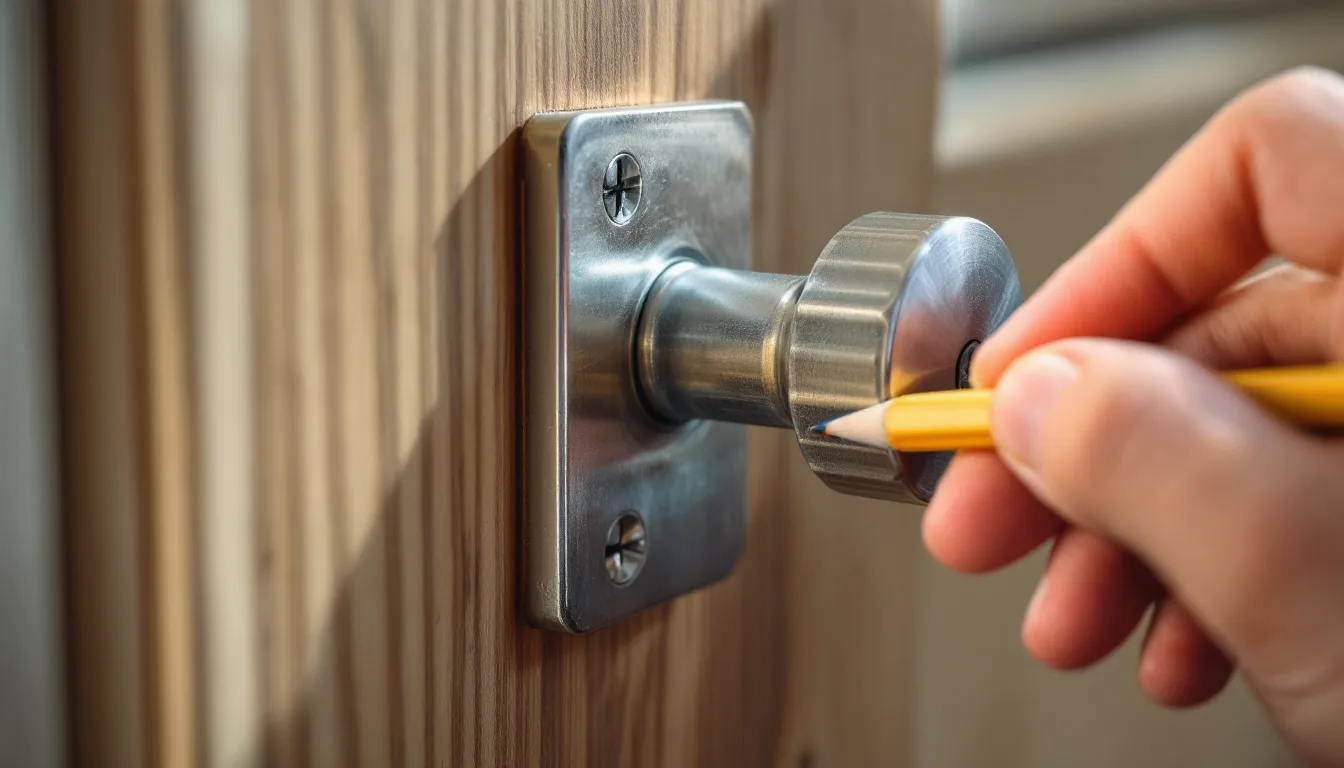
When people call us for a deadbolt
Most deadbolt calls start with one of a few situations. Someone just moved in and has no idea who holds keys. A front door has only a spring latch, the kind a firm shove or a flexible card can defeat. An existing deadbolt has started to stick, spin freely, or refuse the key. Or there has been a break-in, attempted or successful, and the door is splintered and needs to be secure tonight.
Other calls are planned: a remodel with new doors, a landlord upgrading a building, a business turning a back door into a proper entry, or a homeowner who wants every exterior door on one key. Each of these changes the job. A first-time install on a door with no bolt hole is mostly careful carpentry. A replacement in an existing bore is mostly fitting and alignment. A repair after forced entry is often about the door and frame as much as the lock.
Knowing which one you are in tells us what to bring. When you call (213) 577-1366, tell us the door material, whether there is already a hole for a bolt, and what happened. That lets us arrive with the right bits, hardware, and reinforcement instead of guessing at your doorstep.
Single-cylinder or double-cylinder: which belongs on your door?
A single-cylinder deadbolt takes a key on the outside and has a thumbturn on the inside. It is the right choice for nearly every residential door because anyone inside can leave in one motion, with no key to find. If you are not sure which you need, you almost certainly need this one.
A double-cylinder deadbolt takes a key on both sides. Its purpose is narrow: doors with glass, such as sidelights or a glazed panel, close enough to the interior thumbturn that someone could break the glass, reach in, and turn it. A keyed inside cylinder removes that shortcut. The trade-off is serious. In a fire or any emergency, everyone inside needs a key to get out, and a panicked person rarely finds it quickly.
Because of that, many jurisdictions, fire codes, and lease terms limit or prohibit double-cylinder deadbolts on exit doors, especially in rentals and commercial or multi-family buildings. We are locksmiths, not code officials, so confirm with your landlord, HOA, or local building department before you choose one. If the rules allow it, we install it properly. If a thumbturn placed farther from the glass, or a different door treatment, solves your concern without the exit risk, we will say so.
Locked out or need a locksmith now?
We answer around the clock, every day of the year.
Call (213) 577-1366How a deadbolt is installed, step by step
A clean install follows the same order whether the door is new or the lock is a replacement. Skipping steps is how you end up with a bolt that grinds, a key that binds, or a latch that quietly works loose within a few months.
- Read the door before touching the lock. We check the material, thickness, the width of the stile (the solid edge of the door), any existing holes, the condition of the frame, and whether glass sits close to the lock.
- Confirm the hardware with you: single or double cylinder, finish, security grade, and whether the key should match other locks on the property.
- Mark or measure the bore. On a new door we use a template to set the height and the backset, the distance from the door edge to the center of the lock. On a replacement we measure what is already there and confirm it suits the new bolt.
- Drill the face bore with a hole saw and the edge bore with a bit sized for the latch, working from both sides of the door where needed so wood does not splinter. Metal and fiberglass doors get different bits and slower, more careful cutting.
- Cut the faceplate recess with a chisel so the latch plate sits flush with the door edge, not proud of it and not sunk below it.
- Fit the bolt, mount the exterior cylinder, and connect the interior assembly through the door. Mounting screws are tightened evenly and only until snug, because overtightening pinches the mechanism and makes the bolt drag.
- Set the strike. We mark exactly where the bolt lands, drill a deep hole in the jamb, recess the plate, and drive long screws that reach the framing behind the jamb, not just the thin trim.
- Test with the door open and closed. We throw the bolt fully, cycle it repeatedly, try every key from both sides where applicable, and adjust until it moves without lifting, pushing, or pulling the door. Then we hand over the keys and show you how it should feel.
What a professional checks that a quick swap skips
A deadbolt is only as strong as the door and frame around it. This is the part that separates an installation from simply bolting hardware on. Before we call a job finished, we look at several things that rarely get attention.
- Full throw: with the door shut, the bolt should extend its full length into the jamb, not stop short because the hole is shallow or misaligned.
- Door fit: if you have to lift, shove, or slam the door to make the bolt line up, the door has sagged or the hinges have loosened. We tighten or correct that, because the lock will fail in the same place sooner or later.
- Strike anchoring: short screws in a soft jamb are the usual weak point on a forced door. Long screws into the stud make a real difference.
- Gap and bolt exposure: a wide gap between door and frame leaves the bolt exposed. We note it and tell you what would close it.
- Hinge side: loose or short hinge screws let a door be pried despite a good lock.
- Weatherstripping and swelling: seals, paint buildup, and seasonal swelling can interfere with a smooth throw, so we test with the door as it actually closes.
- Hand clearance: the thumbturn has to be easy to grip for everyone who lives there, including kids and older family members.
Locked out or need a locksmith now?
We answer around the clock, every day of the year.
Call (213) 577-1366How door type, hardware grade, and keys change the job
Wood doors are the most forgiving and the most common. Solid-core and hollow-core wood behave differently: hollow-core doors are thin where the bolt sits, so we often fit a reinforcing insert or tell you plainly that the door itself is the limit. Steel and fiberglass doors usually come with a pre-drilled bore, which makes replacement quick but leaves little room for correcting a mistake. Doors thinner than the standard thickness may need an adapter, and some narrow-stile glass or aluminum doors cannot take a standard deadbolt at all and need hardware designed for them.
Hardware grade matters too. Deadbolts are rated by the ANSI/BHMA grading system, where Grade 1 is built and tested to the toughest standard, and Grade 3 is the lightest residential tier. A higher grade generally means heavier internals and a more robust bolt and strike, and it comes with a higher hardware cost. We will explain the difference for your door rather than steer everyone to the most expensive box.
Keys add one more variable. A new deadbolt can often be keyed to match the knob or handle already on the door, though it depends on the brand and keyway, and we confirm in person rather than promise. We can also key several doors alike so one key opens them all. For restricted keyways that block unauthorized copies, see our high-security locks service, and for keypad or app-controlled bolts, see smart lock installation. This page covers doors; vehicle locks are a separate kind of work.
What a new deadbolt cannot fix
We would rather tell you this before the job than after. A deadbolt does not make a weak door strong. If the door is hollow, cracked, or the frame is rotted, the lock will hold while the wood around it gives way. In those cases the right answer is reinforcing or replacing the door or jamb, with a deadbolt as part of the fix, not the whole fix. Glass beside the lock is the same story: a strong bolt does not stop someone breaking the glass and reaching in. No lock is burglar-proof, and we will not suggest otherwise.
Sometimes a new deadbolt is not the right call at all. If your worry is who has keys, such as a former roommate, tenant, or contractor, the lighter-cost route is usually to rekey the lock so old keys stop working, keeping the existing hardware. If your current deadbolt works but sticks, feels gritty, or turns hard, a fix may be all it needs, and lock repair covers that. We would rather do the smaller job and send you on your way than sell you hardware you do not need.
If you are unsure which situation you are in, describe it when you call. Part of our job is telling you whether you need an install, a replacement, a rekey, or a repair.
Locked out or need a locksmith now?
We answer around the clock, every day of the year.
Call (213) 577-1366What affects the price of deadbolt installation?
We do not quote numbers on a web page because the same phrase, new deadbolt, covers very different jobs. What moves the cost is specific and explainable:
- New bore or existing bore: cutting fresh holes in a door takes more labor than swapping a deadbolt into a prepared one.
- Door material: steel, fiberglass, solid wood, and hollow-core each call for different bits, care, and sometimes reinforcement.
- Hardware: security grade, brand, finish, and whether the cylinder is standard or restricted all change the cost of the part itself.
- Single or double cylinder, and how many keys you need cut or matched.
- Number of doors: several doors at one address, especially keyed alike, are planned and handled together.
- Frame and strike work: reinforcing a jamb, replacing a split frame, or repairing a door damaged in a break-in adds work beyond the lock.
- Timing and distance: after-hours and emergency calls, and how far a van must travel, affect the total.
- Special doors: narrow-stile, glass, or unusual doors may need custom hardware or extra fitting.
Why call Wilshire Lock & Key
We have been in business since 1987, and we work out of a real storefront at 10740 Wilshire Blvd in Westwood alongside our mobile service vans. That combination matters. The shop is where hardware, keys, and parts are stocked, and the vans bring that capability to your door.
We are one company. When you call (213) 577-1366, you reach us, any hour of any day, not a call center that sells your job to whoever picks it up. There are no dispatch middlemen between your call and the person who shows up, so the technician at your door is accountable to the same business that answered the phone.
David, the owner and lead technician, oversees the work. You get plain answers about what your door needs, including when the answer is less than you expected. We want you to be able to call again in ten years, because we will still be here.
Where we install deadbolts
We serve 140 cities across Los Angeles and Ventura counties, from our Westwood storefront and by mobile van. You can browse everything we cover on our locations page.
If you want details specific to your area, we have dedicated pages for many cities, including Los Angeles, Santa Monica, and Pasadena. Those pages focus on the local side, while this one covers the work itself. If your city is not named, call anyway, because our coverage is far wider than any short list.
Locked out or need a locksmith now?
We answer around the clock, every day of the year.
Call (213) 577-1366Questions to ask any locksmith before they touch your door
California requires locksmith companies to hold a license from the Bureau of Security and Investigative Services (BSIS), called a Locksmith Company license or LCO. Ask any locksmith for it before work begins, and check it with the state if you want to be sure. That is a fair question for any company, ours included.
Also ask for the full price, and what could change it, before work starts. Ask whether they plan to drill into your door or replace hardware in an existing bore, what grade of deadbolt they are fitting, and whether the strike will be anchored into framing. A company that answers these plainly is a company that is comfortable with its work.
Frequently asked questions
Can you install a deadbolt in a door that has no hole for one?
Yes. We drill the face and edge bores, cut the latch recess, and set the strike in the jamb. It is more labor than replacing an existing deadbolt, but it is routine work on solid wood, solid-core, steel, and fiberglass doors. Very thin or hollow doors may need reinforcement first.
Is a double-cylinder deadbolt a good idea for my front door?
Only in specific cases, usually where glass sits within reach of the inside thumbturn. The drawback is that you need a key to get out in an emergency, and many codes and lease terms restrict them on exit doors. Check your local rules first, then we can talk through the safer alternatives.
How do I know if a deadbolt will fit my door?
It depends on the door thickness, the existing hole sizes, and the backset, which is the distance from the door edge to the center of the lock. Describe the door when you call, or we can measure it in person. Most standard doors fit common deadbolts, but unusual or narrow-stile doors may need special hardware.
Can the new deadbolt use the same key as my other locks?
Often, yes, but it depends on the brand and keyway of the existing lock. We confirm in person rather than promise it over the phone. We can also key several new deadbolts alike so one key opens every exterior door.
Will a deadbolt stop someone from kicking in my door?
A good deadbolt with a properly anchored strike makes a forced entry much harder, but no lock is burglar-proof. Forced doors usually fail at the jamb, not the bolt, which is why we use long screws into the framing and tell you when the frame needs reinforcing.
Do I need landlord permission to replace a deadbolt in a rental?
Check your lease first. Many require approval before changing locks, and some require that the landlord keep a key. We can do the work once that is settled, and we can discuss the right hardware with your property manager.
Is replacing a deadbolt the same thing as rekeying it?
No. Rekeying changes the internal pins so old keys stop working while the hardware stays. Replacement installs a new deadbolt. If the lock is in good shape and your concern is who has keys, rekeying is usually the more economical route.
What should I have ready when I call?
Tell us the door material, whether there is already a bolt hole, whether glass is near the lock, and what prompted the call. Photos of the door edge and frame help, but are not required. If it is an emergency, say so and we will tell you the steps to secure the door in the meantime.
Deadbolt Installation near you
Related services
Reviewed by David, Owner & Lead Technician, Wilshire Lock & Key — in the locksmith trade since 1987.
Last updated 2026-10-12.