
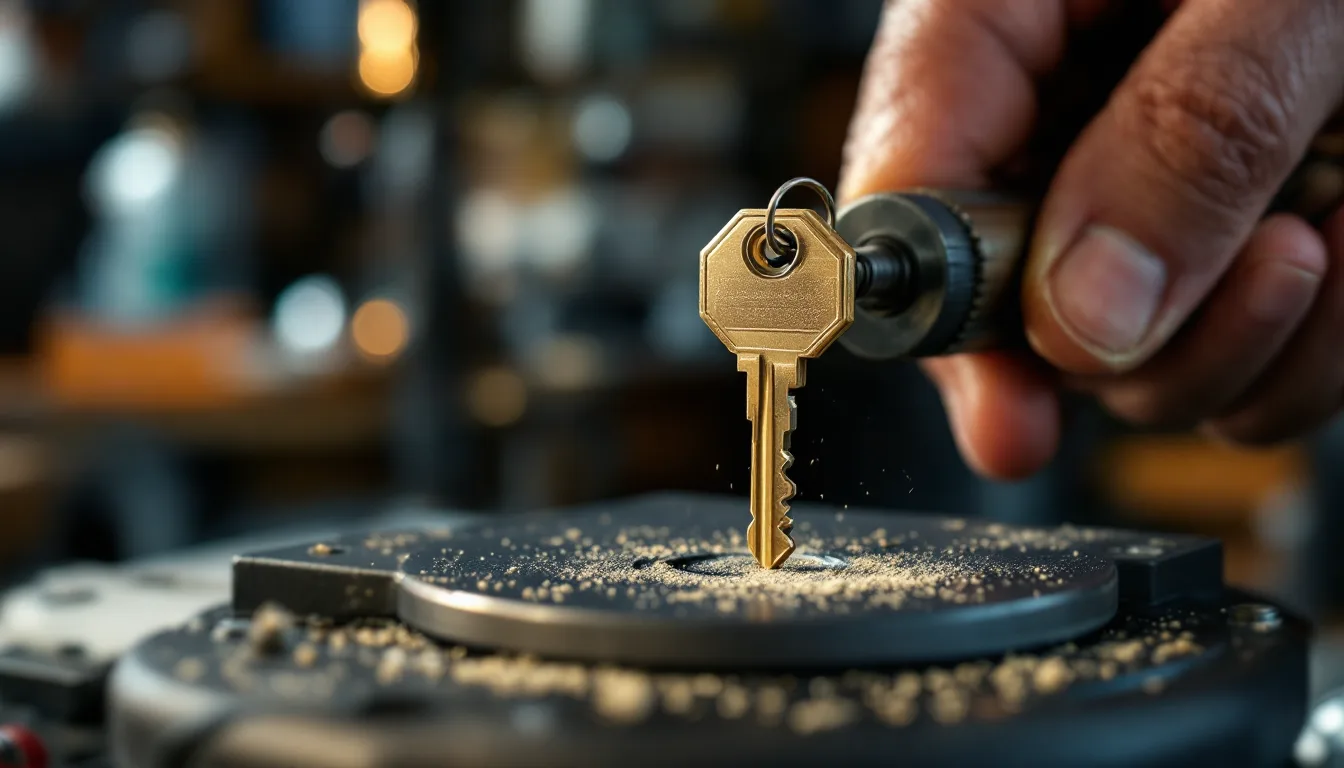
What does key duplication actually involve?
Key duplication sounds like the simplest job in the trade, and in its basic form it is. A blank that fits your lock is clamped into a machine, a cutter follows the grooves and peaks of your original, and a second key comes out the other side. The part people do not see is everything that decides whether that second key works smoothly for years or sticks, snags, and wears out your lock.
A copy is only ever as good as the key it was traced from. If the original is worn, bent, or itself a copy of a copy, each generation drifts a little further from the factory cut. That drift is why a spare that was cut at a hardware-store kiosk sometimes needs a jiggle, a lift, or a second try. We look at the original before we cut anything, and we tell you honestly if it is too worn to trace well.
This page covers what we copy, how we do it, what changes the cost, and how the work fits the homes, apartments, and shops around Norwalk. If you would rather talk it through, call (213) 577-1366. A person answers at any hour, any day of the year.
Why do older Norwalk homes make good spare keys so important?
Norwalk is a classic 1950s post-war suburb. Block after block of single-story stucco tract homes sit on modest lots, and many still carry their original mid-century door hardware. That hardware has now been turned thousands of times. A key that has lived in a pocket for decades and been run through a lock every day is rubbed smooth at the edges, and a copy cut from it inherits those worn edges.
Warm summers add a small wrinkle. Older wood doors and garage side doors can swell slightly in the heat and stick in the frame. When a door binds, people lean on the key and force the bolt, which bends keys and wears the cuts faster. If your spare key has started to feel gritty or needs a wiggle, the cause is sometimes the door and sometimes the key. We can usually tell which one once we see both.
Many Norwalk households are also changing. ADU additions are increasingly common on deeper lots, which means more people living behind the same property line and more keys in circulation: tenants, family members, caregivers, contractors. A deliberate set of spare keys, cut accurately and tracked, beats a drawer of mystery copies every time.
Locked out or need a locksmith now?
We answer around the clock, every day of the year.
Call (213) 577-1366How do we duplicate a key, step by step?
The process is short, but each step exists for a reason. Here is how a typical house, apartment, or office key copy goes.
- Identify the key. We check the keyway, brand stamping, and shape to find the correct blank. Many keys look alike but differ by a groove, and the wrong blank will not enter the lock or will turn poorly.
- Inspect the original. We look for wear, bends, and cracks. A key that is badly worn or bent is a poor pattern, and we will say so before cutting rather than hand you a copy that disappoints.
- Cut the copy. The blank is secured in the machine and cut to the original pattern, with attention to depth and spacing, since small errors there are what cause sticking.
- Deburr and clean. A fresh cut leaves tiny metal burrs that drag inside a lock. Removing them keeps the new key smooth and keeps shavings out of your cylinder.
- Test in the lock. A copy that looks right on the bench can still misbehave in the real cylinder. We try it in the lock it is meant for whenever the lock is with us, or ask you to test it right away and tell us how it feels.
- Adjust if needed. If the copy is stiff or catches, we correct it on the spot instead of sending you home to find out the hard way.
Which keys can be copied, and which need extra steps?
Most keys are straightforward. A few are not, and it is better to know the difference before you need a copy at an inconvenient hour.
- House keys and spare house keys: standard residential keys for entry doors, side doors, and garage service doors. These are the bread and butter of key copying.
- Duplicate deadbolt keys: deadbolts often use a different keyway than the knob lock on the same door, so we match each one rather than assuming a single blank covers both.
- Apartment key copies: if your lease or building rules limit copying, we will ask, and we will not cut keys stamped or marked against duplication without authorization.
- Office and commercial key duplication: suite doors, storage rooms, file cabinets, and shop doors. For larger offices, a master key system can reduce how many separate keys people carry.
- Mailbox key duplication: small, flat keys with their own blanks. If a mailbox key is lost entirely and no original exists, copying is not an option, and the answer may be a mailbox lock replacement instead.
- High security and restricted key duplication: restricted keyways are designed so that ordinary shops cannot cut them. Copies usually require proof of authorization, and the process may involve the manufacturer or a registered account. Details vary by system, so we confirm before promising anything. Our page on high-security locks explains how these systems work.
- Car keys: a plain metal blade is simple, but most modern car keys contain a transponder chip that must be programmed to the vehicle. Whether a particular key can be copied or needs dealer involvement depends on the make, model, and year, and we confirm by VIN and in person rather than guess. See our transponder key programming page for that side of things.
Locked out or need a locksmith now?
We answer around the clock, every day of the year.
Call (213) 577-1366What affects the cost of key duplication?
We do not quote numbers on a web page, because the honest answer depends on what is in your hand. What we can do is tell you exactly what moves the cost up or down, so nothing about the bill is a surprise.
The type of key is the biggest factor. A common brass house key is the lighter-cost job. A key with an unusual profile, a restricted keyway, or a built-in security feature takes more time, more specialized blanks, and sometimes extra verification. Those copies cost more because the work is genuinely different.
The number of keys matters, since a handful of copies cut in one visit takes less setup per key than a series of separate trips. The condition of your original matters too. If it is worn enough that we need to rebuild the pattern by reading the lock or by working from a different key, that is additional work.
Location and timing play a part. Bringing your key to our Westwood storefront is usually the more economical route. Having a van come to you, especially late at night or on a holiday, adds the cost of travel and after-hours service. We will explain which option fits what you need and tell you the figure before we start cutting.
Why call Wilshire Lock & Key for key copying?
We have been in business since 1987, which means decades of seeing every type of key that comes through Los Angeles and Ventura counties, including the older mid-century hardware common in post-war suburbs like Norwalk.
We are one company. There is no call center passing your request to a subcontractor you have never heard of. The person who answers the phone works for the same business that cuts your key. We run a storefront at 10740 Wilshire Blvd in Westwood and mobile service vans, so you can bring keys to us or have us come to you.
David, the owner and lead technician, oversees the work. That matters on small jobs as much as large ones, because a bad key copy is usually a small mistake nobody caught.
One more thing worth knowing: California requires locksmith companies to hold a BSIS LCO license, and you should ask any locksmith you hire for it. That is a fair request, and you should make it of us and everyone else.
Where do keys get copied around Norwalk, and what do people usually need?
Norwalk is covered by ZIP code 90650, and the needs shift from one part of town to the next. Norwalk is roughly 26 miles from our Westwood base, and we travel to the city regularly for jobs like these.
In the post-war tracts off the Rosecrans Avenue corridor, the typical request begins with a home sale or a new purchase. New owners rarely know how many keys are out there, so the practical sequence is to rekey first and then cut fresh copies for the family from the new key. Cutting copies of an old key for a house you are about to rekey wastes money, so we sort the order out with you. Our lock rekeying service handles the first half of that.
Around the Pioneer Boulevard corridor and the Imperial Highway corridor, apartment clusters are common, and apartment key copy requests tend to come from roommates, new tenants, and people who realize they have only one key. Near Cerritos College, around Alondra Boulevard and Studebaker Road, rentals turn over often, and a spare key kept somewhere safe makes a difference when someone is locked out. If it has already happened, our apartment lockout page explains what we do.
In the Norwalk Town Square area, where Firestone Boulevard meets Pioneer Boulevard, and across other storefront strips along Firestone, the work is commercial key duplication: extra keys for employees, back-door keys, stockroom and office keys. Small businesses along Norwalk Boulevard also ask us about gate and padlock keys. The Civic Center district near Norwalk Boulevard and Imperial Highway brings office-style requests, such as suite and storage-room keys.
If you work or live near the Holifield Park area and need keys cut without a trip across town, ask about coming to you.
Locked out or need a locksmith now?
We answer around the clock, every day of the year.
Call (213) 577-1366Can you come to me for mobile key duplication?
Yes. Our mobile vans carry key-cutting equipment, so many duplicates can be made at your door, which helps when a key is stuck in a lock you cannot leave, you cannot get away from a shop, or you need copies for several doors at once. For some keys, especially restricted or high-security ones, the cutting may still need to be done at our storefront or with verification, and we will say so on the call.
Our mobile locksmith service explains how our vans work in general. For key copying specifically, it is worth a phone call first so we can tell you whether your key can be copied in the field or should come to the shop. The line is (213) 577-1366, and it is answered 24/7.
One honest caveat: not every request is a key duplication job. If your key has snapped off in the lock, or you have lost every key and need to get inside, those are different services, and we will point you to the right one.
How should you manage your spare keys once you have them?
A good set of spares prevents a lockout, but only if the spares are somewhere sensible. A few habits go a long way.
- Make copies from a good original, not from a copy. If you only have a copy, tell us, and we will check how it reads before cutting.
- Test each new key right away, in the actual lock, with the door open and again with it closed. A key that feels rough on day one will not improve with use.
- Do not hide a key outside. Fake rocks and doormat spots are the first places anyone looks. Leave a spare with someone you trust.
- Label or tag keys privately, without the address. If the keys are lost, a labeled ring is a map to your door.
- Keep a record of who has which key, especially for rentals and ADUs. If a key goes missing, that record tells you whether a rekey is the better step.
- Replace worn originals. If a key you use daily has smoothed edges, getting a fresh pair now is easier than waiting until it breaks in the lock.
Frequently asked questions
Can you copy a key while I wait?
For most standard house, deadbolt, office, and mailbox keys, yes. Bring the key to our Westwood storefront or ask about mobile service in Norwalk. Restricted or high-security keys, and some vehicle keys, may take extra steps, and we will tell you when we hear what you have.
Do you offer key duplication in Norwalk at night or on weekends?
Our phone line at (213) 577-1366 is answered 24 hours a day, seven days a week, year-round. Whether a duplicate can be cut at your location at a given hour depends on the key type, so call and describe what you have.
My key says 'Do Not Duplicate.' Can you still copy it?
Those stamps carry no legal force in themselves, but they usually signal a restricted or controlled system, or a landlord or employer policy. We will ask about authorization before cutting, and for a properly restricted keyway we may be unable to copy it without proof from the owner or manufacturer.
Why does my copied key stick or not turn smoothly?
Common causes are a worn original, a small cutting error, leftover burrs, or a lock that itself has worn or swollen. Bring the copy and original and we will look at both. Sometimes a quick adjustment fixes the copy, and sometimes the lock needs service.
Can you copy a mailbox key?
Yes, as long as you have a working original to copy from. If every key is lost and no original exists, copying is not possible, and the lock may need to be replaced. We also handle the replacement side of it.
Can you duplicate a high-security or restricted key?
Sometimes. Restricted keyways are built to limit unauthorized copying, so we generally need proof that you are entitled to the copy, and the process can differ by manufacturer. We confirm what is possible for your specific key before promising anything.
Can you copy a car key with a chip in it?
A metal blade can be cut easily, but a transponder chip must be programmed to the vehicle to start the engine. Whether a particular key can be copied locally or requires a dealer depends on the vehicle, so we confirm by VIN and in person instead of guessing.
Should I copy my keys before or after rekeying a new house?
After. Rekeying changes the lock to a new key pattern, so copies of the old key will no longer work. Rekey first, then cut your spares from the new key so everything matches.
How do I know a locksmith is legitimate?
California requires locksmith companies to hold a BSIS LCO license, and you can ask any locksmith for it before they work. A reputable company will also be clear about what it is doing and what it will charge before it starts.
More locksmith help in Norwalk
Key Duplication near Norwalk
Reviewed by David, Owner & Lead Technician, Wilshire Lock & Key — in the locksmith trade since 1987.
Last updated 2026-10-11.