
What does a new lock installation actually involve?
A lock is only as good as the door it sits in. Door lock installation is not a matter of screwing hardware onto a slab. The door has to be measured, the bores have to be the right size and in the right place, the latch has to reach the strike plate cleanly, and the lock has to suit the thickness and material of the door and the way people use it. Most complaints we hear about a recently installed lock come down to a skipped step: a deadbolt that drags because the bore was off, a latch that does not seat because the strike was never aligned, or a lever handle that sags because it was fitted to a door it was not made for.
People call us for new lock installation for a handful of common reasons. A door never had a deadbolt and now needs one. A worn knob set is being swapped for a lever. A remodel or new build needs every exterior door fitted out. A small business is opening and needs locks that suit a commercial door. Or a security screen door has a latch that was never built to hold up. Each of those is a different job, and the first thing we do on the phone is work out which one you have.
It also helps to know when installation is not the right answer. If your lock works and the real worry is who holds a copy of the key, a lock rekey is usually the more economical route, because it changes the key without changing the hardware. If an existing lock is worn out and the new one is the same size, that is a lock replacement job, which is quicker than a fresh installation that needs new holes. We will tell you plainly which category your door falls into, even when it means a smaller job for us.
How do we install a new lock, step by step?
We follow the same order of work on every door, because the order is what keeps the result consistent. Here is what happens once you call (213) 577-1366 and we arrive.
- We look at the door first: material (solid wood, hollow-core, metal, fiberglass, or aluminum-framed glass), thickness, condition, and whether it swings in or out. A door that is cracked or delaminating needs a conversation before any drilling.
- We confirm what you want the lock to do. Is this a main entry, a back door, a bedroom, an office, a storage room? That decides the function, whether it is keyed on both sides, keyed one side with a thumb turn, or a passage set with no key at all.
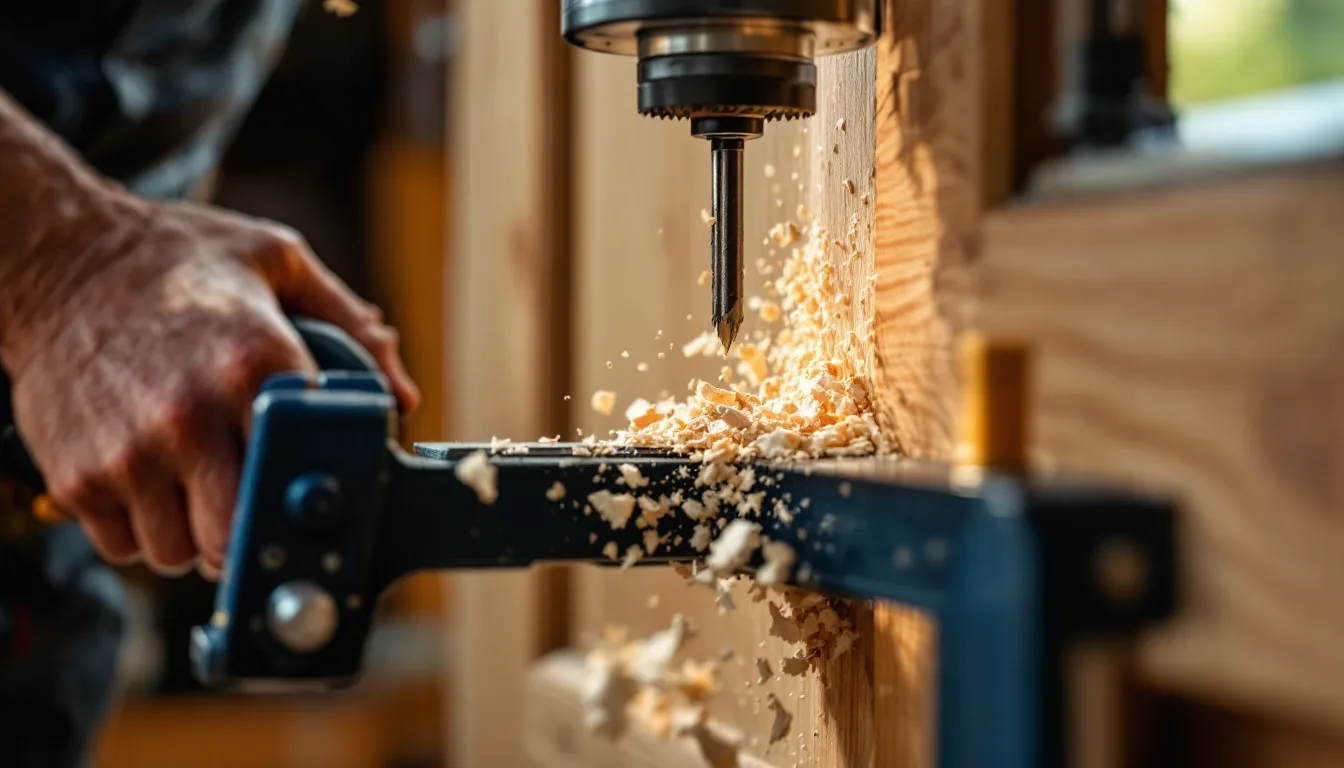
- We check the existing preparation. If the door already has a standard bore and edge hole, we measure the backset and the hole sizes so the new lock actually fits. If it has no prep, we mark and cut it with the proper hole saw and a drilling jig rather than by eye.
- We fit the latch or deadbolt, set the lock body, and secure the trim. On wood doors we mortise the latch faceplate flush so the edge looks clean and the plate does not catch.
- We fit the strike plate to the frame. This is where many installations are weak. A proper strike is aligned to the bolt, set into the jamb, and held with screws long enough to reach the framing behind the jamb, not just the thin trim.
- We test every function with the door open and then closed: the key from both sides where relevant, the thumb turn, the latch, and the deadbolt throw. We watch for dragging or binding, and we adjust until it runs smoothly.
- We hand over the keys, explain how the lock operates, and tell you about anything we noticed on the door or frame that might matter later.
Locked out or need a locksmith now?
We answer around the clock, every day of the year.
Call (213) 577-1366Which type of lock fits your door?
Not every lock suits every door, and the keywords on a hardware box do not always tell you what you need to know. These are the main categories we install, and how we think about each.
- Front door lock installation: the entry door usually gets a deadbolt plus a handle set or lever, or a single combination unit. We choose the pair based on how the door is used day to day and what the frame can support. For standalone bolts, see our page on deadbolt installation.
- Mortise lock installation: a mortise lock sits in a rectangular pocket cut into the edge of the door and combines the latch and bolt in one steel body. You find them in older doors and in many commercial entries. Fitting one means cutting a precise pocket, so it is a more involved job than a standard bored lock, and a good fit depends on the door being thick and sound enough to take it.
- Lever lock installation: lever handles are easier to operate than round knobs, which matters for people with limited grip strength, for anyone carrying groceries, and in commercial spaces where accessibility rules call for them. Many levers fit the same bores as knobs, which keeps the job simple.
- Security lock installation: where the goal is resistance to forced entry, we look beyond the lock itself to the strike, the jamb, and the door. Hardened components and reinforced strikes matter. If you want to go further into pick- and drill-resistant cylinders and restricted key systems, read about high-security locks.
- Keypad and smart locks: these replace or supplement the key, and the installation includes setup, codes, and checking that the door is square enough for a motorized bolt to throw every time. See smart lock installation for the details.
- Secondary and specialty doors: gates, side doors, sliding doors, screen doors and interior doors each take their own style of hardware. Tell us what the door is and we will say whether a standard lock suits it or whether it needs something purpose-built.
Residential and commercial lock installation: what changes?
Residential lock installation is mostly about the door, the frame, and who lives behind it. Households want a lock that is easy to use every day, reasonably secure, and compatible with the style of the home. The work is usually quick if the door is standard and slower if the door is old, warped, or has been drilled several times by earlier owners.
Commercial lock installation adds constraints that a house does not have. Doors are often heavier, made of metal or aluminum-framed glass, and may need to meet fire and egress requirements. A storefront glass door with a narrow stile cannot take the same lock as a wood front door, and an exit door may need hardware that allows quick exit without a key. Businesses also care about key control: who has keys, how many, and whether employees can copy them. For a multi-door building, that points toward a coordinated keying plan, not a random set of locks.
We handle both, and the same discipline applies: measure the door, match the function to the use, and fit the strike properly. For the broader range of business hardware, from exit devices to closers, see our page on commercial door hardware. If a storefront lock that is already installed is failing rather than being replaced, storefront lock repair is the better starting point.
Locked out or need a locksmith now?
We answer around the clock, every day of the year.
Call (213) 577-1366What affects the cost of lock installation in Inglewood?
We do not quote a price on a web page, because the honest answer depends on the door in front of us. What we can do is tell you exactly what moves the cost up or down, so you can judge any quote you receive, ours or anyone else's.
The first factor is the lock itself. A basic keyed knob and a high-security deadbolt with a restricted keyway are different products with different costs, and a smart lock with a motorized bolt is different again. The second is the door. A door with a standard bore is a quick swap. A door that needs new holes cut, a mortise pocket, or repair to old damage takes more time and care.
The third factor is the frame. A strike plate that screws into thin jamb trim does little for security, so reinforcing the jamb and using longer screws adds work but changes the outcome. The fourth is quantity and keying: fitting one door is different from fitting six, and having all of them operate on one key adds planning. Fifth, the type of building matters, since a commercial door with fire or accessibility requirements can limit which hardware is allowed.
Finally, timing and location play a part. A scheduled installation is easier to fit into the day than a late-night call, and the distance our van travels is a normal part of the job. We are based at 10740 Wilshire Blvd in Westwood, and Inglewood is about 11 miles from our storefront. We explain the scope of the job before we start, so nothing about the work comes as a surprise afterward.
Lock installation across Inglewood neighborhoods
Inglewood is not one kind of housing, and the door you have drives the lock you should get. In Fairview Heights and Morningside Park, many homes are Spanish bungalows from the 1920s through the 1940s. Older doors in houses like these have often been modified several times, and the prep may not match modern hardware. We check the thickness and the existing holes before we promise a particular lock will fit, and we are honest when a door needs repair before it can hold a new one. Security screen doors and window bars are common on older homes and small buildings, and on those the screen door latch often deserves as much attention as the main door. On Morningside Park bungalows, gate and security-door hardware is a common part of the job, so we look at the whole entry sequence, not just the front door.
Postwar stucco homes spread across areas such as North Inglewood and Inglewood Knolls, and these typically have more standard doors and frames, which makes new lock installation straightforward. Along the Century Boulevard and La Brea corridors there is a large stock of apartments, and most Inglewood residents rent. For those buildings, the job is usually about consistent hardware across units and sensible key control.
Newer construction is changing what people ask for. The Hollywood Park development is adding condominium and apartment buildings near SoFi Stadium, and residents of newer buildings often want keypad or smart locks on their unit doors. That work needs a door that is square and a frame that has not been altered, and we also help with setup so the codes and settings are clear when we leave. In Downtown Inglewood, storefronts along Market Street need hardware that holds up to daily opening and closing, with the right function for the door and sensible key control for staff.
We serve all five Inglewood ZIP codes: 90301, 90302, 90303, 90304 and 90305. The climate helps the hardware: Inglewood sits a few miles inland, so you get marine-layer mornings but little direct salt exposure, and the effect on door hardware is modest. That means finish and corrosion are less of a concern than they would be right on the coast, and we can choose locks mostly on security, function and fit. If you want us to come to you, our mobile locksmith service covers the whole city.
Locked out or need a locksmith now?
We answer around the clock, every day of the year.
Call (213) 577-1366Installing locks in rental properties
Because most Inglewood residents rent, a lot of lock installation here happens at the request of landlords, property managers and tenants who have permission to make a change. If you own a building or manage several units, the questions are different from a homeowner's. Do all units need the same lock type for maintenance? Should the common doors share a keying plan? Who holds the keys when a tenant moves out?
Our page for landlord locksmith services goes through how we work with owners and managers. For tenants, the practical rule is to check your lease and get written permission before you install anything permanent on a rental door, since the lock you add may need to be left in place when you move.
Between tenants, the lower-cost step is often a rekey, not a new lock. When a door has no deadbolt, or the hardware is worn or broken, installation makes sense. A good installer will tell you which of the two you need, and so will we.
Why call Wilshire Lock & Key for lock installation?
We have been in business since 1987, and that is more than three decades of fitting locks to doors that were not always cooperative. We keep a storefront at 10740 Wilshire Blvd in Westwood, along with mobile service vans that carry what we need to the job. That combination means there is a real business behind the phone number, not a call center that sells your job to whoever picks it up.
When you call (213) 577-1366, you reach us directly, at any hour, every day of the year. We do not pass your job through a dispatch middleman or a lead broker, so the person you talk to is part of the company that sends the technician. David, the owner and lead technician, oversees the work and sets the standard for how doors get measured, drilled and finished.
We also keep the job honest. If a door cannot take the lock you picked, we say so. If rekeying would solve your problem for less effort, we say that too. If an emergency call comes in, we handle it as an emergency, and our emergency locksmith page explains how that differs from a planned install.
One more point worth stating: California requires locksmith companies to hold a license through the Bureau of Security and Investigative Services, known as a BSIS LCO license. You should ask any locksmith for that license number before they start work, and you can check it with the state.
Locked out or need a locksmith now?
We answer around the clock, every day of the year.
Call (213) 577-1366What should you have ready before you call?
A little preparation speeds up the conversation and helps us bring the right parts to your door. You do not need to be an expert. A few observations are enough.
- Which door it is: front, back, side, gate, screen door, interior, or a business entry.
- What the door is made of, if you know: wood, metal, fiberglass, or glass in an aluminum frame.
- What is on the door now: a knob, a lever, a deadbolt, a mortise lock, or nothing.
- What you want from the new lock: keyed entry, keypad, a thumb turn on the inside, or a lock that works with other doors in the building.
- Any problems you have noticed: a sagging door, a loose frame, a latch that does not line up, or old damage around the lock area.
- A photo of the door edge and existing hardware, if you can send one, which helps us judge fit before we arrive.
Frequently asked questions
How long does a new lock installation take?
It depends on the door. A standard door with existing holes is a short job. A door that needs new holes, a mortise pocket, or frame reinforcement takes longer. We will tell you what applies once we have looked at the door, and we do not rush the strike plate or the final testing.
Can you install a lock on a door that has never had one?
Yes. If the door is solid and in decent condition, we can cut the proper holes and fit a new lock and deadbolt. If the door is thin, hollow, or damaged, we will explain whether it will hold hardware properly or needs repair first.
What is the difference between installing a lock and replacing one?
Replacement swaps a lock for a new one in the existing holes, which is faster. Installation means preparing the door for a lock it did not have, or changing the type of lock, which can involve new holes or a mortise pocket. See our page on lock replacement if you only need the swap.
Do you install mortise locks and lever locks?
Yes. We fit mortise lock installations, including on older doors, and lever lock installations on residential and commercial doors. For a mortise lock, the door has to be thick and sound enough to take the pocket. We check that before we cut.
Do you handle both residential and commercial lock installation in Inglewood?
We do both. Homes and apartments generally need entry locks and deadbolts, while businesses may need exit hardware, accessible levers, or a keying plan across several doors. Tell us the type of building when you call so we can bring suitable hardware.
Can you install a smart lock in a new Hollywood Park building?
Yes, we install and set up smart locks on unit doors. Check your lease or building rules first, since some buildings control which locks may go on a door. We also confirm the door is square so the bolt operates reliably.
Is a rekey cheaper than installing a new lock?
In many cases a rekey is the more economical route because the hardware stays in place and only the key changes. If the lock is worn, damaged, or the wrong type for the door, installing or replacing is the better choice. We will tell you which fits.
Should I ask a locksmith for a license?
Yes. California requires locksmith companies to hold a BSIS LCO license, and you should ask any locksmith for it before work begins. It is a reasonable request, and a legitimate company will answer it.
Will you come to my home or business, or do I need to bring the door in?
We come to you. Our mobile vans serve Inglewood, and we also have a storefront in Westwood. Call (213) 577-1366, any hour of any day, and tell us where you are and what door needs the lock.
More locksmith help in Inglewood
Lock Installation near Inglewood
Reviewed by David, Owner & Lead Technician, Wilshire Lock & Key — in the locksmith trade since 1987.
Last updated 2026-10-11.