
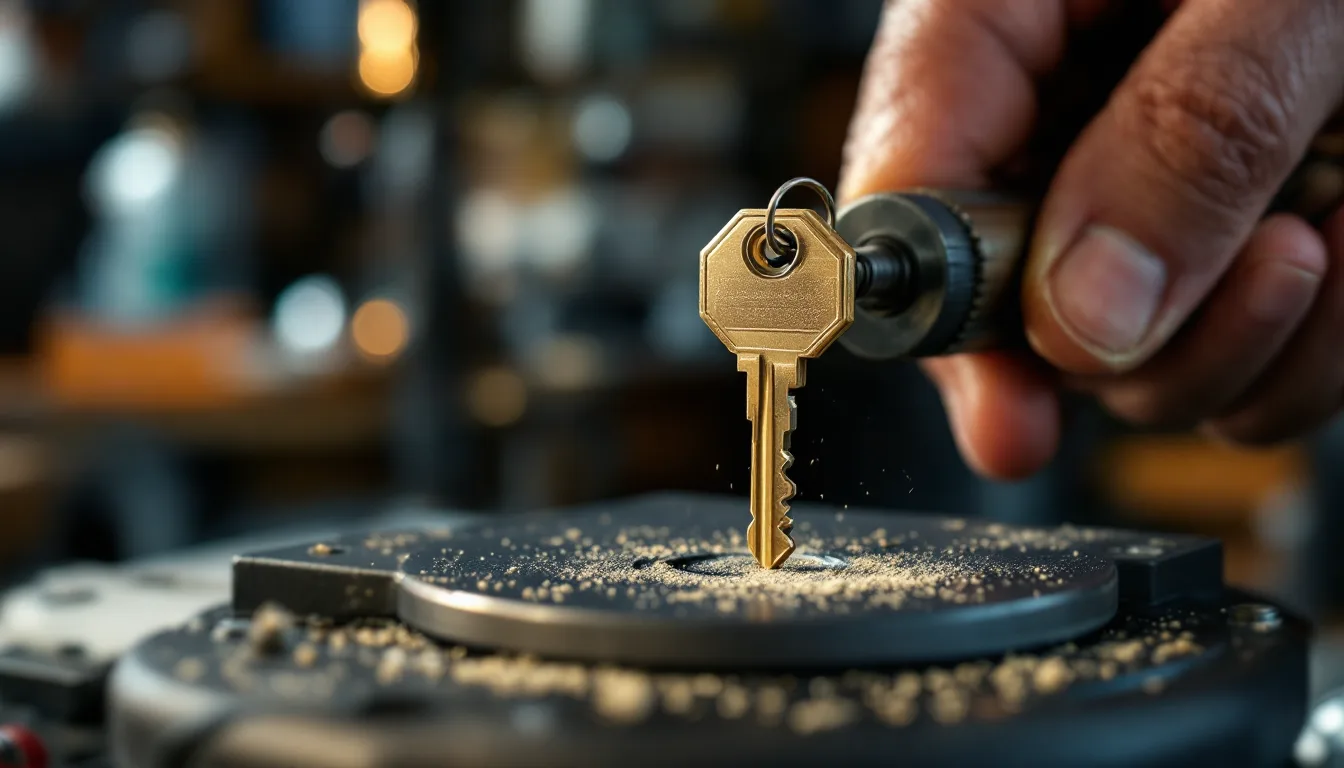
Why does a duplicate key sometimes fail to work?
Most people think of key copying as a trivial errand. You hand over a key, a machine grinds a blank, and you walk away. Most of the time that is how it goes. But anyone who has spent an evening jiggling a new copy in the front door knows it can go wrong, and the reasons are usually simple. The blank was the wrong type. The machine was set slightly off. The original was worn, so the copy inherited the wear and added its own. Or the burrs from cutting were never cleaned off, so the key drags and sticks inside the lock.
A bad copy is not just an annoyance. It wears the pins in your lock faster, it can bind and snap in the cylinder, and it tends to fail at the worst moment, such as late at night or with your arms full of groceries. If a copy breaks off inside a lock, you are suddenly dealing with broken key extraction instead of a quick errand.
We approach key duplication in Glendora the way a tradesperson would. We start by looking at the key and the lock it belongs to, not just at the shape of the metal. That is how you end up with a spare house key that works smoothly the first time, and the second, and years from now.
How do we duplicate a key, step by step?
The process is not complicated, but the details matter. Here is how a typical duplication goes, whether it happens at our storefront or at your door.
- We look at the original key. We check for wear, bends, cracks, and any stamping on the bow that tells us what kind of key it is.
- We match the blank. Keys are not interchangeable even when they look alike, so we identify the correct keyway and blank for your lock rather than guessing from the outline.
- We cut the copy. For worn originals, we pay attention to whether copying the wear would produce a sloppy result, and we say so if the original itself is the problem.
- We deburr and clean the new key so it enters and turns freely and does not shed metal shavings into your lock.
- We test the copy in the lock whenever the lock is available, and we check that the original and the copy both operate the same way.
- We talk through what you have. If the original is badly worn, or if you only have one key and it is the only one, we may suggest cutting from a fresh reference rather than making a copy of a copy.
Locked out or need a locksmith now?
We answer around the clock, every day of the year.
Call (213) 577-1366What kinds of keys can we copy?
Our key cutting service covers the keys most Glendora households and businesses actually carry. A few categories deserve a plain explanation, because they do not all work the same way.
- House key copy and spare house key: standard residential keys for front doors, back doors, and side doors. These are the most common and usually the most straightforward.
- Duplicate deadbolt key: deadbolts often use a different keyway from the knob or handle set beneath them. We match each one separately, and we check whether both locks are on the same key or on two different ones.
- Apartment key copy: building entry keys, unit keys, and mailbox keys. Some buildings restrict copying, and we explain that below.
- Office key duplication and commercial key duplication: suite doors, storage rooms, filing cabinets, and shop doors. Businesses that need many copies should read the section on master key systems further down.
- Mailbox key duplication: small, flat-style keys that are easy to lose and easy to cut wrong. If the mailbox lock itself is damaged or the key is missing entirely, mailbox lock replacement may make more sense than copying.
- High security key duplication: keys for locks with tighter tolerances, sidebar cuts, or dimple patterns. These need more careful equipment and sometimes more time.
- Restricted key duplication: keys on controlled keyways, where the manufacturer limits who can order copies.
What about high-security and restricted keys?
This is where honesty matters most. Some keys are deliberately hard to copy. Higher-security cylinders often use keyways that are protected, and the manufacturer or the property owner controls who is allowed to make more keys. A key stamped with a do-not-duplicate line is not a legal barrier by itself, but it is a signal that the system behind it may be restricted, and we will ask questions before we cut anything.
For restricted key duplication, we typically need proof that you are the authorized person: the original registration or card, or confirmation from the property owner or manager. In some cases the copy has to come through the manufacturer's authorized channel, and that can take longer than a normal cut. In some cases only the manufacturer or a dealer can supply it. We will tell you which situation you are in rather than pretend a quick copy is possible.
If you are weighing a restricted system for your own home or shop, our page on high-security locks explains how these systems work and why the copy rules exist. The short version: the same restrictions that make a copy harder for you also make it harder for someone who should not have one.
Locked out or need a locksmith now?
We answer around the clock, every day of the year.
Call (213) 577-1366What affects the cost of key duplication in Glendora?
We do not quote numbers on a web page, because the honest answer depends on what is in your hand. Here is what actually moves the cost up or down.
The type of key is the biggest factor. A basic residential key on a common blank is the lighter-cost end of the range. Keys with unusual keyways, security features, or restricted blanks take more material, more setup, and more care. The quantity matters too, since several copies cut in one visit are more efficient than separate trips.
Where the work happens also matters. Bringing keys to our storefront is usually the more economical route for a simple copy. Having us come to you adds the cost of the trip, which is worth it when you cannot leave a building, when it is late, or when the lock needs to be tested in place.
Finally, condition counts. A clean original is easy to work from. A worn or bent original may need extra steps, or may be better replaced by a key cut from the lock itself. We will explain the choice before we start, and you will know the cost before we cut.
Can we come to you for mobile key duplication?
Yes. Our mobile service vans reach Glendora from our Westwood storefront at 10740 Wilshire Blvd, about 37 miles away, and we answer calls around the clock at (213) 577-1366. Mobile key duplication is useful when you cannot leave a property, when a key has to be tested in a specific lock, or when you need copies for several doors at once.
Whether a particular key can be cut at your door or has to come back to the storefront depends on the key. Many standard residential keys are simple. Unusual blanks, high-security keys, and restricted keys may need the storefront or a longer process. We tell you which it is when you call, so you are not waiting on a promise we cannot keep.
If you also have a lockout, lost key, or broken lock mixed in with the duplication request, the full picture of what we can do on the road is on our mobile locksmith page.
What does key duplication look like around Glendora?
Glendora is not one kind of neighborhood, and the keys people carry reflect that. Around Glendora Village, many homes are older citrus-era bungalows with locks that have been in place for decades. The keys that open them are often worn smooth from years of use, which is exactly the situation where copying a copy leads to a sloppy fit. If your Village-era key feels loose in the lock, bring it in and we will look at whether a fresh cut from the lock is the better route.
Out in the foothills, the situation changes. Homes in Morgan Ranch and the gated Gordon Highlands, along with Silent Ranch Estates, often have more doors and more hardware than a typical tract house: perimeter gates, side-gate locks, garage entries, and secondary deadbolts. A household there may be carrying five or six different keys on one ring, and a family of four may want a full set for each person. Hillside homes near Big Dalton Canyon often have garage and side-gate locks, and those exterior locks collect wind-blown dust that can gum up a cylinder. A new copy is a good time to notice that and have the lock cleaned or looked at. If a gate lock is sticking or failing, our gate lock repair page covers that separately.
Along the Route 66 (Alosta Avenue) corridor, condos and apartments are common, and apartment key copy requests come with their own rules. Many buildings control who may copy a key, so we confirm authorization when it applies. Merchants in Glendora Village sometimes need extra keys for a shop door, a back room, or a staff member, and for storefront door problems beyond a copy, our storefront lock repair page is the next stop.
Whether you are in 91740 or 91741, the approach is the same. Santa Ana wind events and hot, dry summers are hard on south-facing doors, where heat expansion and worn weatherstripping can make a lock feel stiff. A stiff lock is not always a bad copy. Sometimes the door itself has shifted, and we will tell you which one it is.
Locked out or need a locksmith now?
We answer around the clock, every day of the year.
Call (213) 577-1366When is copying a key not the right fix?
Copying is the right answer when you have a working key and want another one. It is not always the right answer, and part of doing this work honestly is saying so.
If you have lost a key and do not know who has it, a copy does not help, because the lost key still opens your door. In that case lock rekeying changes the lock so the missing key no longer works, and you get a fresh set of keys at the same time. That is often more useful than copying the one key you have left.
If you manage many doors and many keyholders, a pile of loose copies becomes hard to track. A master key system lets one key open many doors while individual keys open only their own, and it is usually a better fit for offices, small buildings, and rental properties than duplicating keys one at a time.
And if what you really need is a car key, that is a different job entirely. Vehicle keys often involve programming and the details vary by make and model, and we confirm what your car needs by VIN or in person. Our car key replacement page explains how we handle that.
Why call Wilshire Lock & Key for duplicate keys?
We have been in business since 1987, and we serve 140 cities across Los Angeles and Ventura counties, Glendora included. We are one company with a real storefront at 10740 Wilshire Blvd in Westwood and our own mobile vans. There is no dispatch middleman passing your call to a stranger, so the person who answers is part of the company that does the work.
David, the owner and lead technician, oversees the work. That matters on a job like key duplication, where the quality is in the small details that nobody sees until a key sticks.
One more thing worth knowing: California requires locksmith companies to hold a BSIS LCO license, and you should ask any locksmith you hire for it. You are entitled to ask, and a legitimate company will not mind the question.
Our phone line at (213) 577-1366 is answered 24 hours a day, 7 days a week, year-round. If you would rather start with a message, you can use our contact page, but for anything urgent, a call is faster.
Frequently asked questions
Can you copy a key that says do not duplicate?
Often not on the spot. That stamp usually signals a restricted or controlled system. We ask for proof of authorization, such as a registration card or confirmation from the property owner, and some restricted keys can only be supplied through the manufacturer or a dealer. We will tell you plainly which case applies.
How long does it take to make a copy of a house key?
A standard residential key on a common blank is a short job. High-security and restricted keys take longer and may need extra steps or authorization. When you call (213) 577-1366, we tell you what to expect for your specific key.
Can I get a duplicate deadbolt key if I only have one?
Yes, in most cases. The deadbolt often uses a different keyway from the doorknob, so we match it separately. If you have only one key and it is worn, we may suggest cutting from the lock so you do not copy the wear.
Do you do mobile key duplication in Glendora?
Yes. Our mobile vans serve Glendora from our Westwood storefront. Whether a key can be cut at your door or has to come back to the shop depends on the key type. We tell you which when you call.
Can you copy a mailbox key?
Usually yes, though mailbox keys are small and easy to cut wrong, so we are careful with them. If the lock is damaged or the key is missing, replacing the lock may be the better route. Some building mailboxes are controlled by the property manager.
What if my original key is worn out?
Bring it in anyway. A copy of a worn key carries the wear forward and can bind in the lock. Depending on the situation, we may recommend cutting a fresh key from the lock instead of copying the old one.
Can you make office keys for several employees?
Yes. We handle office key duplication and commercial key duplication in batches. If you are managing many keys and many people, we will also talk about whether a master key system would save you trouble.
Is it better to copy a key or rekey the lock?
If you have a working key and want another, copy it. If a key is lost or you do not know who holds copies, rekeying is the safer choice because it makes the old keys stop working. Many people end up doing both.
Do you need to see my ID for apartment key copies?
Sometimes. Many buildings control who can copy keys, and we may ask for confirmation from the landlord or property manager. If your building uses a restricted system, we will explain what authorization we need.
More locksmith help in Glendora
Key Duplication near Glendora
Reviewed by David, Owner & Lead Technician, Wilshire Lock & Key — in the locksmith trade since 1987.
Last updated 2026-10-11.