
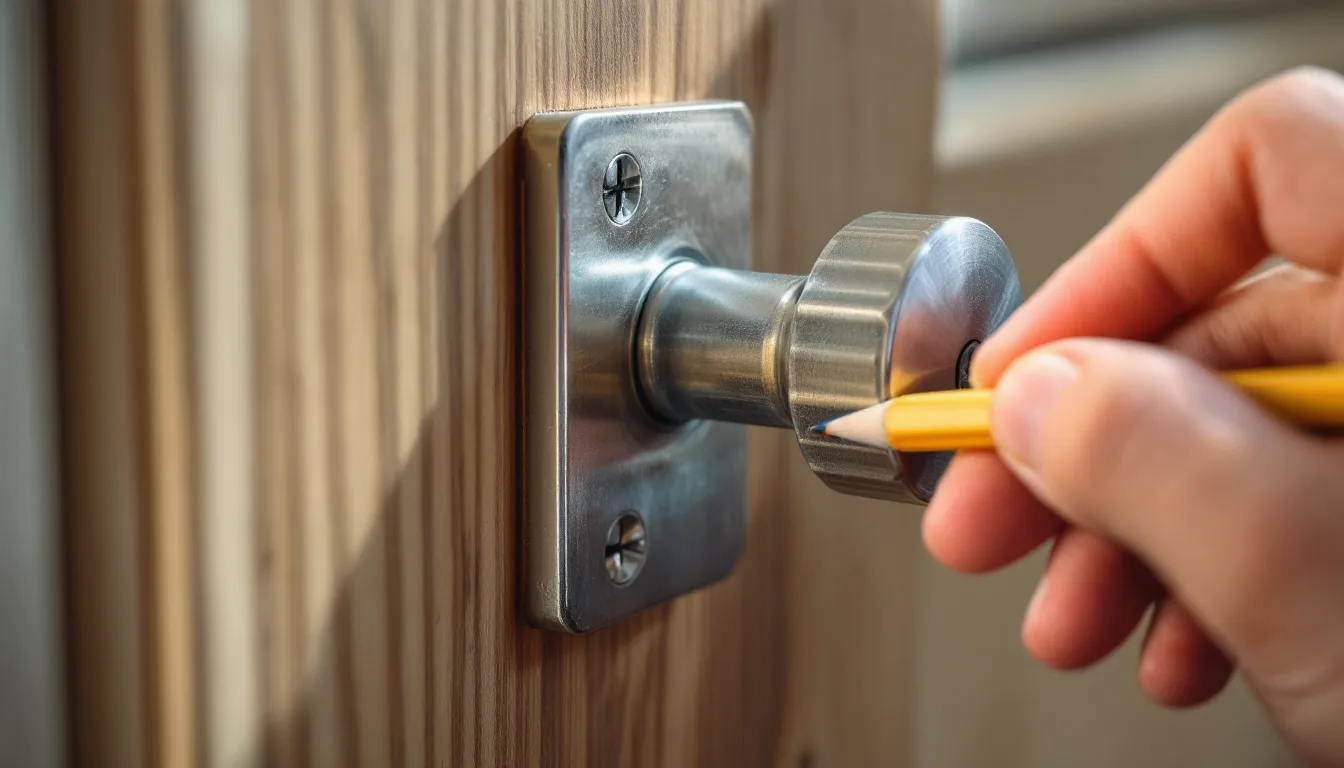
What does a proper deadbolt installation involve?
A deadbolt is only as strong as the way it is mounted. The lock body can be excellent and still fail if the bolt barely reaches the frame, the strike plate is held by short screws in soft jamb wood, or the door has been bored crooked and the bolt rubs on every turn. Most of what people call a bad deadbolt is really a bad installation, and that is the part we focus on.
A full installation means measuring the door, confirming its thickness and the distance from the edge to the center of the bore, cutting or checking the cross bore and the latch bore, setting the bolt, fitting the cylinder and interior hardware, and then mounting a strike that lines up with the bolt so it slides in without you lifting, pushing, or leaning on the door. When we finish, you should be able to turn the key with two fingers.
This page is about adding a new deadbolt where there is none and replacing an existing one. If you want a broader hardware change across the whole house, our lock installation page covers that. If your existing deadbolt is fine and you only need new keys, rekeying is usually the more economical route, and we will say so rather than sell you hardware you do not need.
Single-cylinder or double-cylinder: which deadbolt fits your door?
A single-cylinder deadbolt takes a key on the outside and has a thumb turn on the inside. It is the right choice for most front and back doors because anyone inside can leave quickly without hunting for a key. A double-cylinder deadbolt takes a key on both sides. People ask for double cylinder installation for one main reason: doors with glass in them or right beside them, where a burglar could break the glass, reach in, and turn a thumb turn.
The trade-off is real and we explain it plainly. A keyed-both-sides lock means that in a fire or other emergency, someone has to find the key to get out. Building and fire codes in some situations restrict or prohibit keyed-both-sides locks on exit doors, and rules differ for owner-occupied homes, rentals, and commercial spaces. Before we fit a double-cylinder deadbolt we talk through how the door is used, who lives there, and whether the key can be kept somewhere everyone in the household knows. If a single cylinder with better glass protection is the safer answer, we will tell you that.
- Single cylinder: key outside, thumb turn inside. Best for most entry doors and the easiest to exit in an emergency.
- Double cylinder: key on both sides. Considered for doors with glass within arm's reach of the lock, with the key-access and code questions above in mind.
- Lighter-duty or heavier-duty grades: deadbolts come in different strength grades, and we can walk you through which grade suits the door and the way you live.
- Keyed-alike options: you can often match a new deadbolt to your existing door key so you carry fewer keys.
Locked out or need a locksmith now?
We answer around the clock, every day of the year.
Call (213) 577-1366How do we install a deadbolt, step by step?
Every door is a little different, but the work follows the same order. We do not skip the alignment steps, because they are what separate a lock that works for years from one that sticks by the next summer.
- Look at the door and frame. We check thickness, material (solid wood, hollow core, metal, fiberglass), existing holes, and whether the frame is sound enough to hold a strike securely.
- Choose the hardware with you. We confirm single or double cylinder, finish, and grade, and check the backset so the new lock fits the bore, not the other way around.
- Mark and bore. If the door has no deadbolt, we mark the height and drill the cross bore and edge bore with the correct hole saws. If we are replacing a lock, we reuse good existing bores and repair any that are damaged or oversized.
- Set the bolt and cylinder. We fit the latch, pass the cylinder through, and join the interior assembly so nothing binds when the bolt moves.
- Mortise and mount the strike. The strike plate is cut into the jamb flush, and we use long screws that reach into the framing behind the jamb, not just the thin trim.
- Test it with the door shut and open. The bolt should extend fully, retract fully, and enter the strike without contact on the edges. We adjust until it does.
- Hand over keys and explain the lock. You leave with working keys, a clear explanation of how the lock operates, and a note on anything about the door that is worth fixing later.
Is deadbolt replacement different from a new installation?
Yes, in a few useful ways. Deadbolt replacement usually goes faster because the holes already exist, but it is not automatic. Older bores can be a different size, the backset might not match, and a door that has been swollen, sanded, or repainted can leave the old hole slightly off. We check all of that before choosing a new lock so you do not end up with a replacement that needs shimming or cannot sit flush.
Replacement also gives us a chance to ask why the old lock is being swapped. If it is worn out, sticking, or hard to turn, the real cause is often the strike alignment or a swollen door rather than the lock itself, and a lock repair adjustment might solve it. If keys were lost or a former tenant or contractor still has one, replacing or rekeying makes sense. If you are upgrading for security, we can talk about higher-grade hardware and, where it fits, high-security locks with controlled key blanks that are harder to copy without authorization.
If you want a keypad or app-controlled bolt instead of a conventional key cylinder, that is a different set of decisions about batteries, door prep, and how the lock fits into your household. Our smart lock installation page covers those.
Locked out or need a locksmith now?
We answer around the clock, every day of the year.
Call (213) 577-1366What affects the cost of deadbolt installation in Fillmore?
We do not quote prices on a web page because the real number depends on the door in front of us, and a figure written here would be a guess. What we can do is show you exactly what moves the cost up or down, so the quote you get over the phone makes sense.
The lighter-cost end of the range is a straightforward replacement on a door that already has correct bores and a solid frame. The more involved end is a new installation in a door that has never had a deadbolt, a damaged or oversized bore that needs repair, or a frame that needs reinforcement before the strike will hold.
- The hardware itself: grade, brand, finish, and whether it is single or double cylinder.
- New hole versus existing hole: boring a fresh door takes more labor than swapping into a clean existing bore.
- Door material and condition: solid wood, metal, and fiberglass each need different handling, and a warped or swollen door takes extra adjustment.
- Frame and strike reinforcement: if the jamb is split, soft, or weathered, it has to be addressed or the new lock will not hold up.
- Number of doors: several doors done in one visit generally make better use of the trip.
- Key setup: keyed-alike sets, restricted keys, or matching an existing key add steps.
- Timing and travel: an urgent after-hours call, or a more distant address, affects scheduling and what we charge for getting there.
- Related work: if the visit turns into rekeying, repair, or other hardware changes, those are quoted separately and clearly.
Deadbolts for Fillmore's older bungalows, new tract homes, and ranch properties
Fillmore, in ZIP code 93015, has a housing mix that makes deadbolt work different from one block to the next, and we plan for the door we are likely to find.
Around Downtown Fillmore and the Central Avenue district you find early-1900s bungalows and 1920s to 1940s cottages. Doors there can be older, thinner, or already carrying a mortise lock or other vintage hardware. Adding a modern deadbolt can mean choosing a position that does not weaken the original lock area, repairing old bores, and sometimes fitting a trim plate or reinforcer so the door does not split. We try to preserve the character of the door while giving you a lock that actually performs.
Heritage Grove and other newer tract homes on the north side tend to arrive with builder-grade deadbolts and strikes fixed with short screws. Those are common upgrade candidates: a stronger deadbolt, longer strike screws into the framing, and, if the keys passed through many hands during construction and sale, a fresh key setup. If the bolt itself is serviceable, rekeying might be all that a new tract home needs, and we will say that honestly.
North Fillmore and the postwar single-family streets around the core have yet another mix, often original or mid-life doors with deadbolts that have been replaced once or twice, and not always cleanly. For properties near Bardsdale and Piru, and the citrus ranch properties on the valley floor, the question often becomes outbuilding doors, shop doors, and side entries as well as the house. Deadbolts on a workshop or equipment shed door are common requests, and for fences and driveway entries our gate lock repair page covers the hardware that is a different job from a deadbolt.
Two local conditions matter for deadbolts specifically. Fillmore sits inland in the Santa Clara River Valley, where summers are hot and dry. Heat can swell wood doors and frames in older homes, which pulls the bolt out of line and makes a good lock feel stiff. We account for that when we set clearances. Valley dust also works into exterior lock mechanisms over time, so we pay attention to cylinder quality and leave you with a short note on keeping the lock running smoothly.
Locked out or need a locksmith now?
We answer around the clock, every day of the year.
Call (213) 577-1366Why call Wilshire Lock & Key for a deadbolt in Fillmore?
We have been in business since 1987, and we serve 140 cities across Los Angeles and Ventura counties, Fillmore included. Our storefront is at 10740 Wilshire Blvd in Westwood, and our mobile service vans bring the work to your door, so you do not have to remove a door or travel to us. Our base is about 55 miles from Fillmore, which is why we are upfront on the phone about scheduling and travel instead of promising something we cannot back up.
When you call (213) 577-1366, you reach us, not a lead-selling call center. It is one company with no dispatch middlemen passing your job to an unknown subcontractor. David, the owner and lead technician, oversees the work and the standards we hold it to. The line is answered 24 hours a day, 7 days a week, year-round, so a broken deadbolt after a break-in attempt or a stuck bolt at night does not have to wait until morning.
If your situation is urgent, such as a door that will not secure after a break-in, our emergency locksmith page explains how that call works. For general home work beyond deadbolts, see our residential locksmith services.
What should you ask any locksmith before they start?
California requires locksmith companies to hold a license from the Bureau of Security and Investigative Services (BSIS), called a Locksmith Company (LCO) license. It is reasonable to ask any locksmith for that license number before work begins, and to be wary of anyone who dodges the question or will not say the company name when answering the phone.
A few other habits protect you. Ask for a clear explanation of the work and what drives the final cost before anyone drills. Ask what grade of deadbolt is being installed and whether the strike will be anchored into the framing. Ask whether the keys you receive are the only copies. Those are fair questions, and a good technician answers them without fuss. We would rather you ask and feel confident than agree and wonder later.
When is a deadbolt not the right answer?
Sometimes the problem is bigger than the lock. A cracked frame, a door that has been kicked and split, or a hollow-core door that no deadbolt can truly protect may need reinforcement or replacement of the door itself before new hardware makes sense. We will tell you when that is the case and where the line is, rather than fit a strong bolt into a weak door.
If you are locked out right now, a deadbolt install is not the first step; our house lockout service is. If you only need extra copies of a key you already have, that is a different service, and we will point you to it. Call (213) 577-1366, describe the door, and we will tell you what makes sense.
Frequently asked questions
How long does it take to install a deadbolt?
A replacement into an existing, clean bore is usually quick. A new installation on a door that has never had a deadbolt takes longer because we have to measure, bore, and fit the strike properly. Old, swollen, or damaged doors add time. We would rather take the time to align it correctly than rush and leave a bolt that sticks.
Can you add a deadbolt to a door that does not have one?
Usually yes, if the door is thick enough and solid enough to hold one. We check the material, thickness, and the frame first. Hollow or damaged doors may need reinforcement, and in some cases a different door is the better choice. We will explain that before drilling anything.
Do I need a single-cylinder or double-cylinder deadbolt?
Most entry doors do well with a single cylinder, since the thumb turn inside lets everyone leave quickly. A double-cylinder deadbolt is mostly considered for doors with glass near the lock. Because it requires a key to exit, and codes can restrict it in some settings, we talk through the door and your household before installing one.
Is double cylinder deadbolt installation safe?
It can be safe if the key is always reachable by everyone who needs to get out, but it carries a real emergency risk if a key is missing in a fire. Some building and fire rules limit keyed-both-sides locks on exits. We explain the trade-offs and will suggest alternatives where they are the safer choice.
Can you install a deadbolt in an older bungalow door near Central Avenue?
Yes, though older doors need more care. They may be thinner, carry vintage hardware, or have bores that have been altered over the years. We pick a position and hardware that fit the door, repair or reinforce where needed, and avoid cutting more than necessary.
Should I replace my deadbolt or just rekey it?
If the lock works well and the issue is who has keys, rekeying is often the more economical route. If the bolt is worn, sticking, low grade, or damaged, replacement makes more sense. We look at the lock and tell you honestly which one fits your situation.
Will a new deadbolt fit my existing door holes?
Most standard residential deadbolts are made to fit common bore sizes, but backset, bore condition, and door thickness all matter. We check those before choosing a lock so it fits without gaps or shimming. If a hole has been damaged or enlarged, we repair it as part of the job.
Why does my deadbolt stick in summer?
Heat can swell wood doors and frames, which pulls the bolt out of line with the strike. Dust inside the cylinder can add to it. Sometimes a strike adjustment fixes it. Other times the bolt or cylinder is worn and needs replacing. We check the alignment first so you are not paying for a new lock you do not need.
Do you install deadbolts on outbuildings and ranch property doors?
Yes. We can fit deadbolts on shop doors, sheds, and side entries on properties around Bardsdale, Piru, and the valley floor. For gates, we use different hardware, which our gate lock repair service covers. Call (213) 577-1366 and describe the door, and we will plan accordingly.
More locksmith help in Fillmore
Deadbolt Installation near Fillmore
Reviewed by David, Owner & Lead Technician, Wilshire Lock & Key — in the locksmith trade since 1987.
Last updated 2026-10-11.