
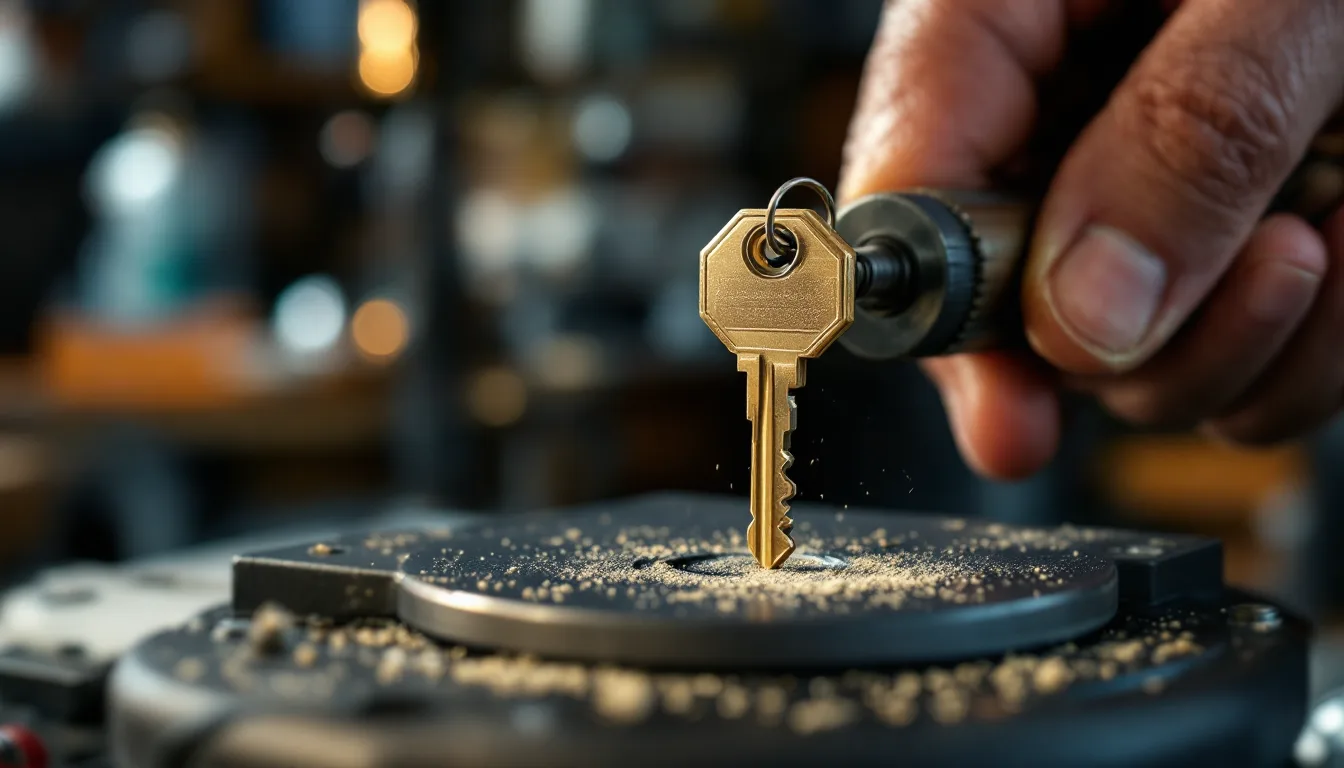
Why do copied keys fail so often in Bell Gardens?
A duplicate key looks like the simplest job in the trade, and that is exactly why so many copies come out wrong. A key is a small mechanical part that has to match a lock's internal pins within a very tight tolerance. If the cut is off by a hair, the key might slide in and turn on a good day, then stick, bind, or refuse to turn when the weather changes or the lock gets a little dirty.
In Bell Gardens the problem is made worse by how the keys are used. This is a dense city with a strong renter majority, which means a single house or apartment key tends to be copied, handed around, and copied again. Each generation of copy is made from the one before it, and small errors stack up. A fourth-generation copy of a worn key can be the difference between a lock that opens smoothly and a lock that fights you every morning.
Most of the complaints we hear are variations on the same story: a hardware-store copy that works in the front door but not the deadbolt, a spare that has to be jiggled, or a key that worked for a month and then stopped. Almost every one of those traces back to a poor blank, a worn cutting machine, or a copy made from a copy.
This page explains how we approach key duplication, which keys we can copy and which we cannot, what changes the cost, and how to get spares that last. If you would rather talk it through, call (213) 577-1366. A person answers the phone at any hour.
How do we duplicate a key, step by step?
Our process is not complicated, but it is careful. The goal is a spare that behaves like the original did when it was new, not just one that looks similar.
- We look at your original key first. We check for wear, bends, and rounded edges, because a badly worn original is the most common reason a copy fails. If your key is worn out, we tell you so, and we may suggest making the copy a different way.
- We identify the key type and keyway. House keys come in many brands and profiles, and a blank that is close but not exact will cut fine and still run rough in the lock.
- We choose the correct blank. Brass, nickel-plated, and other blanks differ in hardness and finish, and the blank has to match the keyway and the shoulder or tip stop that positions the key in the lock.
- We cut the new key and then deburr it. Leftover metal burrs are a hidden cause of sticky keys and of keys that chew up the pins inside your lock.
- We test the copy in the lock it is meant for, not just on the bench. When you are with us, we try it in your actual deadbolt or knob if we can. If it does not operate cleanly, we adjust or recut it.
- We hand you the copy and the original and tell you plainly what we found, including if the original shows wear that will affect future copies.
Locked out or need a locksmith now?
We answer around the clock, every day of the year.
Call (213) 577-1366Which keys can we copy?
We handle a wider range than most people expect, but not everything is a walk-in, same-pattern job. Here is how it breaks down by key type.
- House key copy and spare house key: standard residential keys for knobs, handlesets, and entry locks, including keys for older hardware that is no longer common.
- Duplicate deadbolt key: deadbolts are often a different brand or keyway from the knob. If you have a separate key for the deadbolt, bring both so we can match each correctly.
- Apartment key copy: front-door and unit keys for tenants and property managers. Some buildings use restricted or building-issued keys, and we explain below what that means for copying.
- Office key duplication and commercial key duplication: suite keys, storefront keys, file cabinet and desk keys, and keys for commercial cylinders.
- Mailbox key duplication: small mailbox and cluster-box keys. If a mailbox key is lost entirely and the lock itself has to be changed, that is a separate job, covered under mailbox lock replacement.
- High security key duplication: keys for higher-grade cylinders with tighter tolerances or special cuts. These need the right blank and the right cutting equipment, and they are often not something a self-serve kiosk can do.
- Restricted key duplication: keys on a protected or restricted keyway. These generally cannot be copied without proof of authorization, and we will not skip that step.
What about 'Do Not Duplicate' keys and restricted keys?
People are often surprised to learn that a 'Do Not Duplicate' stamp is usually just a request, not a lock. A key stamped that way may still be cut by anyone with a matching blank. It does not carry real security on its own, and you should not rely on it to keep copies from being made.
A restricted key is different. These are tied to a protected keyway, and the blanks are controlled by the manufacturer. Copies are made only for the authorized account holder, often with a card, a registration, or a letter from the property owner or manager. If you have a key like that, bring whatever documentation came with it. If you cannot find it, we will tell you honestly what is and is not possible rather than cutting something that will not work.
If a building or business needs real control over who holds copies, the better answer is usually a controlled-key system rather than a stamp. For larger setups, that conversation leads to commercial locksmith work and master key planning rather than simple duplication. For homeowners, high security locks are the option worth looking at if you want copies to be hard to make without your say-so.
Locked out or need a locksmith now?
We answer around the clock, every day of the year.
Call (213) 577-1366What affects the cost of key duplication?
We do not quote numbers on a web page, because the honest answer depends on the key in your hand. Here is what moves the cost up or down, so you know what to expect when you call.
The type of key is the biggest factor. A standard brass house key is the lighter-cost end of the range. Keys with unusual shapes, high-security profiles, or restricted blanks cost more to cut because the blank itself costs more and the work takes more care.
Quantity matters too. Cutting several copies of the same key at once is usually the more economical route compared with coming back for one at a time, especially for a rental unit or an office where several people need access.
The condition of your original also plays a part. If the original is worn, we may need to take extra steps or work from a different reference to get a clean cut. That can add some time.
Finally, where the work happens matters. Coming into our Westwood storefront is the lighter-cost option when you can manage it. If you want us to bring the machine to you, that is a mobile visit, and the cost reflects travel as well as the keys. Call (213) 577-1366 with the key type and the number of copies, and we will give you a clear quote before any work begins.
Why call Wilshire Lock & Key for spare keys?
Duplicating keys is a small job, so you should expect it to be handled by someone who treats it seriously. Here is what we can honestly offer.
We have been in business since 1987. That is decades of seeing what goes wrong with copies, from worn hardware in old bungalows to mismatched blanks in rental units.
We run a real storefront at 10740 Wilshire Blvd in Westwood, plus mobile service vans. You can bring keys in, or we can come to you. It is one company either way, with no dispatch middlemen passing your call to a stranger.
David, the owner and lead technician, oversees the work. When a key is tricky, a restricted blank, a worn original, or a lock that will not accept a copy cleanly, that decision does not get lost in a call center.
The phone is answered 24 hours a day, 7 days a week, year-round, at (213) 577-1366.
One more thing worth knowing: California requires locksmith companies to hold a BSIS LCO license. You should ask any locksmith you hire, including us, for that license number. We are adding ours to this site, and you are right to ask for it before work begins.
Locked out or need a locksmith now?
We answer around the clock, every day of the year.
Call (213) 577-1366Key duplication around Bell Gardens: what we see locally
Bell Gardens sits in ZIP code 90201, about 21 miles from our Westwood base. It is a city of small pre-1960 single-family homes, low-rise apartment complexes, and several mobile home parks, and the housing mix shapes the key work more than anything else.
Many older bungalows still have decades-old knob-and-deadbolt hardware, and security doors are common. That means two or three keys per entrance: one for the knob, one for the deadbolt, and often another for the security screen door. When someone asks for a spare house key here, the right first question is how many locks that key has to open and whether they all need to be matched. Old hardware also wears, so the original key may already be rounded off. A fresh, accurate copy made from a worn original will not be perfect, and we say so up front. Sometimes the better move is to rekey the lock to a new key instead of copying a tired one, which is covered under lock rekeying.
Along the Eastern Avenue, Garfield Avenue, and Florence Avenue corridors, apartment buildings and storefronts sit close together. Rekeying rental units between tenants in dense multi-unit blocks is a common situation, and it creates a steady need for extra keys right after. Once a unit is rekeyed, the landlord or manager usually needs several matching copies for the new tenant, a spare, and the building file. If that is you, our page for landlord locksmith work explains how we handle several units at once.
The Bicycle Casino district on Eastern Avenue brings its own pattern: offices and storefronts where staff turnover means keys drift out of the building. In those cases, duplicating more keys is not always the answer. If you cannot account for the copies you already have, it is worth thinking about changing the cylinders instead.
Mobile home parks, including the historic park around the Gage Mansion, have their own quirks. Many mobile home locks are smaller or use different hardware from a standard house, so bring the key and, if possible, tell us the brand on the lock.
On climate: Bell Gardens has hot, dry summers and mild winters, several degrees warmer than the coast in summer. The main seasonal issue is heat-related expansion of doors and frames, which can make a lock bind. That can feel like a bad key when the real problem is the door. Coastal corrosion is not a factor here, so keys and locks do not usually fail from salt air. If a new copy sticks only on hot afternoons, tell us. It points to the door, not the key.
Locked out or need a locksmith now?
We answer around the clock, every day of the year.
Call (213) 577-1366Can we come to you for mobile key duplication?
Yes. Our vans carry key-cutting equipment and a good range of common blanks, so many standard keys can be cut on your doorstep. This is useful if you cannot leave a business unattended, you do not have a car, or you are dealing with several keys at an apartment complex or office.
Mobile key duplication works best when we know the key types ahead of time. When you call (213) 577-1366, tell us the brand if you know it, how many copies you need, and whether any of the keys are marked restricted or high security. That lets us bring the right blanks. A truly uncommon blank may need to be ordered, and we will say so before you wait on it.
If you would like the broader picture of how our vans work in the city, see our page on mobile locksmith service in Bell Gardens. We keep key duplication separate from emergencies on purpose. If you are locked out, that is a different call with a different priority, and our team will sort it as soon as you phone.
How to get spare keys that last
A few habits make a big difference in how long your copies work and how well your property stays secure.
- Copy from your best original, not from a copy. If you have the original key from the lock's first set, use that for any new batch.
- Test every new key right away, in the actual lock, before you leave the shop or let the technician go. A copy that fails the test is easy to fix on the spot and a headache later.
- Number or mark your keys in a way that only you understand. Keep a simple record of who holds which copy, especially in a rental or office.
- Do not put a name and address on a keychain. If it is lost, it points directly to the door it opens.
- If you cannot account for existing copies, rekey instead of copying more. More keys in circulation is the opposite of control.
- If a key breaks in the lock, stop turning it. Call us, and see our page on broken key extraction, because forcing it usually makes it worse.
Frequently asked questions
Can you copy any house key in Bell Gardens?
Most standard house, deadbolt, and office keys can be copied. Keys marked restricted or built for higher-security cylinders may need proof of authorization or a special blank. We will tell you before cutting if a key falls into that group, and we confirm in person rather than guess.
Is a copy from a hardware store kiosk as good as one from a locksmith?
It can work for a basic key, but kiosks often use generic blanks and machines that are not checked often, and they rarely test the key in your lock. We choose the blank by keyway, deburr the cut, and try the key in the lock when possible. That is why our copies tend to run smoother.
What should I bring for key duplication?
Bring the best original key you have, not a copy of a copy. If you have separate keys for the knob and the deadbolt, bring both. For restricted or building-issued keys, bring any card, letter, or paperwork that came with them.
Can you copy a key marked 'Do Not Duplicate'?
That stamp is usually a request rather than a real lock, so it does not always stop a copy. A truly restricted key is different and normally needs authorization from the account holder. We ask for that documentation and will not skip it.
Do you duplicate mailbox keys?
Yes, we cut small mailbox and cluster-box keys when you have a working original. If the key is lost completely, the lock usually has to be changed instead, and that is handled as lock replacement, not duplication.
Can you come to my apartment or office to cut keys?
Yes. Our mobile vans carry cutting equipment and common blanks. Call (213) 577-1366, tell us the key types and quantity, and we will say whether we can cut them on site or whether a specific blank needs to be ordered first.
How much will my key copies cost?
It depends on the key type, how many you need, the condition of the original, and whether you come to the storefront or we travel to you. Standard brass house keys are usually the more economical end. Call us with the details and we will quote before we start.
My new copy sticks in the lock. What went wrong?
Possible causes are a worn original, a blank that does not quite match, leftover burrs, or a lock that needs cleaning. In Bell Gardens, hot afternoons can also make doors and frames expand and bind the lock. Bring the key and tell us when it sticks, and we will sort out whether it is the key or the door.
Should I copy a key or rekey the lock?
If you know exactly who has keys and the lock works well, copying is fine. If you moved into a new place, a tenant left, or you cannot account for existing copies, rekeying is the more sensible step. After rekeying, we can cut as many matching copies as you need.
More locksmith help in Bell Gardens
Key Duplication near Bell Gardens
Reviewed by David, Owner & Lead Technician, Wilshire Lock & Key — in the locksmith trade since 1987.
Last updated 2026-10-11.