
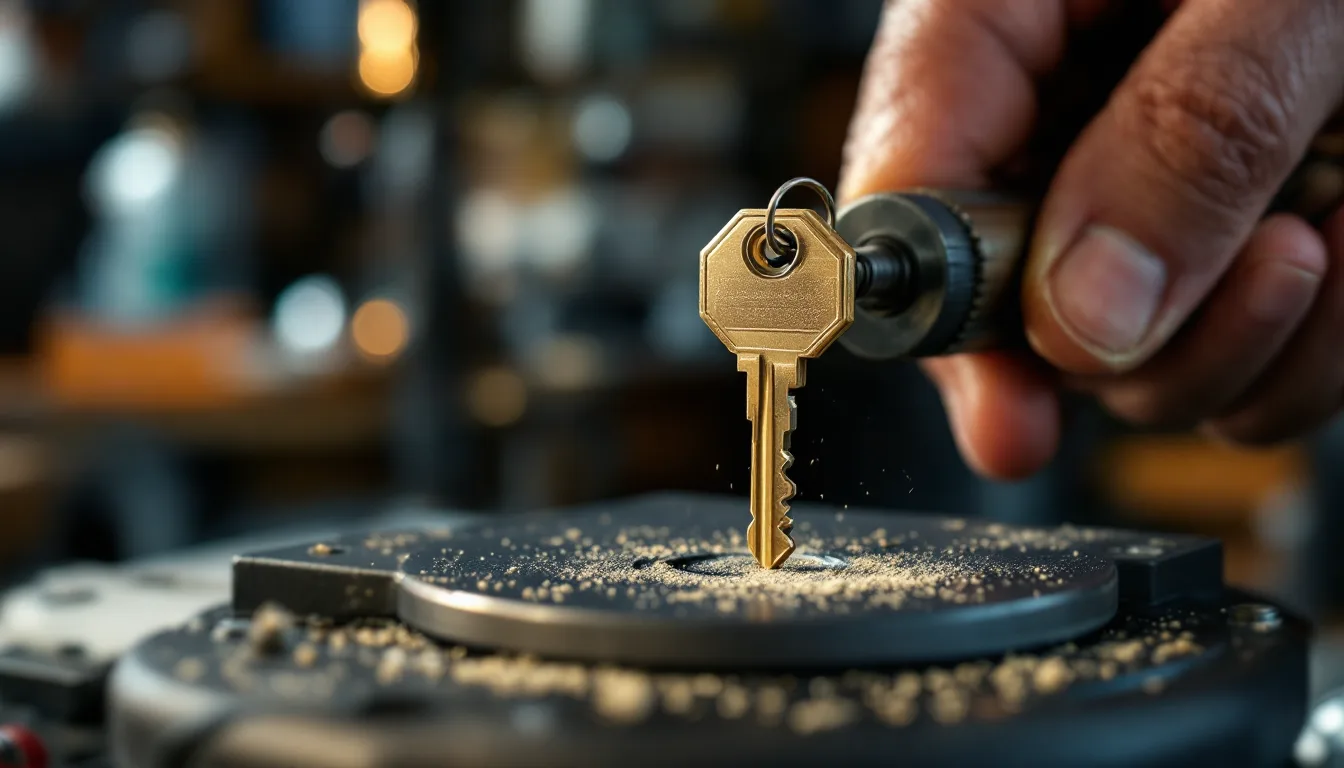
What is key duplication, and what should you bring?
Key duplication means cutting a new key to match one you already have. It sounds like the simplest job in the trade, and for a plain house key it often is. But a copy that turns smoothly depends on three things: the right blank, a properly set-up cutting machine, and the condition of the key we start from. Whether you need a spare house key for a family member, an apartment key copy for a roommate, office key duplication for a new hire, or mailbox key duplication because the little key disappeared, those same three things decide how the copy behaves in the lock.
The most useful thing you can bring is the key you actually use every day. Not a copy of a copy. If you can't get to us, call (213) 577-1366 and we will talk through the options, including coming to you.
- The working key you want copied, ideally the original or the one cut closest to it
- Any key stamped with a restriction or marked do not duplicate, so we can explain what that means for your lock
- Proof that you own or are authorized to manage the property, if the key is restricted
- The make and model of the vehicle, plus the VIN, if the key is for a car
Why do some copied keys stick, jam, or stop working?
Almost every bad copy has the same cause: small errors stacking up. A key cut at a self-serve kiosk from a worn blank is a little off. A copy of that copy is a little more off. By the third generation the key may technically enter the lock but drags across the pins, turns only with a jiggle, or works on the kitchen door and not the front. The wrong blank causes similar trouble, because blanks that look alike can differ in thickness, shoulder length, or groove shape.
Burrs are the other culprit. A freshly cut key that hasn't been properly deburred leaves metal shavings that get carried into the lock and gum up the pins. Over months, that wear makes both key and lock feel rough.
A badly cut key is also a real risk when it is forced. A copy that binds and gets twisted hard can snap in the cylinder, and then you need broken key extraction on top of the original errand. Getting the copy right the first time is the cheaper-in-every-sense path.
How do we duplicate a key, step by step?
We keep the process short and repeatable. The point is to catch problems before you walk out the door, not after the key fails at the lock at night.
- Identify the key. We check the keyway, brand markings, and any restriction stamps to see whether it is a standard key, a high security key, or a restricted key.
- Inspect the original. We look for wear, bends, and rounded cuts. If the key is badly worn, we tell you before cutting, because a copy will inherit that wear.
- Match the blank. We select a blank that matches the original in profile, length, and shoulder, not just one that looks close.
- Cut the copy. We cut to the original's depths and spacing on a machine that is set up for that key type.
- Deburr and clean. We remove burrs and metal dust so the key doesn't drag debris into your lock.
- Test it. Where we can, we try the new key in the lock it is meant for, and compare how it feels against the original. If something is off, we recut or tell you why.
Locked out or need a locksmith now?
We answer around the clock, every day of the year.
Call (213) 577-1366Which keys can we copy, and which are harder?
Most keys fall into a few groups, and each behaves differently on the counter.
Restricted and high security keys are where honesty matters. Some keyways are protected so that blanks are only sold through the manufacturer or an authorized dealer, and the owner must authorize copies. In those cases we explain what paperwork or ordering is involved rather than pretend we can cut one on the spot. If a particular key turns out to be dealer-only, we say so plainly.
- Standard house keys and duplicate deadbolt keys: usually the quickest copies, as long as the original is in decent shape.
- Apartment keys: copyable in most cases, but check your lease first, since some buildings require management approval for copies.
- Office and commercial keys: commonly copied, though keys on a master key system are sometimes restricted by the system owner.
- Mailbox keys: small, often a different blank from your door keys, and sometimes tied to a postal or building-supplied lock. If the lock itself is the problem, mailbox lock replacement may be the real answer.
- High security and restricted keys: copied when we can lawfully and properly source the blank. Read more about the locks themselves under high security locks.
- Car keys: a plain metal key is one thing; keys with electronics are another. We confirm by VIN and in person what a given vehicle needs, and electronic keys fall under transponder key programming rather than simple cutting.
What affects the cost of key duplication?
We don't quote numbers on a web page, because the honest price depends on the key in your hand. What moves the cost up or down is predictable, so you can judge a quote when you get one.
For plain house keys, copying is usually the more economical route compared with changing a lock. If you need many copies at once, or the same key for several doors, tell us up front so we can plan the blanks.
- Key type: a standard brass blank is a different job from a high security or restricted key with a protected profile.
- Blank availability: common blanks are easy to stock; specialty blanks may need to be ordered.
- Authorization: restricted keys may require paperwork, an owner's authorization, or ordering through an authorized channel.
- Condition of the original: a worn key may need extra care, or the lock may need attention instead.
- Quantity: several copies in one visit are handled differently from a single spare.
- Location and hour: a visit to our Westwood storefront is different from a mobile service call, and an after-hours call is different from a daytime one.
Locked out or need a locksmith now?
We answer around the clock, every day of the year.
Call (213) 577-1366Should you copy the key, rekey the lock, or set up a master key system?
Duplication is the right call when you simply need more working keys for a lock you trust. It is the wrong call when you have lost control of who holds keys. If you just bought a home, ended a tenancy, or let go of an employee who held a key, adding copies does nothing for security. Lock rekeying changes the lock's internals so old keys stop working, and you can have new keys cut at the same time.
For a business with many doors and many staff, a pile of duplicates becomes hard to track. That is when a commercial locksmith conversation about a controlled key system is more useful than a bag of loose copies.
We would rather tell you which of these you need than sell you the job you walked in asking for. If a copy is all you need, that is all we will do.
Can you get key duplication done at your home or office?
Yes, mobile key duplication is part of what we do. We run mobile service vans alongside our storefront at 10740 Wilshire Blvd in Westwood, so we can come to a home or office instead of you making a trip. Simi Valley is about 35 miles from our base, and we won't quote a made-up arrival time. Call (213) 577-1366 and we will tell you honestly when we can be there.
A mobile visit makes the most sense when you have several doors to cover, when a property manager wants every unit's keys checked, or when you can't leave the building. We cut what we can on-site, and if a key needs a specialty blank or authorization, we say so before anything is cut. For lockouts and urgent needs, see our mobile locksmith service.
What does key duplication look like across Simi Valley?
Simi Valley's housing mix shapes what people ask us to copy. The valley floor is covered in 1960s and 1970s single-family ranch tracts, including areas like Texas Tract. Houses that age have often lived through several sets of keys, and when we see a front door key worn smooth, the best advice is to copy from the cleanest original rather than from a key that has been passed around. In 93063 and 93065 alike, the hardware on those older doors tends to be well used.
The climate adds to that. Hot, dry summers and Santa Ana wind events mean strong sun and repeated heat cycles on south-facing entries, which expand doors and stiffen or fade exterior hardware. A latch or deadbolt that's been pushed slightly out of alignment makes a key feel tight, and a freshly cut copy can get blamed for what is really a door problem. We check the lock before we blame the key.
Wood Ranch and other newer west-end communities often have HOAs, and new homeowners there commonly want spare house keys and extra deadbolt keys cut right after closing. That works best alongside a rekey, so the keys you copy are ones only your household holds. In Bridle Path, the big lots and horse gates mean people want duplicates for gate padlocks and barn locks, which are usually a different key type from the front door. And in hillside areas like Big Sky and Santa Susana Knolls, a spare key left with a neighbor is worth more than one locked inside, because getting there for a lockout takes time.
Locked out or need a locksmith now?
We answer around the clock, every day of the year.
Call (213) 577-1366Why call Wilshire Lock & Key for key duplication?
We have been in business since 1987, and a lot of what we know about keys comes from seeing the same mistakes repeated for decades. We are one company with a storefront and our own mobile vans, serving 140 cities across Los Angeles and Ventura counties. There is no dispatch middleman between you and the person doing the work. David, the owner and lead technician, oversees how we do the work.
We answer the phone at (213) 577-1366 around the clock, every day of the year, so a lost-key situation at night doesn't have to wait until morning. California requires locksmith companies to hold a Locksmith Company license issued through the Bureau of Security and Investigative Services (BSIS, license type LCO). Ask any locksmith for their license number before work begins, and do the same with us.
If you are locked out right now, a copy won't help you, and you should look at house lockout service instead. Otherwise, call, tell us the key and the lock, and we will tell you whether it is a quick copy or something that needs a different plan.
Frequently asked questions
Can you copy a key that says do not duplicate?
Often yes, but it depends on the key. That stamp is usually a request, not a lock-level restriction, so a standard key may still be copyable. Truly restricted keys have protected keyways, and those need the owner's authorization. We check the key and tell you which one you have.
Can you make a copy if I only have one key?
Yes. Having only one key is the most common reason people call. We copy from that key, check how worn it is, and advise you if the original is too worn to copy cleanly. Don't wait until it is the last key and it breaks.
What if I lost all my keys?
Then you need something different from duplication. Depending on the lock, we may be able to work from the lock itself, or it may make more sense to rekey or replace it. Call (213) 577-1366 and describe the situation.
Do you copy mailbox keys in Simi Valley?
Yes, in many cases. Mailbox keys are small and use different blanks from door keys. Some mailboxes are supplied by a building or the postal service, so we may need to see the lock, and replacement of the lock itself is sometimes the better route.
Can you copy office or commercial keys?
Yes, for most standard commercial keys. Keys that belong to a master key system or carry a restriction may need approval from whoever controls the system. We will ask who the authorized contact is before cutting those.
Do you duplicate car keys?
We can cut standard metal car keys. Many modern vehicle keys contain electronics that need programming, and what a given car needs varies. We confirm by VIN and in person rather than guess. Electronic keys are handled under transponder programming.
Will you come to my house to copy keys?
Yes, through our mobile service vans. Call (213) 577-1366, tell us the key type and address, and we will tell you plainly what we can do on-site and when we can arrive. Specialty or restricted keys may need a second step.
Are you a licensed locksmith company?
California requires locksmith companies to hold a BSIS Locksmith Company (LCO) license, and you should ask any locksmith for that number before they begin. You are entitled to ask us too, and we are glad to answer questions about how we work.
More locksmith help in Simi Valley
Key Duplication near Simi Valley
Reviewed by David, Owner & Lead Technician, Wilshire Lock & Key — in the locksmith trade since 1987.
Last updated 2026-10-11.