
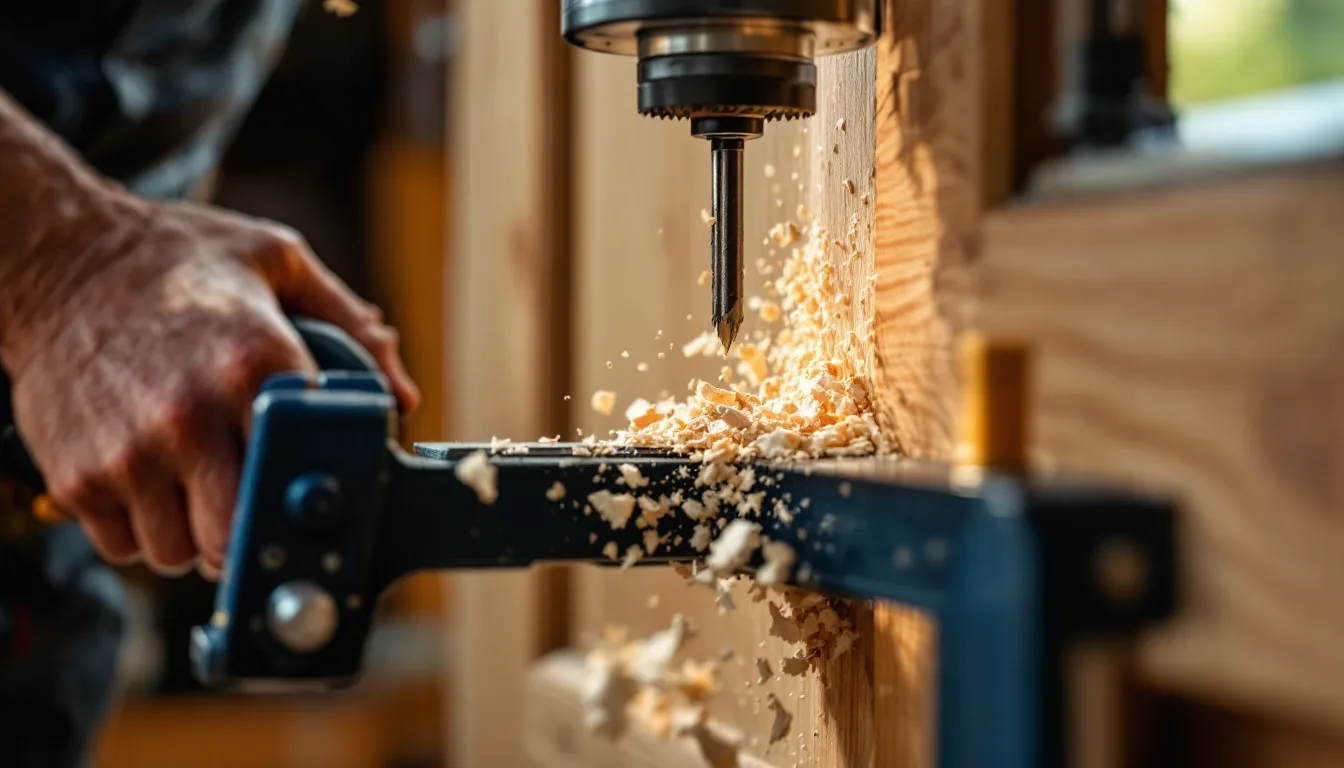
What does lock installation in San Dimas actually involve?
Lock installation means putting a lock on a door that has none, on a door whose old hardware is being retired, or on a door that is being upgraded to a different style. It is more than driving in a few screws. A lock only works as well as the door it sits in, so the job includes checking the bore holes, the latch edge, the strike plate, the frame, and whether the door hangs true. A good deadbolt in a door that rubs its frame will fight you every day.
In San Dimas, the work we expect to do for this service falls into a few groups: front door lock installation on a tract home from the 1960s through the 1980s, new hardware for a door that was just replaced or remodeled, setting up locks properly on a townhome or condo, and commercial lock installation for storefronts and offices. Each group has different priorities, and we approach them differently.
This page is about fitting new hardware. If your lock works and you simply want different keys to operate it, that is a separate job, covered under lock rekeying. If an existing lock has failed and needs swapping for a like-for-like unit, that is lock replacement. We will tell you honestly which of the three your situation calls for, even when it means a smaller job for us.
When is a new lock installation the right move?
Plenty of people call us asking for a new lock when what they need is a rekey, and some call for a rekey when the door really needs new hardware. The right answer depends on what is on the door now and what you want it to do. New installation is usually the correct path in these situations:
- The door has no lock at all, such as a side door, a garage entry, a pool gate or a converted room.
- The existing hardware is worn, loose, corroded or simply not good enough for the door it protects.
- You are moving from a basic knob to a deadbolt, a lever handle, or a keypad or smart lock.
- A new or replacement door has been hung and needs its hardware fitted and tested.
- A business is changing its door, adding a second entrance, or moving to hardware that meets its needs better.
- You want a different security level, such as a stronger strike plate, a hardened deadbolt, or a restricted keyway.
How we install a new lock, step by step
Every installation follows the same discipline, whether it is a single bedroom lock or a full set of exterior doors. The order matters, because most installation problems come from skipping the early checks.
- Talk through the door and the goal. We ask what the door is for, who uses it, and what has gone wrong with the current setup. That conversation decides the hardware.
- Inspect the door and frame. We check thickness, material, the edge condition, how the door swings, and whether the frame is solid enough to hold a security lock.
- Confirm the hardware fits the door. Backset, bore size, edge preparation and handing all have to match. If they do not, we explain the options before cutting anything.
- Prepare the door. Where needed, we adjust or add bore holes and the latch mortise, using the right tools so the finish edges stay clean.
- Fit the lock and latch. We mount the hardware square and snug, without over-tightening, which can bind a latch as easily as under-tightening can loosen it.
- Set the strike and frame side. The strike plate is placed so the bolt throws fully into solid framing, with longer screws where the frame allows.
- Test everything. We cycle the lock with the door open and closed, check the latch catch, and make sure the key turns freely with no pressure on the door.
- Hand over the keys and explain the hardware. You see how it works, and we leave you with what you need to operate and maintain it.
Locked out or need a locksmith now?
We answer around the clock, every day of the year.
Call (213) 577-1366Which locks do we install: lever, mortise, and security locks?
Most customers know what they want the lock to do but not what it is called, so here is how the common types differ in practice.
Lever lock installation is popular because a lever handle is easier to operate with full hands, a bad wrist or a small child. Levers are common on interior doors and on commercial entrances. The key detail is the return and the latch: a lever that sags over time usually points to a poorly supported rose or a door that needs adjusting.
Mortise lock installation is a different animal. A mortise lock sits in a rectangular pocket cut into the edge of the door, and the lock body is much larger than a standard bored latch. You find mortise sets on older doors and many older commercial storefronts. If a door was never prepared for one, installing one means cutting into the door edge, which is not always sensible on a thin or hollow door. In that case we will say so and recommend a bored-style lock that suits the door better.
Security lock installation is about the whole assembly, not just a shiny deadbolt. It means matching a solid bolt with a reinforced strike, proper-length screws into the framing, and a keyway that resists casual bumping and copying. We can go further with high-security locks if your situation calls for restricted keys. For a standalone bolt on an existing door, our deadbolt installation page goes into more detail, and if you want a keypad or app-controlled lock, see smart lock installation.
- Front door lock installation: usually a deadbolt paired with a handleset or lever, chosen around the door material and how exposed the entry is.
- Door lock installation for interior rooms: privacy or passage sets, where function matters more than security.
- Residential lock installation on garage entries and side doors: often the weakest points of a home, and the easiest to improve.
- Commercial lock installation: durable hardware, often with a lever or a mortise body, matched to how many people use the door each day.
What about commercial lock installation for storefronts and offices?
Commercial doors work harder than residential ones. They open and close dozens or hundreds of times a day, they are often glass or aluminum rather than wood, and they may need to meet life-safety expectations that a house door does not. Hardware that looks identical on a shelf can behave very differently after a year of constant use.
When we fit commercial locks, we start with how the door is used: who needs to get in, who has to be able to leave in a hurry, and whether keys are shared among staff. We then choose hardware that suits that pattern and the door type, whether that is a cylindrical lever, a mortise lock, or a panic device. For the wider range of door and exit hardware, our page on commercial door hardware covers the options.
If you manage multiple doors and want them to work on a coordinated key arrangement, tell us at the start. It is far easier to plan keying before the locks go in than to rework it afterward.
Locked out or need a locksmith now?
We answer around the clock, every day of the year.
Call (213) 577-1366How much does lock installation cost in San Dimas?
We do not quote numbers on a web page because the same words, new lock installation, cover very different jobs. What we can do is tell you exactly what moves the cost, so you can judge any quote you receive from us or anyone else.
The biggest factor is the hardware itself. A basic bored lock, a hardened deadbolt, a mortise set, a commercial lever and a smart lock sit in very different places. After that comes the condition of the door. A door that is already prepared and straight is quick. A door that needs new bore holes, a repaired edge, or a reinforced frame takes longer.
Other factors include how many doors are involved, whether the locks need to be keyed alike, whether the keyway is standard or restricted, and what time of day you need the work. Emergency or after-hours calls are handled differently from scheduled daytime work, and travel to your location is part of the picture for a mobile service.
The usually more economical route is often to plan the installation ahead of time and bundle several doors in one visit. We would rather tell you that than have you pay for several separate trips. When you call (213) 577-1366, describe the doors and the hardware you have in mind and we will explain how the job is priced before we start.
- Hardware type and grade
- Door material, thickness and condition
- Frame condition and strike reinforcement
- Number of doors and keying requirements
- Standard versus restricted keyways
- Time of day and travel to the site
Lock installation around San Dimas: from Via Verde to Bonita Avenue
San Dimas is mostly 1960s through 1980s suburban tracts, and in ZIP code 91773 that means many doors with decades of use on them. The hardware on those doors is often original or an early replacement. Over time, the latch edge wears, the strike plate loosens, and the lock stops lining up. When a homeowner in one of these neighborhoods asks for a new front door lock installation, we often find that the door itself needs a small adjustment for the new lock to work properly.
The Via Verde planned community brings townhomes, condos and golf-course homes in the southwest near Puddingstone Reservoir. For these properties, the practical questions are often about matching existing hardware finishes and respecting any community rules about exterior appearance. Check with your association before changing visible hardware, and tell us what finish you need so the new set blends in. Rekeys are common around Via Verde, but when someone wants new locks on a door that never had a deadbolt, that becomes an installation job.
Downtown San Dimas, around the Bonita Avenue district, has a western-themed streetscape with older storefronts that carry legacy commercial hardware. Installing a new lock there can mean fitting a modern body into a door built for a different style of lock, sometimes a mortise pocket from another era. We look at what the door was designed for before choosing hardware, and for ongoing issues with existing storefront doors, our gate lock repair page covers outdoor and gate hardware while the commercial door hardware page covers the rest.
The San Dimas Canyon and Horsethief Canyon areas lean toward larger lots and equestrian properties. Barn doors, tack rooms, pasture gates and side entrances all need locks that can handle weather, dust and heavy use. Canyon winds carry dust into exterior hardware, so we choose finishes and mechanisms with that in mind and recommend periodic cleaning. Along Arrow Highway, several mobile home parks have doors that differ from standard site-built doors, so we measure before assuming a standard lock will fit.
Summer heat in the inland valley is well above the coastal basin, and late-summer door expansion and sticking latches are routine. We test new locks with that in mind. A latch that is too tight in cool weather can bind in heat, so we leave proper clearance and check the strike alignment rather than forcing the fit.
Our storefront is at 10740 Wilshire Blvd in Westwood, roughly 40 miles from San Dimas, so we plan installation visits and bring the parts and tools the job is likely to need. Our mobile locksmith vans do the work on-site, whether you are along the Foothill Boulevard corridor, the Lone Hill Avenue corridor or out near Bonelli Park.
Locked out or need a locksmith now?
We answer around the clock, every day of the year.
Call (213) 577-1366Why call Wilshire Lock & Key for installation?
We have been in business since 1987, and the job has not changed much in principle: fit the right lock, to the right door, correctly. What has changed is the range of hardware, and we keep up with it.
We are one company with a storefront and mobile vans. When you call (213) 577-1366, you are talking to us, not a call center that passes the job to whoever is available. That matters for installation because the person who hears your description is the person who prepares the parts.
David, the owner and lead technician, oversees the work. That means standards for how doors are prepared, how strikes are set and how locks are tested apply to every installation, large or small.
We answer the phone 24 hours a day, seven days a week, year-round. Most installations are scheduled work, but doors do not always wait. If a break-in damaged your door, or you have just moved in and have no working lock, call anytime and we will work out the safest interim step and the proper fix.
How to check any locksmith before they install a lock
California requires locksmith companies to hold a license from the Bureau of Security and Investigative Services, known as an LCO license. Whoever you hire, ask for it, ask for the company name, and make sure the person who arrives matches the company you called. A reputable locksmith will answer plainly.
Also ask what the hardware is, what grade it is, and how the job will be priced before work begins. You should be able to see the lock and understand what you are paying for. A clear explanation of the door, the lock and the process is a good sign. Vague answers, pressure to decide on the spot, or an unwillingness to say who they are, are not.
Frequently asked questions
What is the difference between lock installation and lock replacement?
Installation is fitting a lock where there is none or where you are changing the type of hardware, such as adding a deadbolt or moving to a lever set. Replacement is swapping a failed lock for a similar one. The skills overlap, but installation often involves preparing the door, so the work and cost can differ.
Can you install a lock on a door that has never had one?
Yes. We check the door thickness, material and frame, then prepare the bore holes and latch edge and fit the hardware. On very thin or hollow doors, we may recommend a different lock type or reinforcement so the lock actually holds up in use.
Do you install mortise locks and lever locks?
Yes. Lever sets are common on both homes and businesses, and mortise locks are found on older doors and storefronts. If a door was not prepared for a mortise body, we will explain what is involved and whether a bored lock suits the door better.
Can you match a lock to my existing keys?
Often, yes. We can fit new hardware keyed to work with your current key, or key several new locks alike so one key works on all of them. Tell us your preference when you call, because it affects which hardware we bring.
Is a new lock installation worth it, or should I just rekey?
If your locks are in good condition and you only need to cancel old keys, rekeying is usually the more economical route. If the hardware is worn, weak or the wrong type for the door, new installation is the better choice. We will tell you honestly which one fits.
Do you install locks on commercial and storefront doors in San Dimas?
Yes. We fit levers, mortise locks and other commercial hardware on storefront, office and back doors, including older doors in a downtown setting. We check how the door is used and what it needs to do before choosing the lock.
How do I know a locksmith is legitimate in California?
California requires locksmith companies to hold a BSIS LCO license. Ask any locksmith for the license, the company name and how the job will be priced before work starts. A legitimate company will give you straight answers without hesitation.
Can you install a lock after hours or on a weekend?
Yes. We answer at (213) 577-1366 every hour of every day. If you need a door secured urgently, say so on the call. Scheduled installations are easier and often more economical to plan, but we will help whenever you call.
Will the heat in San Dimas affect my new lock?
It can affect how the door behaves. Inland valley heat can swell wood doors and make latches stick in late summer, so we leave proper clearance and check strike alignment. Canyon dust can also reach exterior hardware, so occasional cleaning helps keep the lock turning smoothly.
More locksmith help in San Dimas
Lock Installation near San Dimas
Reviewed by David, Owner & Lead Technician, Wilshire Lock & Key — in the locksmith trade since 1987.
Last updated 2026-10-11.