
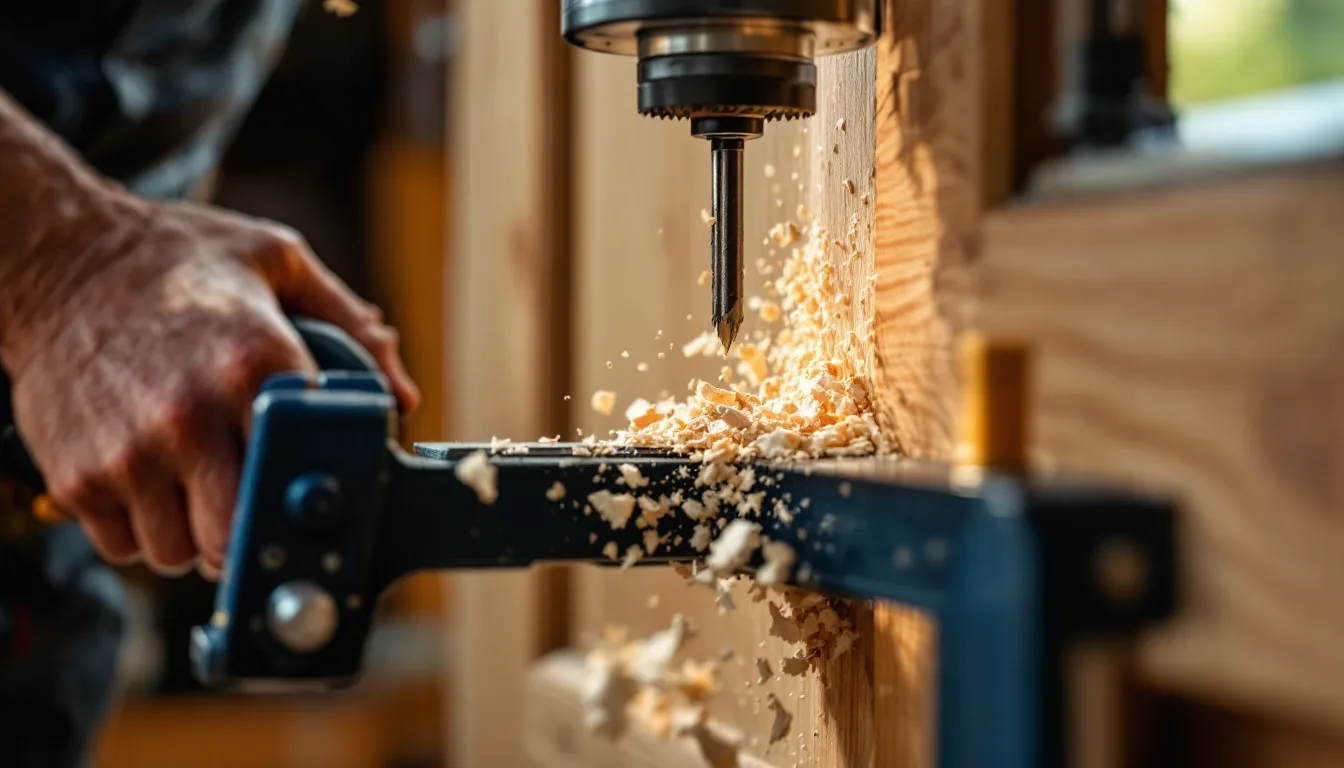
What does lock installation actually involve?
Lock installation means fitting a lock where there wasn't one, or fitting a new lock into a door that is ready for it, and making sure it works properly with the door, the frame and the strike plate. It sounds simple. Most of the real work is in the details: whether the bore holes are the right size, whether the latch lines up with the strike, and whether the door hangs true enough that a deadbolt throws freely without being lifted or pushed into place.
A badly installed lock can be weaker than the one it replaced. A deadbolt that has to be wrestled into engagement tends to get left unlocked. A strike plate held by short screws into soft trim does very little when someone leans a shoulder into the door. So we treat installation as a fitting job, not a hardware swap.
This page covers new installation: front door locks, deadbolts, mortise sets, lever handles and commercial-grade hardware. If you only want your existing locks to work with a different key, that is a different job, and rekeying is usually the more economical route. If a lock is worn out or damaged and you simply want the same kind of lock back in the door, that falls under lock replacement.
When do you need a new lock installed?
People call us for installation in a handful of situations, and knowing which one you are in helps us bring the right parts and plan the right amount of prep work.
- A new or replaced door that has no hardware fitted yet
- A door that only has a knob and no deadbolt above it
- A back door, side gate or garage-entry door that was never secured properly
- A remodel where the style is changing, such as swapping knobs for levers
- A business opening a new space, adding a door, or upgrading old hardware
- A move-in where you would rather start with hardware you control than wonder who else holds a key
How do we install a new lock, step by step?
Every door is a little different, but the sequence is consistent. Here is how a typical installation goes from your first call to the finished door.
- You call (213) 577-1366 and tell us about the door: wood, metal, fiberglass or aluminum, what is on it now, and what you want it to do. A photo of the door edge and the existing hardware helps a great deal.
- We talk through the lock type that suits the door and how it is used, including grade, finish, handing and keyway, so the right hardware is with us when we arrive.
- At the door, we inspect its condition, thickness, existing bores, the edge, the frame and the area around the strike. We tell you what we find before we start cutting.
- We prep the door. That means drilling or adjusting the bores only where needed, or cutting a mortise pocket for a mortise lock, and repairing a split or over-drilled edge when there is one.
- We fit the latch and lock body, set the backset correctly, install the trim, and align the strike so the bolt enters cleanly without scraping.
- Where the frame is weak, we reinforce it with longer screws that reach the framing behind the jamb and a proper strike or edge plate.
- We test everything with the door open and closed, check that keys turn smoothly, hand over the keys, and show you how the lock is meant to be used.
Locked out or need a locksmith now?
We answer around the clock, every day of the year.
Call (213) 577-1366Which kinds of locks do we install?
The keywords people search for are really different jobs with different tools and different fitting problems. Here is how we think about each.
- Front door lock installation: a handleset and deadbolt pair or a keyed entry set, matched to the door's thickness and bore pattern. This is the lock your household uses every day, so how it feels in the hand matters as much as how it looks.
- Door lock installation for secondary doors: back doors, garage-entry doors and side doors, which often get less attention than the front but are often where people actually come and go.
- Mortise lock installation: a mortise lock body sits inside a rectangular pocket cut into the door edge. You see it on older solid doors, some higher-end residential doors and many storefront doors. It needs a door thick enough for the body and careful cutting, so we like a photo ahead of time.
- Lever lock installation: lever handles in place of knobs. They are easier to operate with a full hand or an elbow and are common where accessibility is a concern.
- Security lock installation: higher-grade deadbolts, reinforced strikes and restricted keyways for people who want more resistance to forced entry or key copying. See our page on high-security locks for the hardware side of that.
- Electronic and keypad hardware: a different category with its own battery, door-prep and app considerations. Read about smart lock installation if that is what you are after.
Residential and commercial lock installation: what is different?
Residential lock installation usually means cylindrical locks and deadbolts going into wood, fiberglass or steel doors with standard bore sizes, most often a 2-1/8 inch cross bore and a standard edge bore. Residential-grade hardware is built around a household's daily use, and the choice among grades mostly comes down to how much resistance and durability you want.
Commercial lock installation is a different animal. Doors are heavier and see far more cycles. Aluminum storefront doors have narrow stiles that only accept certain locks. Hardware is often a higher grade, and there are life-safety rules to respect: a door on an exit path generally has to open from the inside without a key, so we do not fit anything that defeats that. We also think about key control, since a business may have many people holding keys.
If you run a restaurant, shop or office and need new locks fitted, our commercial locksmith work follows the same approach, with more attention to grade, egress and who carries keys. Panic hardware, door closers and access control are separate jobs, and we will tell you when a door needs one of those instead of, or alongside, a new lock.
Locked out or need a locksmith now?
We answer around the clock, every day of the year.
Call (213) 577-1366What affects the cost of lock installation?
We don't quote numbers on a web page because a fair price depends on the door in front of us. Here is what actually moves the cost, so you can see where a quote comes from.
- Lock grade and brand: a basic keyed set and a heavy-duty security deadbolt are very different products.
- How many locks: several doors keyed alike take more planning and more parts than a single door.
- Door material and condition: solid wood, hollow-core, steel, fiberglass and aluminum all cut differently, and a damaged edge needs repair first.
- How much prep is needed: a door that is already bored for the new lock is a lighter job than one that needs new holes or a mortise pocket cut.
- Frame and strike work: reinforcing a weak jamb takes extra time and hardware.
- Lock type: mortise and commercial hardware are more involved than a standard residential deadbolt.
- Timing and travel: a night or holiday call and the distance our van travels can both affect the total.
Why call Wilshire Lock & Key for lock installation?
Installation is a trade where small mistakes show up months later as a sticking bolt or a door that won't latch. Experience in the details is what we offer.
- We have been in business since 1987.
- We have a real storefront at 10740 Wilshire Blvd in Westwood, plus mobile service vans that come to you.
- We are one company. The person you speak with works for us, and there is no dispatch middleman passing your job to a stranger.
- David, the owner and lead technician, oversees the work.
- Our phone is answered 24 hours a day, 7 days a week, year-round, and we serve 140 cities across Los Angeles and Ventura counties.
What should lock installation look like for Rowland Heights homes and businesses?
Rowland Heights, ZIP code 91748, has a lot of tract homes from the 1960s through the 1980s. Houses that age have usually had their hardware changed more than once, so we often find mismatched bores, doors that have shifted slightly in their frames, and strike plates mounted with short screws. A new front door lock installation there often includes a little correction work so the new lock sits on a door and frame that are ready for it.
In the hills south of Pathfinder Road there are newer subdivisions and some gated communities. View-lot hillside homes commonly use side gates and garage-entry doors as primary access points, so we put as much thought into those doors as into the front door. Gate latches are their own category of hardware, and our gate lock repair page covers that side.
Townhome and condo complexes concentrate along the Colima Road and Fullerton Road corridors. If you live in one, check with your association before changing exterior-facing hardware, since some have rules about finish or style. Colima Road and Fullerton Road also have shopping plazas where restaurants and storefronts may need commercial lock installation for a new tenant or a new back-of-house door.
The climate matters too. Summers in the eastern San Gabriel Valley are warm to hot and dry, and the sun-exposed hillside lots in the Puente Hills get a lot of direct light. Weathering of south-facing doors and gate hardware is the main concern, so we pay attention to finish and material on exterior locks. Whether you are near the Nogales Street corridor, the Pathfinder Park area or the neighborhoods around the Rowland Heights Community Center, the aim is the same: a lock that is fitted properly and holds up on that door.
Rowland Heights is about 34 miles from our Westwood storefront, so we come to you in a mobile van. That distance is one reason we ask good questions on the phone about the door before we leave.
Locked out or need a locksmith now?
We answer around the clock, every day of the year.
Call (213) 577-1366How do you check a locksmith before they install your locks?
California requires locksmith companies to hold a BSIS LCO license, which is issued through the Bureau of Security and Investigative Services. Ask any locksmith for that license number before work starts, and do the same with us. It is a normal question and a good habit.
A few other things are worth checking. Ask who will actually come to your door and what company they work for. Ask for the quote before any drilling begins and ask what could change it. Be wary of any quote that cannot be explained in terms of the lock, the door and the labor involved. A reputable locksmith will tell you what they plan to do and why.
Frequently asked questions
How long does a lock installation take?
It depends on the door and the lock. A standard deadbolt going into a door that is already bored for it is a short visit. New bores, a mortise pocket, frame reinforcement or several doors take longer. When you call (213) 577-1366 and describe the door, we give you a realistic idea of what the visit involves.
Can you install a lock on a door that has no holes drilled?
Yes. Bare doors are common with new or replaced doors. We bore the face and the edge using proper hole saws and jigs so the lock sits square, then fit the latch and strike. The door's material, such as solid wood, hollow-core, steel or fiberglass, determines how we cut it.
Do you do mortise lock installation?
Yes. Mortise locks need a rectangular pocket cut into the door edge and a door thick enough for the lock body, so we like a photo of the edge and the existing hardware beforehand. Older solid doors and many storefront doors use them. We confirm the right body before we come out.
Should I choose lever handles or knobs?
Levers are easier to operate when your hands are full or if you have limited grip strength, and they are common in commercial spaces and accessibility-minded remodels. Knobs are fine for many homes. Either way, the security comes from the deadbolt and how the strike is installed.
What lock grade should I use on my front door?
Lock grades run from Grade 1, the heaviest duty, to Grade 3, which is lighter. For a front door, many homeowners choose a higher-grade deadbolt than the minimum, because forced entry usually attacks the deadbolt and strike. We can explain the options once we see the door and how it is used.
I live in a condo or townhome near Colima Road. Can I change my locks?
Often yes, but check with your association first. Some complexes have rules about exterior hardware, and you may be required to keep a particular finish or give the association a copy of the key. We can install what is allowed and tell you what the door needs.
Do you install locks for restaurants and shops in Rowland Heights?
Yes. Storefront and back-door lock installation is part of our commercial work. We pay attention to grade, to narrow-stile aluminum doors and to exit rules, since a door on an exit path generally must open from the inside without a key. Key control for staff is also part of the conversation.
Can I call at night to get a lock installed?
You can call (213) 577-1366 at any hour, because the phone is answered 24 hours a day, 7 days a week. If the situation is a break-in or a lockout, we treat it as urgent. A planned installation is often simpler to schedule in daylight, and we will talk through what makes sense given the 34 miles from our Westwood storefront.
More locksmith help in Rowland Heights
Lock Installation near Rowland Heights
Reviewed by David, Owner & Lead Technician, Wilshire Lock & Key — in the locksmith trade since 1987.
Last updated 2026-10-11.