
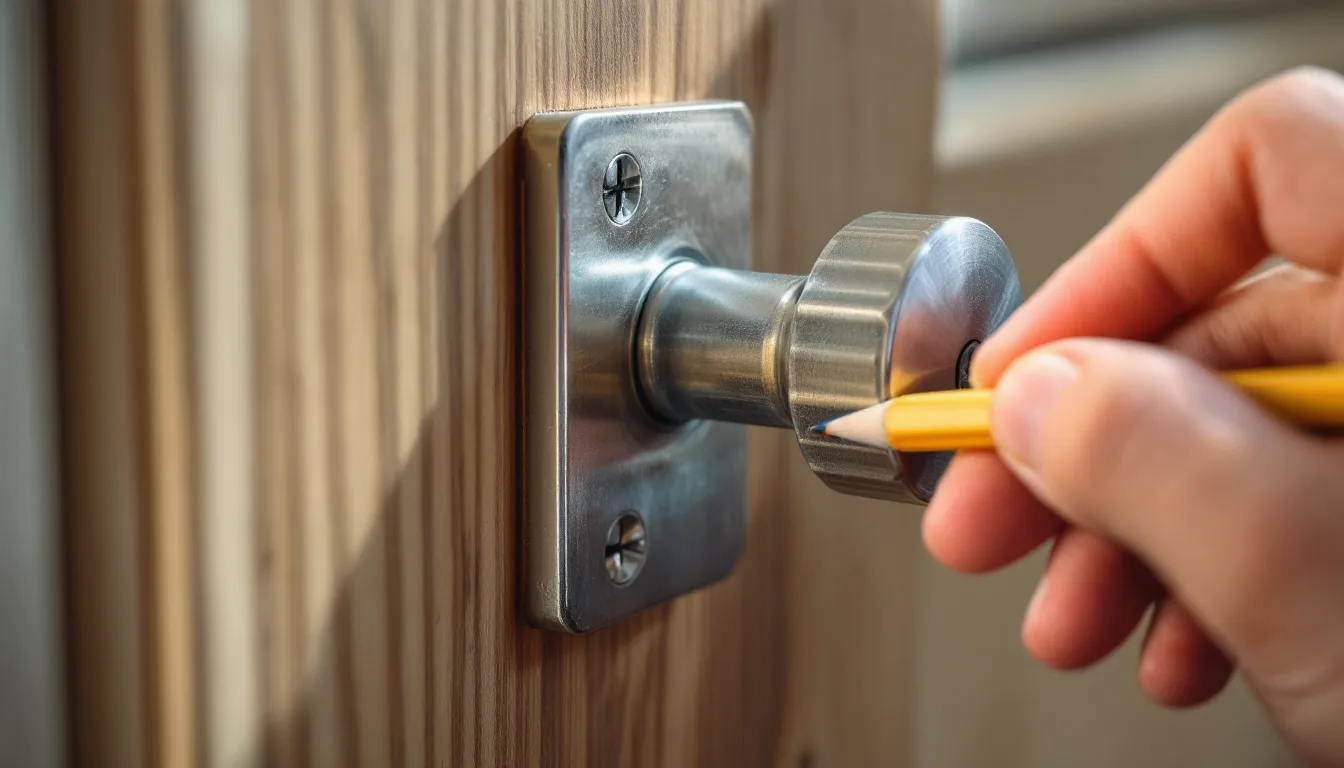
What does deadbolt installation actually involve?
People often picture a deadbolt as a single part you screw onto a door. It's really three things working together: the lock body and cylinder on the door, the bolt that extends into the frame, and the strike plate and wood behind it that take the force when someone pushes, kicks, or simply leans on the door. If any one of those three is poor, the deadbolt is poor, no matter what the packaging says.
Most calls we get in Reseda fall into a few groups. Some doors have no deadbolt at all, only a knob lock that a credit card or a firm shoulder can beat. Some have a deadbolt that's worn out, loose, or hard to turn. Some have a bolt that no longer lines up with the strike, so you have to lift or pull the door to lock it. And some are new situations: a front door being swapped, a back door getting a second lock, or a rental where the existing hardware is a mystery.
Deadbolt installation covers all of these. If the door is already drilled for a deadbolt, replacement is usually quick. If it isn't, we bore the holes, fit the hardware, and set the strike so the bolt goes in cleanly. This page is about that work: choosing the right deadbolt, installing it properly, and making sure it keeps working. If what you really need is a broader hardware change across the house, our lock installation page covers the wider picture.
Single-cylinder or double-cylinder: which one belongs on your door?
A single-cylinder deadbolt has a keyway on the outside and a thumb turn on the inside. A double-cylinder deadbolt has a keyway on both sides, so it takes a key to lock or unlock from either side. Both are real options, and which is right depends on the door.
The case for a double cylinder is usually glass. If your door has a window in it, or a sidelight within arm's reach of the thumb turn, a determined person can break the glass, reach through, and turn a thumb turn. A keyed cylinder on the inside closes that gap. That's why we're asked about double-cylinder deadbolt installation on doors with decorative glass, narrow side windows, or older French-style doors.
The case against is safety. With a double cylinder, you need a key to get out. In a fire or other emergency, a person fumbling for a key can lose time they don't have. Building and fire codes in many places restrict keyed-both-sides locks on exit doors, and landlords and insurers sometimes have their own rules. Before we install one, we'll talk through the door, who lives there, and where the key will be kept.
- Choose single-cylinder when the door is solid and nothing breakable is near the thumb turn. It's the default for most homes.
- Choose double-cylinder when glass sits within reach of the inside hardware and you're comfortable with the exit-by-key tradeoff.
- Ask about the building first if you rent, or live in a multi-unit property. Some buildings don't allow keyed-both-sides locks on primary doors.
- If you do install a double cylinder, keep a key in a consistent spot near the door, out of reach from outside, and make sure everyone in the home knows where it is.
Locked out or need a locksmith now?
We answer around the clock, every day of the year.
Call (213) 577-1366How we install or replace a deadbolt, step by step
Whether we're doing a straight deadbolt replacement or starting from a bare door, the sequence is the same. The order matters, because the mistakes people regret are almost always in the early steps.
- Look at the door and frame. We check the door's thickness, whether it's solid wood, hollow-core, metal, or has glass, and whether the frame is sound or has splits and soft spots.
- Pick the hardware with you. We go over single versus double cylinder, the grade of the deadbolt, the finish, and whether you want it keyed to match your existing locks.
- Measure the backset and prep the door. If the door is already bored, we confirm the hole sizes and the distance from the door's edge. If not, we mark and drill the face bore and the edge bore with the right hole saw so the lock sits square.
- Mount the lock body and cylinder. The cylinder and the inside piece connect through the door, and we tighten them so nothing wobbles but not so hard that the mechanism binds.
- Set the strike plate. We mortise the plate flush, drill the bolt hole straight into the frame, and use long screws that reach the framing behind the jamb, not just the thin trim.
- Test it with the door closed and open. The bolt should extend fully with no lifting, pushing, or pulling, and retract just as freely. We check the latch on the knob or handle too, since it shares the same strike area.
- Hand over keys and explain the lock. You get the keys, we show you how it operates, and we point out anything about the door that might need attention later.
What affects the cost of deadbolt installation in Reseda?
We don't quote numbers on a web page, because the honest answer depends on the door in front of us. Here's what actually moves the cost up or down, so you can judge any quote you get from us or anyone else.
The biggest variable is whether the door is already prepared. Swapping a worn deadbolt into existing holes is a lighter job than boring a new door from scratch. The second is the hardware itself: deadbolts range from basic residential grades to heavier-duty ones with reinforced bolts, hardened inserts, and pick-resistant cylinders. A higher-grade deadbolt generally costs more but resists force and tampering better.
Door and frame condition matter next. A solid frame takes a new strike plate in minutes. A cracked or rotted jamb may need reinforcement or repair before any deadbolt will hold. Double-cylinder hardware usually costs more than single-cylinder, and keying several locks alike, or to an existing key, adds a little time. If we're coming out after hours or to a location that needs a longer drive, that can factor in too. We'll tell you the full figure before we start work, so there are no surprises when we're done.
- Existing door prep versus new boring
- Single versus double-cylinder hardware
- Deadbolt grade and security features
- Door material and frame condition
- Number of locks and whether they're keyed alike
- Timing and travel distance
Locked out or need a locksmith now?
We answer around the clock, every day of the year.
Call (213) 577-1366Deadbolt installation on Reseda's tract homes and older apartment buildings
Reseda was one of the Valley's first mass-built postwar suburbs, and most of its housing is 1940s and 50s single-story stucco tract homes on uniform lots. In the 91335 ZIP code, that means a lot of front doors that have been through decades of owners, repairs, and swaps. Some still carry original knob locks. Others have a deadbolt from some earlier decade that's loose, sticky, or mismatched to the knob.
The scenario we see most often with these houses is a change of hands. When a tract home sells or a tenant turns over, rekeying is the first thought, and often it's enough. But if the front door has no deadbolt, or the existing one is worn and rattly, that's the time to install or replace one. If the lock itself is fine and only the keys are the problem, rekeying the lock is the lighter-cost route, and we'll say so.
Older apartment buildings line Sherman Way, Vanowen, and Saticoy, and many of those buildings date to before the 1994 Northridge earthquake and have had repairs and hardware replacement since. That history shows up in doors: frames patched over, mismatched hardware, and strike plates screwed into whatever was left. In a Downtown Reseda building near Sherman Way and Reseda Boulevard, we may find a door that has had three different deadbolts and three sets of old screw holes. We deal with that by repositioning the strike, plugging or reinforcing the old holes, and seating the new bolt into solid wood.
Security screen doors are widespread on older Reseda homes and on apartment entries. A screen door lock isn't the same thing as a deadbolt. The screen door slows people down, but the real security sits on the main door behind it. If you're picturing a deadbolt for the inner door, we'll make sure the screen door doesn't block the key or the thumb turn, and that you can still get in and out comfortably.
If you're in Reseda Ranch, near Reseda Park, or along the Victory Boulevard, Saticoy Street, or Tampa Avenue corridors, the same approach applies. The door, the frame, and the way you use the entrance decide the install, not the street name.
Why does the Valley's weather matter for a deadbolt?
The central Valley floor swings between hot, dry summers and cool winter nights. Wood doors and frames respond to that. They expand a little, shrink a little, and over decades that movement works on the way a door sits in its frame. In aging postwar homes, the common, modest results are sticking latches and a strike plate that no longer lines up with the bolt.
A deadbolt is unforgiving about that kind of drift. A spring latch can forgive a few millimeters of misalignment, but a bolt that's off by that much will drag or refuse to throw. That's why we set the strike with the door in its normal, closed position rather than guessing from the old plate, and why we test the lock again in a few different door positions.
If your new or existing deadbolt starts catching in warm months, or loosens up in cooler ones, it's usually the door moving rather than the lock failing. A small strike adjustment often fixes it, and we'd rather do that than sell you a new lock. For issues like that on an existing lock, our lock repair page explains what we look at.
Locked out or need a locksmith now?
We answer around the clock, every day of the year.
Call (213) 577-1366Why call Wilshire Lock & Key for a deadbolt?
We've been in business since 1987, and deadbolts are bread-and-butter work for us. We operate from a storefront at 10740 Wilshire Blvd in Westwood and send out mobile service vans, so most deadbolt jobs get finished at your door in one visit, with the hardware and tools already in the van. Reseda is about 17 miles from our base, and we cover the whole area as part of our service across 140 cities in Los Angeles and Ventura counties.
You deal with one company. There's no dispatch middleman who takes your call and hands it to whoever's available. The person who answers the phone works for us, and the technician who arrives works for us. David, the owner and lead technician, oversees the work, which is why the standards stay consistent from job to job.
Our phone, (213) 577-1366, is answered 24 hours a day, 7 days a week, year-round. A deadbolt installation isn't usually an emergency, but sometimes it becomes one: a door that won't lock after a break-in attempt, a lost key, or a new tenant moving in tonight. If you'd rather we come to you than drive across town, our mobile locksmith service is how most Reseda customers reach us.
What should you ask any locksmith before they start?
Hiring a locksmith is a trust decision, because you're letting someone modify the thing that protects your home. A few simple questions protect you.
California requires locksmith companies to hold a BSIS LCO license, issued through the Bureau of Security and Investigative Services. Ask any locksmith for their license number, and check it yourself. A legitimate company will give it without hesitation. Ask for the total cost before work begins, and be wary of anyone who quotes a very low number on the phone and then changes it at the door. Ask what grade of deadbolt they're installing and what brand, and ask whether they'll reinforce the strike and frame.
Also ask who is actually coming. Some companies advertise local numbers but dispatch a stranger from elsewhere. You're entitled to know the name of the company arriving at your door.
- Can I see your BSIS LCO license number?
- What's the full cost, including the hardware and labor?
- What grade is the deadbolt, and who makes it?
- Will you reinforce the strike plate and check the frame?
- Is the person arriving an employee of the company I called?
When a deadbolt isn't the whole answer
Sometimes a deadbolt is the right fix. Sometimes it's part of a bigger plan. If you want keyless entry, app control, or codes for family members or guests, a smart lock installation may suit you better, and many smart locks include a deadbolt mechanism of their own. If you're worried about picking, drilling, or key control, high-security locks are built for that and are worth a conversation.
If you own rental units around Reseda, a deadbolt is often one piece of a turnover routine, and our locksmith for landlords page lays out how we handle multiple doors. And if you're standing outside right now with no way in, the house lockout page is the place to start; we can sort the deadbolt afterward.
The short version: a deadbolt only helps if the door, frame, and strike are ready for it. We'll tell you plainly if the fix is a different lock, a frame repair, or just an adjustment.
Frequently asked questions
How long does deadbolt installation take?
A replacement into an existing, properly drilled door is usually a short visit. A new installation on an undrilled door takes longer because we have to bore the holes and set the strike. Frame repairs or reinforcement add time. We'll tell you what to expect after seeing the door.
Can you replace my deadbolt without changing the door?
Yes, in most cases. Standard deadbolts fit the usual hole sizes on residential doors, so we can swap the lock without replacing the door. If the existing holes are damaged or the wrong size, we can usually correct that on site, but a badly damaged door or frame may need repair first.
Is a double-cylinder deadbolt safe for my home?
It depends on the door and who lives there. A double cylinder resists glass-break entry, but you need a key to exit, which can be a hazard in a fire. Many buildings and codes restrict them on exit doors, so check with your landlord or building rules, and keep a key near the door in a consistent place.
Do I need a double-cylinder deadbolt if my door has a window?
Not always. If the glass is far from the thumb turn or can't be broken to reach it, a single cylinder is often fine. If the glass is within arm's reach of the inside hardware, a double cylinder or a different door solution is worth considering. We look at the layout and talk it through.
My deadbolt keeps sticking. Do I need a new one?
Often not. In Reseda's older homes, the Valley's hot summers and cool winter nights move wood doors and frames, so the strike and bolt drift out of line. A strike adjustment frequently fixes it. If the lock itself is worn, we'll replace it. Either way we'll explain what we find.
Can you key the new deadbolt to match my other locks?
Usually yes, depending on the brand and keyway of your existing locks. When matching isn't practical, we can key the new deadbolt to a different key or rekey the others so everything works on one key. We confirm what's possible when we see the hardware.
I rent my apartment near Sherman Way. Can I install a deadbolt?
Check your lease and talk to your landlord first, since many buildings control the hardware on entry doors and may require a copy of the key. If the landlord approves, we can do the installation. Landlords can also call us directly to arrange it.
Do you install deadbolts at night or on weekends?
Our phone, (213) 577-1366, is answered around the clock, every day of the year. If you need a door secured urgently, call and we'll go over what can be done that day. For routine installs, we can also schedule a more convenient time.
What should I check before hiring a locksmith for a deadbolt?
Ask for their BSIS LCO license number, since California requires locksmith companies to hold one, and verify it. Ask for the total cost up front, the brand and grade of the deadbolt, and who will be arriving. A trustworthy company answers all of that plainly.
More locksmith help in Reseda
Deadbolt Installation near Reseda
Reviewed by David, Owner & Lead Technician, Wilshire Lock & Key — in the locksmith trade since 1987.
Last updated 2026-10-11.