
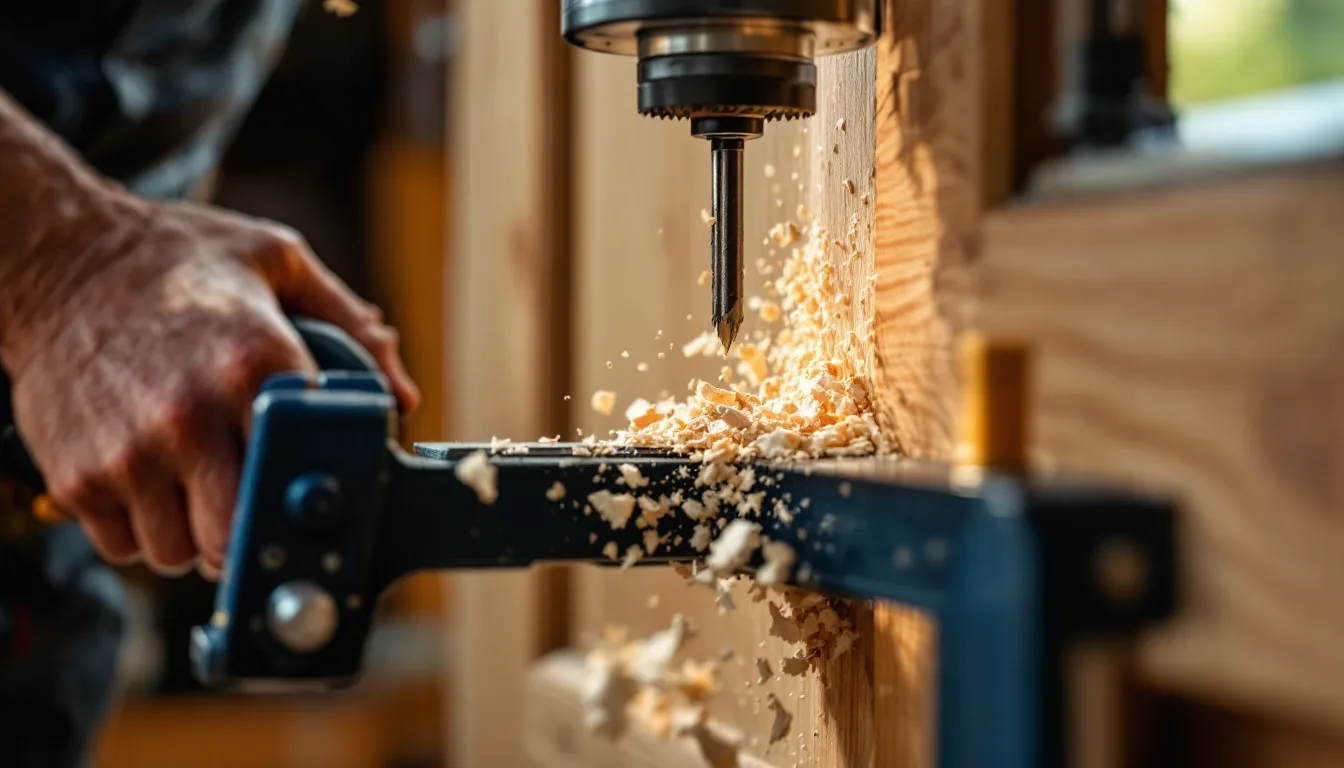
What does lock installation actually cover?
Lock installation means putting a lock on a door that doesn't have one yet, or removing hardware that doesn't suit the door and fitting a different kind. It is a different job from rekeying, which changes the key to a lock you already own, and different from repair, which fixes a lock that has worn or broken. We'll tell you plainly which of those your situation calls for, because sometimes the more economical fix isn't a new lock at all.
The calls we get in Lancaster tend to fall into a few groups: a front door lock installation after a move or remodel, a deadbolt added to a door that only has a knob latch, old knobs swapped for lever handles, a storefront door that needs proper commercial hardware, and a door where a break-in attempt wrecked the old lock and chewed up the frame. Every one of them starts the same way, by looking at the door before choosing anything.
If what you really want is the same lock with a different key, that's lock rekeying. If the hardware is the same type and simply worn out, lock replacement is the better fit. This page is about fitting new locks correctly.
Which type of lock belongs on which door?
The right lock depends on the door material, its thickness, the frame, and who uses the door every day. Here is how we think through the common choices:
- Front door lock installation: most entry doors take a deadbolt plus a handle set or lever. We bore to standard sizes, match the backset to the door, and set the strike so the bolt throws fully into solid framing, not just thin trim.
- Deadbolts: a single-cylinder deadbolt takes a key outside and a thumbturn inside. A double-cylinder needs a key on both sides, which can slow you down getting out in an emergency, so we talk through whether it suits your door. More detail is on our deadbolt installation page.
- Lever lock installation: levers are easier on hands that can't grip and twist, and they're common in rentals, offices and homes with older family members. The set has to be mounted so the handle doesn't sag or rub the door edge.
- Mortise lock installation: a mortise lock sits in a deep pocket cut into the edge of the door instead of a simple round bore. You see them on older commercial doors and some solid residential doors. The pocket has to be cut precisely, and the door must be thick and sound enough to take it. Not every door can, so we check first.
- Commercial lock installation: heavier-duty cylindrical or mortise hardware built for constant traffic, often keyed into a system if you run several doors. See our notes on commercial door hardware.
- Security lock installation: cylinders with better pick and drill resistance, reinforced strike plates and longer screws that bite into the stud. We cover those options under high-security locks.
- Electronic locks: keypad and app-based deadbolts need the same careful door prep, plus battery and signal considerations. That work is covered under smart lock installation.
Locked out or need a locksmith now?
We answer around the clock, every day of the year.
Call (213) 577-1366How does a new lock installation go, step by step?
This is the sequence we follow on a typical visit. The order matters, because most bad installs come from skipping the early steps.
- Call (213) 577-1366 and tell us the door type, what's on it now and what you want. If something sounds unusual, like a hollow door, a metal frame or earlier damage, we'll flag it before we head out.
- We inspect the door and frame: thickness, material, edge condition, whether the door hangs square, and whether the frame is solid where the strike will sit.
- We settle on the hardware with you. We lay out the options that suit your door, explain the differences, and agree on the lock before any drilling begins.
- We mark and bore using a template, so the face bore and edge bore are centered and the backset is right. Freehand drilling is how doors get ruined.
- We fit the latch or bolt and set the plate flush with the door edge, neither proud nor sunken.
- We set the strike on the frame with long screws that reach the framing behind the jamb, because a strong lock in a weak frame only gives you the strength of the frame.
- We mount the lock body, handle or cylinder, and align everything so nothing binds.
- We test with the door open, then closed, and cycle the lock repeatedly. The bolt should throw fully without lifting or pushing the door, and the key should turn freely.
- We hand over the keys, show you how it works, clear up our debris, and tell you if anything else on the door needs attention.
What affects the cost of lock installation in Lancaster?
We don't print numbers on a web page because the honest answer depends on your door. What we can do is tell you what moves the cost, so any figure you hear on the phone makes sense.
- Hardware grade and brand: locks are rated by ANSI/BHMA grade from 1 to 3, with grade 1 the heaviest duty. A solid mid-grade deadbolt is a sensible baseline for many exterior doors, and we'll explain the trade-offs instead of pushing the top rating on every door.
- Fresh bore or existing prep: swapping into a door already drilled to standard size is usually the lighter-cost job. Cutting new holes, or a mortise pocket, takes more labor.
- Door and frame condition: a split edge, a loose jamb or a door that has warped needs repair or reinforcement before a lock will hold.
- Number of doors: several doors at one address can often be handled in one visit, which spreads the setup work.
- Keying: keyed-alike sets, master-key layouts and restricted keyways take extra planning and parts.
- Electronics: keypads, app control and battery systems add to both hardware and setup.
- Timing and distance: after-hours calls and travel are part of the picture. Our storefront is in Westwood and Lancaster is about 67 miles away, so we factor that in when we schedule and quote.
Locked out or need a locksmith now?
We answer around the clock, every day of the year.
Call (213) 577-1366How do residential and commercial installs differ?
Residential lock installation usually means one or two doors, standard bore sizes and a focus on how the household lives: who needs keys, whether anyone struggles with a thumbturn, and whether a screen door sits in front of the entry.
Commercial lock installation is a different job. Storefront doors often have narrow aluminum stiles that need purpose-made hardware, and doors on exit routes generally have to open from the inside without a key or special knowledge. That's why we don't put double-key deadbolts on doors like those. A business also needs to think about key control from day one: who holds which key, and how you'd take back access when staff change. Installing locks that can be keyed into a system from the start is far easier than redoing them later.
What does lock installation look like across Lancaster's neighborhoods?
Lancaster's housing shapes the work. Central and east Lancaster carry postwar aerospace-boom housing, mostly 1950s–1970s ranch homes on grid streets. In older central neighborhoods, security-door and deadbolt upgrades are a common request, and security screen doors are a frequent retrofit. When one goes on, the screen door latch, the handle clearance and the inner door's deadbolt have to work together. Houses that age have also settled and been repainted many times, so we check how the door hangs before we bore anything.
The westside, including ZIP 93536, is mostly larger 1980s–2000s stucco tract homes. There, a new lock installation tends to mean a handle set and deadbolt on a bigger entry, or extra deadbolts on side and garage-entry doors. In west Lancaster tracts near Avenue K and 30th Street West, a lockout call can turn up a tired lockset, and if you decide to replace it, the new install can often happen on the same visit. The same applies across 93534 and 93535.
Then there's the weather. The Antelope Valley sits around 2,350 feet, with triple-digit summers, sub-freezing winter nights and strong winds carrying fine dust. Doors and frames swell and shrink, so a bolt that lines up on a cool morning can bind on a hot afternoon. We leave sensible clearance and judge alignment with that swing in mind. Seasonal sticking isn't always the lock's fault either; sometimes an adjustment or lock repair is the lighter-cost answer. Dust also works into outdoor locks and gate hardware, so for exposed doors we lean toward weather-resistant hardware, and we suggest dry lubricant, since oil holds dust.
Downtown Lancaster and The BLVD district mean storefront doors, where new commercial hardware has to suit the frame and the traffic. Along Sierra Highway and Division Street, industrial buildings raise the key-control question: if you're fitting several doors, plan the keying before the first lock goes on. Rural large-lot properties ring the city's edges, including areas like Desert View on the north side, and Quartz Hill and Antelope Acres nearby. Outbuilding and gate-side hardware there faces the wind and dust hardest.
Our mobile vans make the trip from Westwood, so mobile locksmith service is how Lancaster installs get done. For planned work, call and we'll find a window that suits you.
Locked out or need a locksmith now?
We answer around the clock, every day of the year.
Call (213) 577-1366Why call Wilshire Lock & Key for a new lock?
We've been in business since 1987, and David, the owner and lead technician, oversees the work. A few things set us apart:
- One company from first call to finished door. No dispatch middlemen passing your job to whoever is free.
- A real storefront at 10740 Wilshire Blvd in Westwood, plus mobile vans that serve Lancaster and 140 cities across Los Angeles and Ventura counties.
- Phones answered 24 hours a day, 7 days a week, year-round at (213) 577-1366.
- Plain talk about your door. If it needs reinforcement, or you don't need a new lock at all, we say so.
How do you check a locksmith before they install a lock?
California requires locksmith companies to hold a BSIS LCO license, issued through the Bureau of Security and Investigative Services. Ask any locksmith for the license number before work starts, and verify it with the state. That applies to us and to anyone else you call.
Other warning signs include a vague company name, no street address, a price that changes at your door, and a technician who wants to drill out a lock that could be opened without damage. A locksmith should be able to explain the plan and cost before they start.
What should you have ready before you call?
A few details speed things up and help us bring the right parts:
- Which door, and whether it's wood, metal, glass or aluminum frame
- What's on it now, and a photo if you can send one
- The door's approximate thickness, if you can measure it
- Any damage to the door edge or frame
- How many keys and who needs them
- Whether you want a specific brand or finish, or want our recommendation
Frequently asked questions
How long does a lock installation take?
A single deadbolt on a door that's already drilled is usually a short visit. A new bore, a mortise pocket, a damaged frame or several doors take longer. We give you a realistic idea after hearing about the door.
Can you install a lock on a door that has never had one?
Yes. We bore the door, set the latch and strike, and make sure the frame can hold the bolt. Hollow or thin doors may need reinforcement, and we'll tell you if so.
Will a new lock fit my older door?
Usually, but it depends on the existing bore, the backset and the door thickness. Older doors may have non-standard prep or worn edges. We measure first and tell you if the door needs adjusting.
Can you fit a lock on a security screen door in Lancaster?
Yes. Screen doors are common on older central-city homes. We choose hardware that suits the frame and make sure the screen door latch, handle and inner deadbolt don't interfere with each other.
Can I supply my own lock for you to install?
Often, yes. We'd want to see it first to make sure it suits your door and is a sound product. If it doesn't, we'll tell you why and suggest an alternative.
Can you key new locks to match my existing keys?
In many cases, yes, particularly when the new locks are the same brand and keyway family as the old ones. We confirm what's possible when we look at your hardware.
Do you handle commercial lock installation for Lancaster businesses?
Yes, including storefront doors and industrial buildings. We plan keying and key control before installing, and we keep exit-door rules in mind so a door still opens from inside.
Can I get a new lock installed at night or on a weekend?
Our phones are answered 24 hours a day, 7 days a week at (213) 577-1366. For urgent needs, call right away. For planned installs, we'll set a time that works for you.
More locksmith help in Lancaster
Lock Installation near Lancaster
Reviewed by David, Owner & Lead Technician, Wilshire Lock & Key — in the locksmith trade since 1987.
Last updated 2026-10-11.